Transmission Lines Around the World: Design, Standards, Technologies, and Engineering Fundamentals
A comprehensive guide for electrical and power systems engineers
Table of Contents
- 1. Introduction
- 2. Transmission Line Components
- 3. Electrical Design
- 4. Mechanical Design
- 5. Right-of-Way & Clearances
- 6. Insulation & Lightning Protection
- 7. Substation Interface
- 8. Protection Systems
- 9. HVDC Transmission
- 10. Full Transmission Line Design Workflow
- 11. Global Transmission Line Trends
1. Introduction to Transmission Lines
Transmission lines are critical infrastructure that deliver bulk electrical energy from generation plants to substations. They operate at high, extra-high, and ultra-high voltage levels such as:
- High Voltage (HV): 69–230 kV
- Extra High Voltage (EHV): 345–765 kV
- Ultra High Voltage (UHV): 800–1200 kV AC / ±500–1100 kV DC
Major global transmission achievements include:
| Country | Voltage Level | Notes |
|---|---|---|
| China | ±1100 kV HVDC | Highest and longest HVDC lines globally |
| India | 1200 kV AC | Highest AC transmission system in the world |
| Brazil | ±800 kV HVDC | Massive Amazon–load center projects |
| USA | 765 kV AC | Key backbone for Midwest and East Coast |
| Europe | 400 kV AC | Highly meshed interconnection grid |
| Philippines | 500 kV AC, ±350 kV HVDC | Luzon backbone and HVDC Leyte–Luzon |
2. Transmission Line Components
2.1 Conductors
Common conductor types include:
- ACSR (Aluminum Conductor Steel Reinforced)
- AAAC (All-Aluminum Alloy Conductor)
- ACCC/ACCR (Composite core, high-temperature)
2.2 Insulators
Insulators provide mechanical support and electrical isolation.
- Suspension type
- Tension type
- Post insulators
- Polymer/composite insulators
2.3 Towers
Towers may be:
- Lattice steel towers
- Monopole structures
- Guyed towers
- Portal structures
2.4 Shield Wires
Shield (ground) wires protect phase conductors from lightning by providing a low-impedance path.
2.5 Line Hardware
Includes armor rods, vibration dampers, spacers, suspension clamps, and tension clamps.
3. Electrical Design of Transmission Lines
3.1 Line Parameters
Resistance (R): Depends on conductor size and temperature.
Inductance (L):
L = 2 × 10⁻⁷ ln(Dm / r')
Capacitance (C):
C = (2πϵ₀) / ln(Dm / r)
3.2 Transmission Line Models
- Short line (< 80 km) – R and L only
- Medium line (80–250 km) – π-model
- Long line (> 250 km) – Distributed parameters
3.3 Surge Impedance & SIL
Z₀ = √(L / C)
SIL = V² / Z₀
3.4 Corona Performance
Corona depends on conductor diameter, surface condition, voltage gradient, and bundling configuration.
4. Mechanical Design
4.1 Sag and Tension
Sag is calculated using:
S = (wL²) / (8T)
- w = conductor weight per unit length
- L = span length
- T = horizontal tension
4.2 Tower Loading
Loads include:
- Vertical loads
- Transverse loads
- Longitudinal loads
- Wind load on conductors and towers
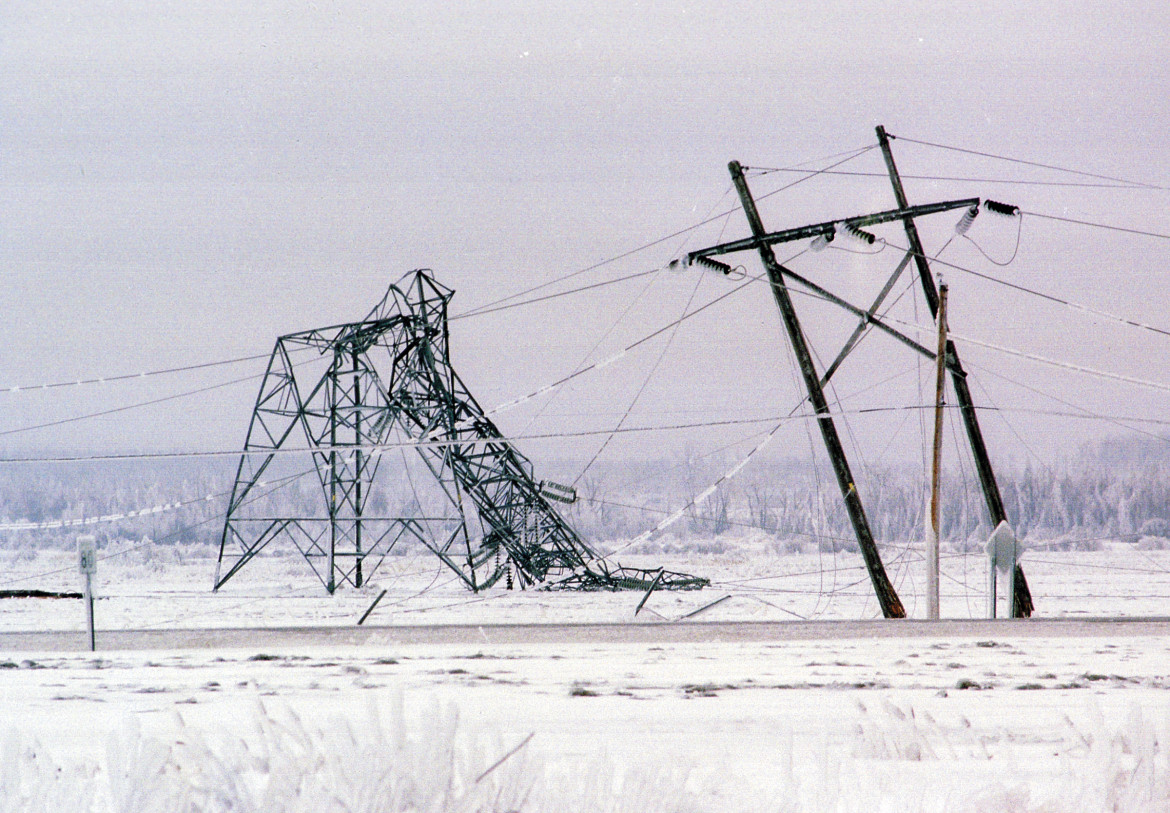
- Ice load (in cold climates)
Standards used:
- ASCE 74
- IEC 60826
- NESC
- PGES / NGCP TLDS Manual
5. Right-of-Way (ROW) and Clearances
| Voltage Level | ROW Width |
|---|---|
| 115 kV | 15–25 m |
| 230 kV | 30–35 m |
| 500 kV | 50–60 m |
| ±800 kV HVDC | 70–100 m |
6. Insulation & Lightning Protection
6.1 BIL (Basic Insulation Level)
Determines the insulation strength required for lightning and switching surges.
6.2 Shielding Angle
Typical shielding angle = 25°–30°
6.3 Surge Arresters
Used at line terminations and high-lightning-density areas.
7. Substation Interface
Transmission lines must match substation equipment ratings:
- Bus configuration
- CT/PT class
- Breaker interrupting capacity
- Line protection panels
- Communication channel (OPGW, PLCC, microwave)
8. Protection of Transmission Lines
- Distance (21) relays
- Line Differential (87L)
- Pilot protection (using OPGW or PLCC)
- Backup overcurrent protection
9. HVDC Transmission Systems
HVDC is ideal for long-distance bulk power transfer, underwater connections, and asynchronous grid interconnections.
- Overhead bipolar transmission
- Monopolar with ground return
- Metallic return configurations
10. Complete Transmission Line Design Workflow
- Requirement definition (voltage, MW, route)
- Route selection (GIS, environmental, ROW)
- Electrical calculations (RLC, corona, SIL)
- Mechanical design (sag-tension, wind load)
- Tower structural design and spotting
- Protection and communication planning
- Construction planning and commissioning
11. Global Trends in Transmission Technology
- High-temperature low-sag (HTLS) conductors
- Composite-core conductors
- UHVAC and UHVDC expansion
- Dynamic Line Rating (DLR)
- Drone-based line inspection
- LiDAR-based route optimization
- PLS-CADD for advanced modeling


No comments:
Post a Comment