Transmission Line Sag & Tension: Complete Engineering Guide (IEC 60826 / ASCE 74 / PLS-CADD)
A full technical guide on sag–tension engineering for overhead transmission lines, covering ruling span, catenary equations, creep, blowout, safety clearances, and PLS-CADD modeling.
1. Introduction
Sag–tension design ensures that transmission line conductors maintain safe clearances, acceptable mechanical stresses, proper thermal limits, and compliance with IEC, ASCE, and utility standards. Sag varies with temperature, tension, loading, and conductor properties such as elasticity and creep.
2. Catenary vs. Parabolic Sag Models
The real conductor forms a catenary curve described by:
s = (H/w) * (cosh(wL/H) – 1)
Where H = horizontal tension, w = weight per unit length, L = span.
For spans < 300 m, the parabolic approximation is acceptable:
s ≈ (wL²) / (8H)
3. Ruling Span Theory
For unequal spans between two dead-end structures, sag–tension calculations use a single equivalent span:
LR = Σ(L³) / Σ(L²)
4. Conductor Mechanical Properties
- Cross-sectional area
- Modulus of elasticity
- Thermal expansion coefficient
- Creep characteristics
- Stranding and lay ratio
5. Initial vs. Final Sag
Initial sag occurs immediately after stringing. Final sag includes long-term creep and permanent elongation.
6. Temperature and Sag
Sag increases with temperature due to thermal expansion:
ΔL = α * L * ΔT
7. Everyday, Maximum, Minimum Temperature Cases
- Everyday (EDL): 10–40°C
- Maximum: 70–100°C
- Minimum: –5 to –20°C
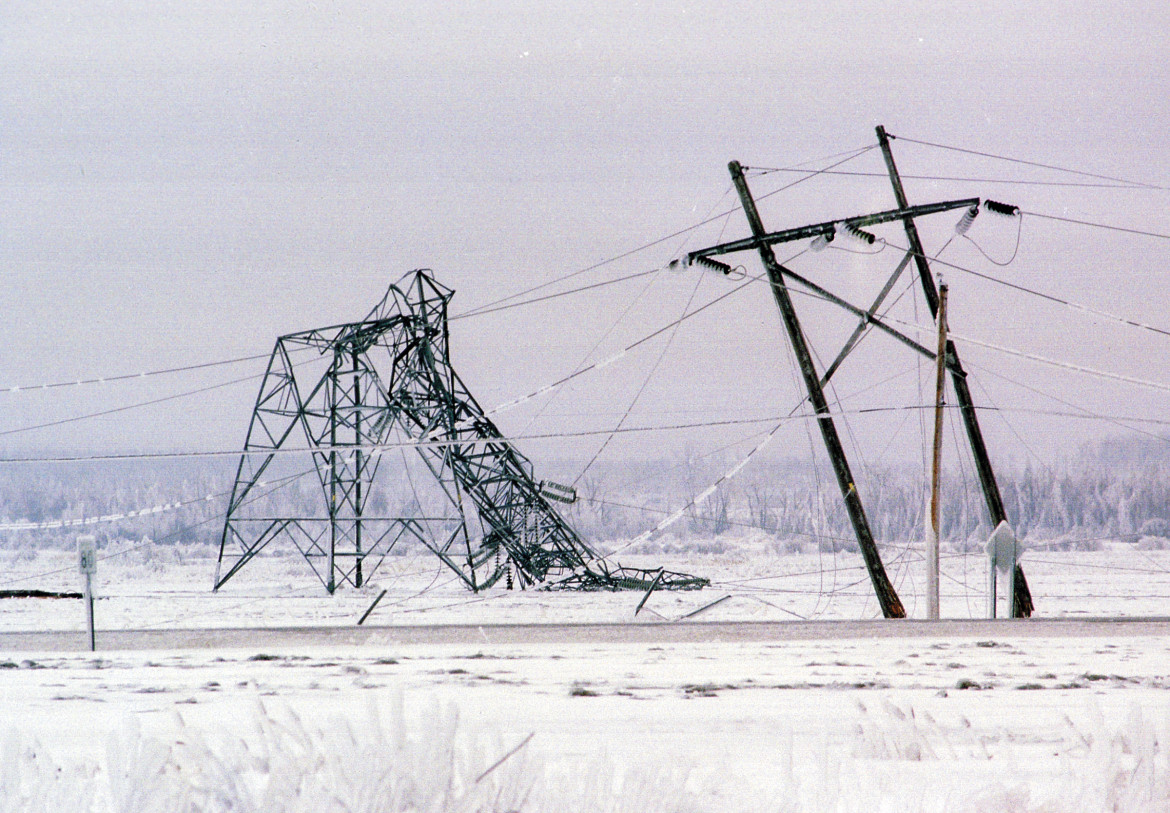
8. Ice & Wind Load Cases (Heavy Load Sags)
ASCE 74 defines:
- Vertical load = conductor weight + ice
- Horizontal load = wind pressure
9. Safety Clearances
Per IEC / utility standards:
- Ground clearance
- Road crossing clearance
- River crossing clearance
- Building separation
10. Conductor Blowout & Swing
θ = arctan(Fw / T)
Where Fw = wind load, T = tension.
11. Numerical Example (ACSR Drake, 400 m Span)
- w = 1.071 kg/m
- H = 18 kN
- L = 400 m
Parabolic sag:
s = wL² / (8H) = 1.071*400²/(8*18000) = 11.9 m
12. PLS-CADD Sag–Tension Modeling
PLS-CADD calculates sag using exact catenary equations, conducting initial and final condition analysis for multiple load cases.
13. Common Engineering Mistakes
- Using average span instead of ruling span
- Ignoring creep
- Using wrong temperature cases
- Failure to include blowout


No comments:
Post a Comment