The conductivity of aluminum is not as great as that of copper for a given size. For example, checking
Table 310.15(B)(16), an 8 AWG Type THHN copper conductor has an allowable ampacity of 55 amperes.
An 8 AWG Type THHN aluminum or copper-clad aluminum conductor has an ampacity of 45 amperes. In 240.4(D), the maximum overcurrent protection for a 12 AWG copper conductor is 20 amperes but only 15 amperes for a 12 AWG aluminum or copper-clad aluminum conductor.
Aluminum conductors have a higher resistance compared to a copper conductor of the same size. When considering voltage drop, a conductor’s resistance is a key ingredient.
Common Connection Problems
Some common problems associated with aluminum conductors when not properly connected may be summarized as follows:
• A corrosive action is set up when dissimilar wires come in contact with one another when moisture is present.
• The surface of aluminum oxidizes as soon as it is exposed to air. If this oxidized surface is not
penetrated, a poor connection results. When installing aluminum conductors, particularly in large sizes, an inhibitor (antioxidant) is brushed onto the aluminum conductor, and then the conductor is scraped with a stiff brush where the connection is to be made.
The process of scraping the conductor breaks through the oxidation, and the inhibitor keeps the air from coming into contact with the conductor. Thus, further oxidation is prevented. Aluminum connectors of the compression type usually have an inhibitor paste already factory installed inside of the connector.
• Aluminum wire expands and contracts to a greater degree than does copper wire for an equal load. This is referred to as creep or cold flow.
This factor is another possible cause of a poor connection. Crimp connectors for aluminum conductors are usually longer than those for Older texts used the term MCM, which also means “thousand circular mils.” The first letter “M” refers to the Roman numeral that represents 1000.
Thus, 500 MCM means the same as 500 kcmil. Roman numerals are no longer used in the electrical industry for expressing conductor sizes.
Top 5 Worst Transmission Line Disasters in History
Top 5 Worst Transmission Line Disasters in History Causes, technical failures, cascading effects, and engineering lessons learned This a...
-
Hello. In this blog, we will try to create a steel pole model, using the PLS Pole software of Power Lines System. This created pole will pr...
-
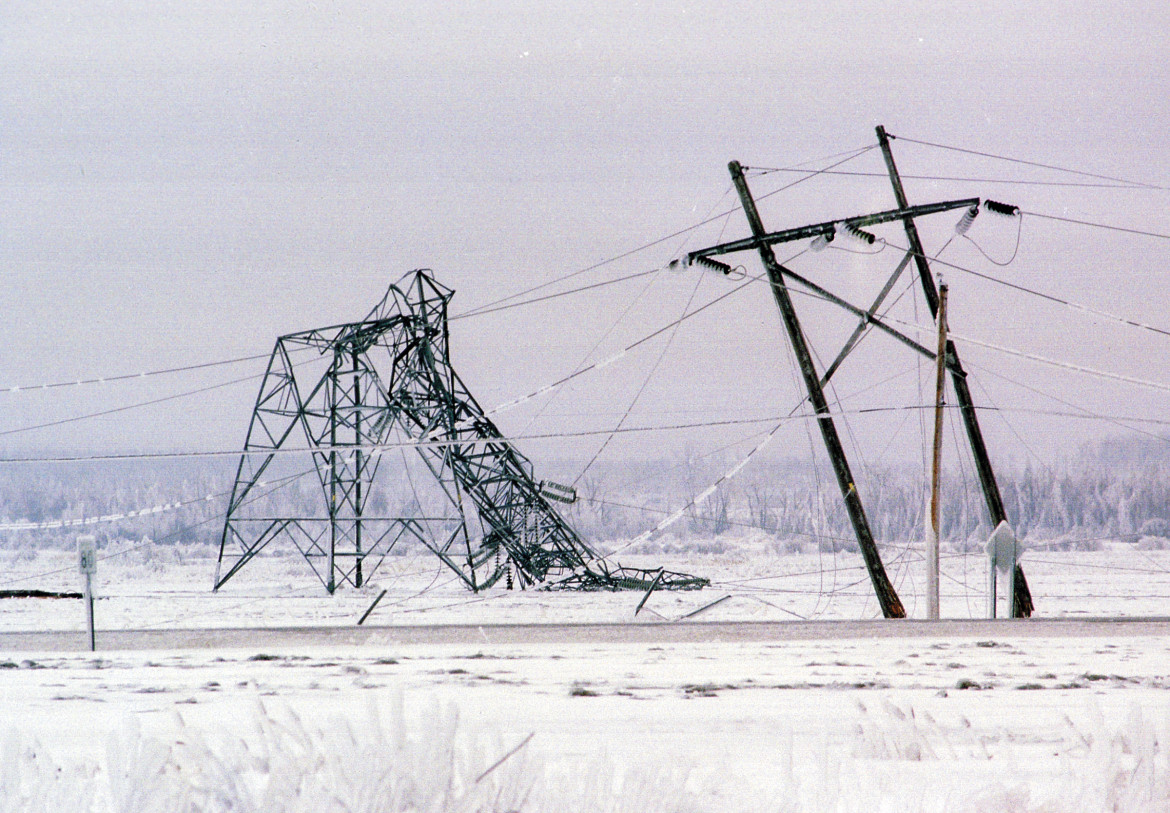
 When a conductor is covered with ice and/or is exposed to wind, the effective conductor weight per unit length increases. During occasions o...
 -
 Yup, you read it right. This is about the World's Longest Overhead Transmission Line as of today. It is around 1700 km in length, trans...

1 comment:
i didn't know that. thanks for sharing!Power System's Loss
Post a Comment