The differences between the two standards are numerous and significant (Rodolakis [B7]). Despite the conceptual association in the duty types, system modeling and computational procedures are quite different in the two standards.
That is why results calculated using both standards can be quite dissimilar, with IEC 60909 (1988) having the tendency to yield higher fault current magnitudes. The essential generic differences between the two standards can be summarized in the following:
— AC decrement modeling in IEC 60909 (1988) is fault location-dependent and it quantifies the rotating machinery’s proximity to the fault. The IEEE standard, on the other hand, recommends universal, system-wide ac decrement modeling.
— DC decrement for IEC 60909 (1988) does not always rely on a single X/R ratio. In general, more than one X/R ratio must taken into account. Furthermore, the notion of separate X and R networks for obtaining the X/R ratio(s) at the fault point is not applicable to IEC 60909 (1988).
— Steady-state fault current calculation in IEC 60909 (1988) takes into account synchronous machinery excitation settings.
In view of these important differences, computer simulations adhering to the ANSI and IEEE C37 standards cannot, in general, be used to cover the computational requirements of IEC 60909 (1988) and vice versa.
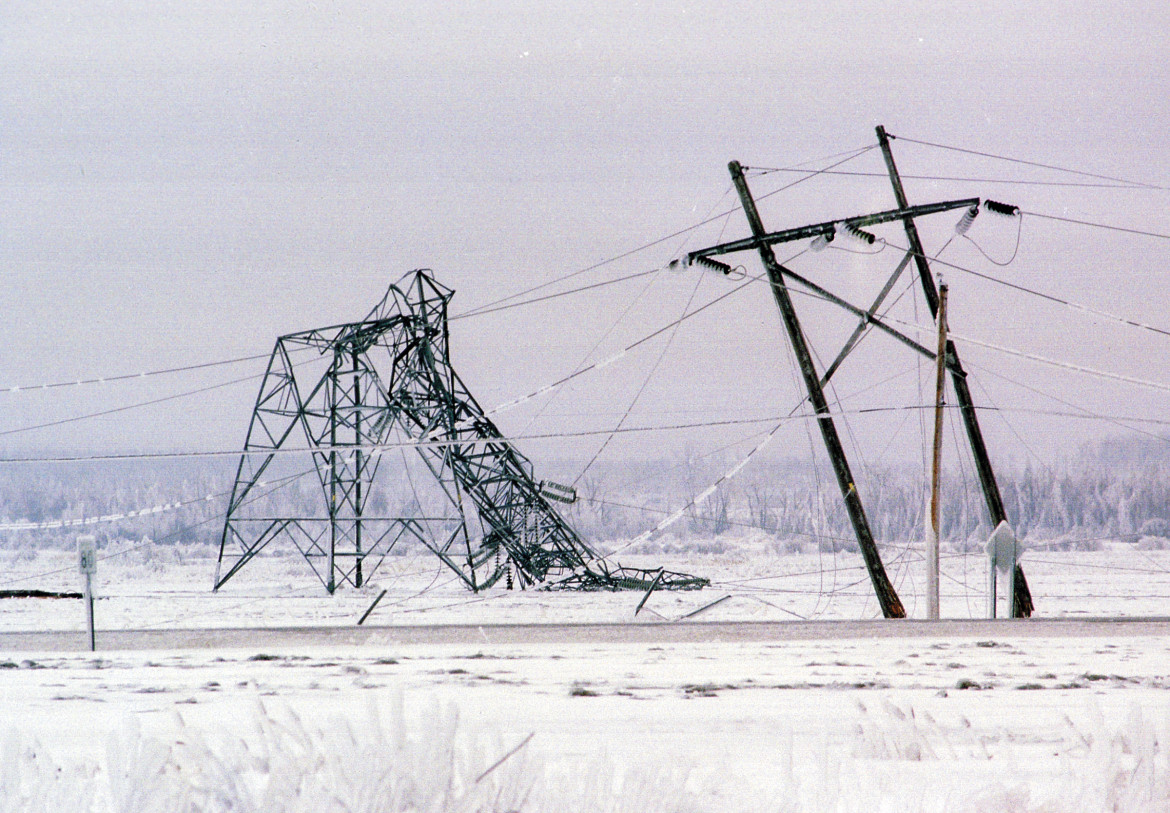
 When a conductor is covered with ice and/or is exposed to wind, the effective conductor weight per unit length increases. During occasions o...
No comments:
Post a Comment