The trend toward larger unit substation transformers and larger connected kVA loads on such substations has given way to power circuit breakers in tested combination with current-limiting fuses.
This is routinely done in order to increase the short-circuit interrupting rating of the switchgear. This combination can be used for all frame sizes.
The fuses cause the same problems with single phasing as fuses in the switchboards; however, there are numerous features that compensate for this problem.
First, most fuse assemblies are attached directly to the breakers themselves so fuses cannot be removed or installed unless the breaker is out of service.
Most manufacturers solve the single-phasing problem by either an electrical or a mechanical means of blown fuse detection, which in turn causes the breaker to trip immediately after the fuse has cleared.
On the largest frame sizes, where the fuses must be mounted apart from the breaker cubicle, the fuse assembly is on a truck or roll-out which is mechanically interlocked with the breaker it serves.
It should be noted that the overcurrent protection for overloads is still handled by the breaker’s overcurrent trip devices, and that the fuse is not expected to clear except for the most severe short circuits.
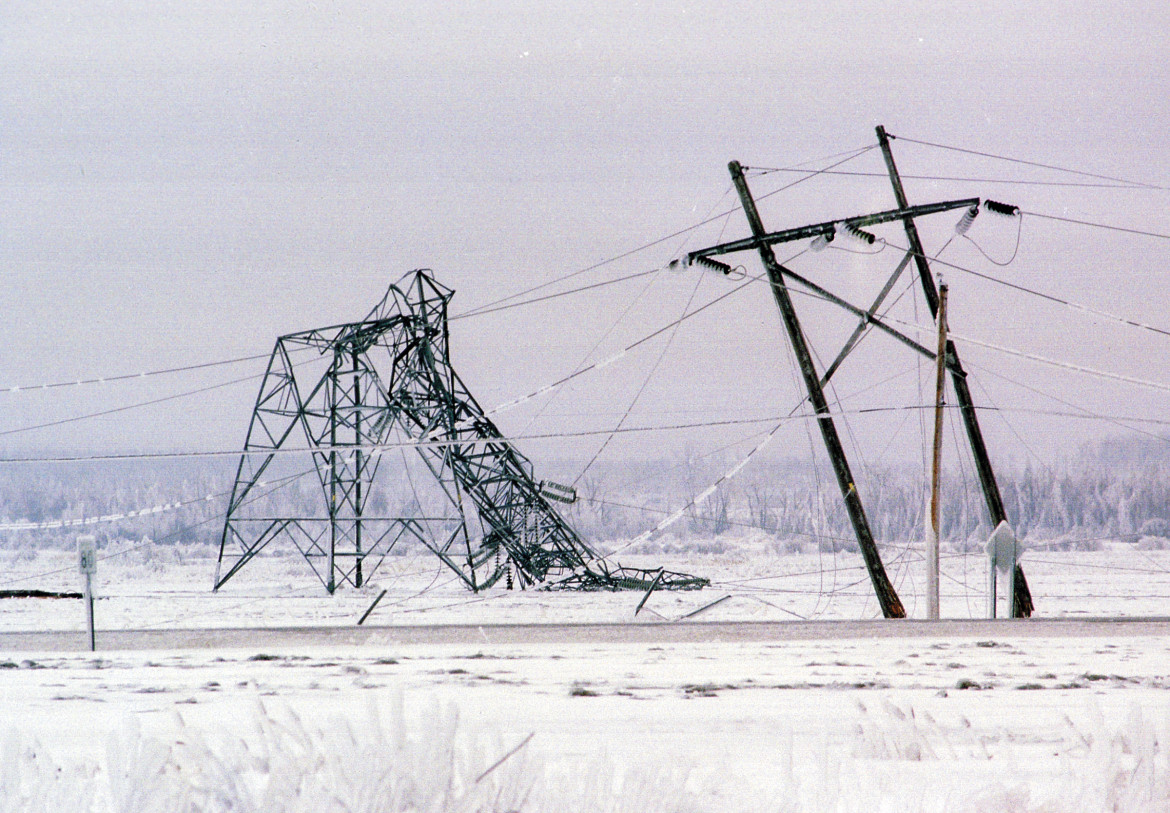
Top 5 Worst Transmission Line Disasters in History
Top 5 Worst Transmission Line Disasters in History Causes, technical failures, cascading effects, and engineering lessons learned This a...
-
Hello. In this blog, we will try to create a steel pole model, using the PLS Pole software of Power Lines System. This created pole will pr...
-
 When a conductor is covered with ice and/or is exposed to wind, the effective conductor weight per unit length increases. During occasions o...
 -
Transmission Line Sag & Tension: Complete Engineering Guide (IEC 60826 / ASCE 74 / PLS-CADD) A full technical guide on sag–tension engi...

No comments:
Post a Comment