Low voltages require large conductors, and high voltages require smaller conductors. This was illustrated with a water analogy. A small amount of pressure may be applied and the water will flow through a large pipe, or more pressure may be applied and the water will flow through a slimmer pipe.
This principle is basic in considering the choice of a voltage (or pressure) for a distribution system. There are two general ways of transmitting electric current-overhead and underground.
In both cases, the conductor may be copper or requires careful studies. Experts work out the system three or four different ways. For instance, they figure all the expenses involved in a 4000-volt (4 kV), in a 34,500-volt (34.5 kV), or a 13,000-volt (13 kV) system.
The approximate costs of necessary equipment, insulators, switches, and so on, and their maintenance and operation must be carefully evaluated. The future with its possibilities of increased demand must also be taken into consideration.
Safety is the most important factor. The National Electric Safety Code includes many limitations on a utility company’s choice of voltage.
Some municipal areas also set up their own standards. The utility company must weigh many factors before determining a voltage for distribution. It was mentioned that safety is the most important factor in determining voltages for distributing electricity.
Here’s why!
Consider what happens when a water pipe carrying water at high pressure suddenly bursts. The consequences may be fatal and damage considerable. The same is true of electrical conductors.
Safeguarding the life and limb of the public as well as workers is an important responsibility of the utility company.
Table 1-1 shows typical transmission and distribution system voltages in use at the present time.
Table 1-1. Typical Voltages in Use
————————————————————————————————
Main Sub Primary Distribution
Transmission Transmission Distribution Secondary
————————————————————————————————
69,000 V 13,800 V 2,400 V 120 V
138,000 V 23,000 V 4,160 V 120/240 V
220,000 V 34,500 V 13,800 V 240 V
345,000 V 69,000 V 23,000 V 277/480 V
500,000 V 138,000 V 34,500 V 480 V
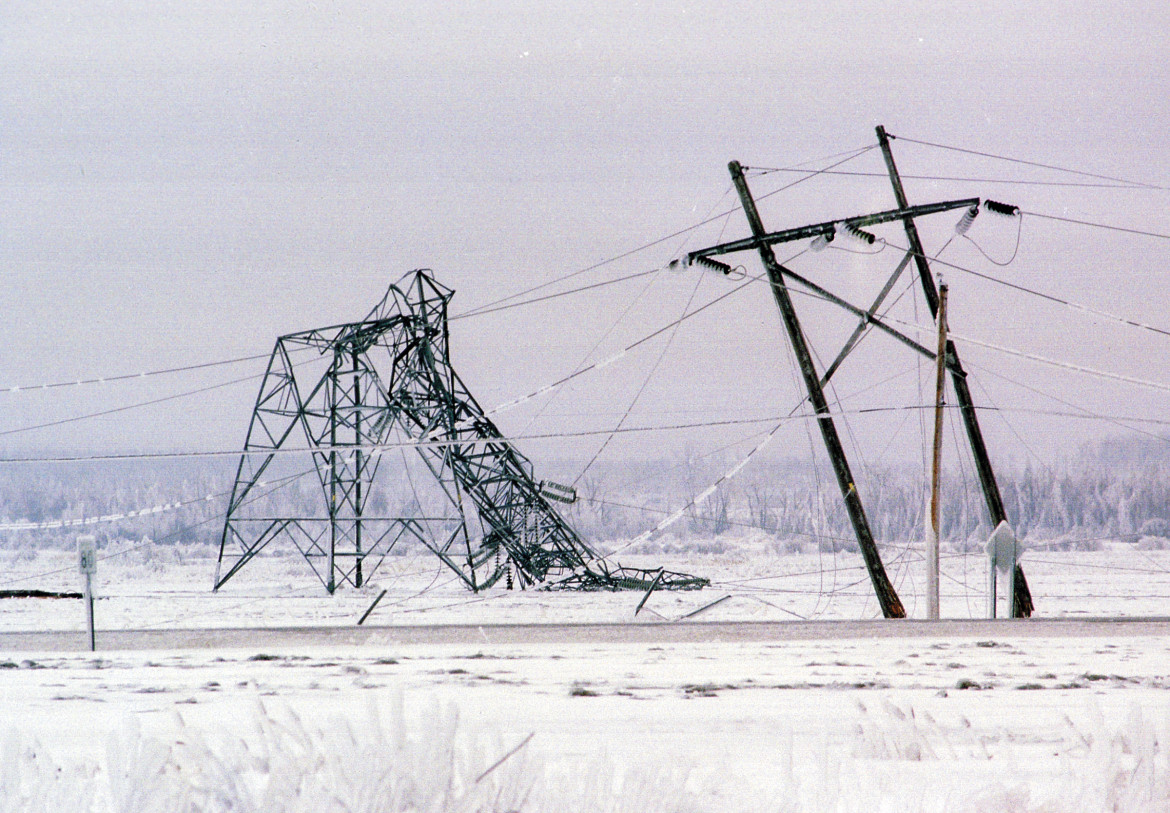
 When a conductor is covered with ice and/or is exposed to wind, the effective conductor weight per unit length increases. During occasions o...
No comments:
Post a Comment