The resistance for most resistors changes with temperature. The temperature coefficient of electrical resistance is the change in electrical resistance of a resistor per unit change in temperature.
The temperature coefficient of resistance is measured in OHM/°C. The temperature coefficient of resistors may be either positive or negative.
A positive temperature coefficient denotes a rise in resistance with a rise in temperature; a negative temperature coefficient of resistance denotes a decrease in resistance with a rise in temperature. Pure metals typically have a positive temperature coefficient of resistance, while some metal alloys such as constantin and manganin have a zero temperature coefficient of resistance.
Carbon and graphite mixed with binders usually exhibit negative temperature coefficients, although certain choices of binders and process variations may yield positive temperature coefficients.
The temperature coefficient of resistance is given by
R(T2) = R(T1) [ 1+ ALPHAn (t2-t1)]
where
ALPHAn = is the temperature coefficient of electrical resistance at reference temperature @ T1
R(T2) is the resistance at temperature T2(W), and R(T1) is the resistance at temperature@ T1(W). The reference temperature is usually taken to be 20°C.
Because the variation in resistance between any two temperatures is usually not linear as predicted by Eq. , common practice is to apply the equation between temperature increments and then to plot the resistance change versus temperature for a number of incremental temperatures.
Top 5 Worst Transmission Line Disasters in History
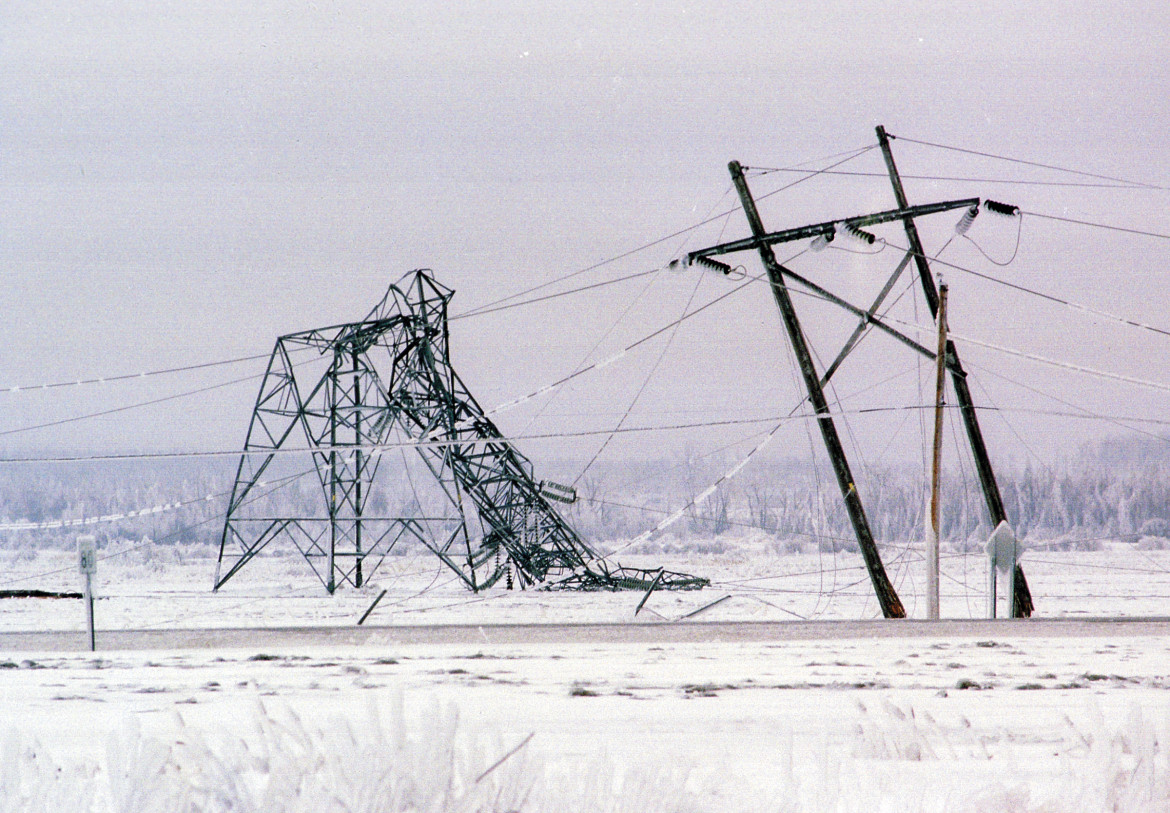
Top 5 Worst Transmission Line Disasters in History Causes, technical failures, cascading effects, and engineering lessons learned This a...
-
Back-to-back HVDC converter stations are integrated within ac transmission links and play a role similar to that of transmission tie statio...
-
Hello. In this blog, we will try to create a steel pole model, using the PLS Pole software of Power Lines System. This created pole will pr...
-
 When a conductor is covered with ice and/or is exposed to wind, the effective conductor weight per unit length increases. During occasions o...

No comments:
Post a Comment