Posts

Showing posts from November, 2012

GUIDE IN CREATING A SINGLE LINE DIAGRAM BASIC TUTORIALS

The following characteristics should help to ensure accuracy as well as ease of interpretation: a) Keep it simple. A fundamental single-line diagram should be made up of short, straight lines and components, similar to the manner in which a block diagram is drawn. It should be relatively easy to get the overall picture of the whole electrical system. All, or as much as possible, of the system should be kept to one sheet. If the system is very large, and more than one sheet is necessary, then the break should be made at voltage levels or at distribution centers. b) Maintain relative geographic relations. In many cases, it is possible to superimpose a form of the one-line diagram onto the facility plot plan. This is very helpful toward a quick understanding of the location of the system's major components for operating purposes. It may, however, be more difficult to comprehend the overall system operation from this drawing. Such a drawing could be used for relativel...

CIRCUIT BREAKER SELECTION CRITERIA BASIC INFORMATION

The selection of any circuit breaker, for any given duty, is ultimately based on an assessment of its ability to perform the following basic functions: a) To carry the required full-load current without overheating (i.e., it should have the correct current rating), b) To switch and isolate or disconnect the load from the source at the given system voltage (i.e., it should have the correct voltage rating), c) To interrupt any possible abnormally high operating current or short-circuit current likely to be encountered during operation (i.e., it should have the correct interrupting rating), and d) To be able to perform these functions over an acceptably long period of time under the operating and environmental conditions that will actually prevail in the application (i.e., it should have the correct mounting provisions, enclosure, and accessories for operation in the environment in which it is to be applied). The degree to which a circuit breaker can satisfy these re...

PROTECTIVE RELAY COORDINATION BASICS

Image
Coordination is a systematic application of current actuated devices in a power system, which in response to a fault or overload will remove only a minimum amount of equipment from service. The objective is to minimize the equipment damage. A coordination study provides data useful for selection of instrument transformers, protective relay characteristics and settings, fuse ratings, and other information pertinent to provision of optimum protection and selectivity in coordinating these devices. Planning and Data Collection. The following data and initial planning steps are required before a coordination study is started: • Single-line diagram of the electrical system with details of equipment ratings. • Load flow data and short-circuit data. The maximum and minimum available short-circuit currents, both for phase and ground faults at each relay location in the system. • Time-current curves, setting ranges, type of characteristics of the protective devices, instrument...

DIFFERENTIAL RELAY PURPOSE AND FUNCTIONS BASIC INFORMATION

Image
How Differential Relay Protect Your System? Differential relays provide high-speed (1 to 2 cycles), sensitive, and inherently selective protection. These will not provide protection for turn-to-turn winding faults in generators, motors, and transformers because of the small increment in the current produced by such faults, which remain below the pickup sensitivity of the relays. An overcurrent relay can be used to provide differential protection when it is so connected that external fault currents through the current transformers balance out and do not give rise to a current in the relay operating coil. A phase or ground fault within the protected zone results in current unbalance and operates the relay. This scheme is limited by current transformer saturation at high magnitudes of external fault currents. Partial differential protection of a motor uses core balance transformers, which circle phase and neutral leads so that under an external fault situation the magnetic f...

POWER FAILURE MODES AND EFFECTS ANALYSIS (FMEA)

The FMEA for power distribution systems amounts to the determination and listing of those component outage events or combinations of component outages that result in an interruption of service at the load point being studied according to the interruption definition that has been adopted. This analysis must be made in consideration of the different types and modes of outages that components may exhibit and the reaction of the system’s protection scheme to these events. The primary result of the FMEA as far as quantitative reliability evaluation is concerned is the list of minimal cut-sets it produces. A minimal cut-set is defined to be a set of components that, if removed from the system, results in loss of continuity to the load point being investigated and that does not contain as a subset any set of components that is itself a cut-set of the system. In the present context, the components in a cut-set are just those componen...

CONTROL SYSTEM WIRING OF GAS INSULATED SUBSTATION

Transients generate substantial radiated energy, electric and magnetic fields, and transient currents within the substation grounds. Any of these phenomena can couple into poorly executed control wiring systems, but none of them can couple to an appreciable degree into well-executed control wiring systems. The obvious and correct approach to GIS control wiring is to enclose the entire control system in a Faraday cage, i.e., within a metal enclosure. This is much simpler than it sounds, as will be described below. A Faraday cage is a metal enclosure that fully surrounds the system, offering protection from EMI. In the case of control wiring, the system is typically a sensor (e.g., a gas density relay), the attached control wiring, the local control wiring cabinet in which the control wiring is terminated, the control wiring from the local cabinet to the substation control room, and the relay or computer racks in the control room. Each of the...

IEC - 60870 - 5 STANDARDS GENERAL APPLICATION PRACTICE

The IEC 60870-5 standards address the basic goals of telecontrol systems and their particular environmental conditions. IEC 60870-5 does not define one particular protocol profile; but rather like EPRI/UCA, it specifies a number of frame formats and services that may be provided at different layers. IEC 60870-5 is based on a three-layer Enhanced Performance Architecture (EPA) reference model for efficient implementation within RTUs, meters, relays, and other IEDs. Additionally, IEC 60870-5 defines basic application functionality for a user layer, which is situated between the OSI Application Layer and the application program. This user layer adds interoperability for such functions as clock synchronization and file transfers. The following descriptions provide the basic scope of each of the five documents in the base IEC 60870-5 telecontrol transmission protocol specification set. Standard profiles are necessary for uniform application of t...

POWER LINES WOOD POLES HOLE DIGGING AND POLE SETTING BASIC INFORMATION

Foundations The foundations for poles are just as important as the structure above ground. The pole back fill should be capable of withstanding structure reactions. Pole-setting equipment should be moved clear of the structure site prior to back filling. Differences in ground elevation at each pole location, and pole length tolerances permittedby ANSI O5.1-1987 [9] should be considered to ensure a level structure. The tops of poles should not be cut. If cutting is necessary, the pole top should be covered with a mastic-type cap. Under no circumstances should the butt of any pole be cut. The design engineer should specify a minimum hole depth. The actual hole depths required to obtain a level structure are the responsibility of the installing contractor. Digging operations should not be too far in advance of the setting operation. Holes open too long may deteriorate due to ground water seepage and/or heavy rains and increase the chance for accidents. Unattended pole hole...

TYPICAL GENERATOR PROTECTIVE DEVICES AND RELAYS BASIC INFORMATION

The protective functions noted in the various generating station configurations provide both primary and backup protection for the generating station as well as additional protection schemes which could also be applied. These protective functions are listed below with a reference to the subclause in the text that discusses their application in detail. Also included is a discussion of the various tripping modes used in generating stations. Protective Devices Device Function                      Subclause 21 Distance relay. Backup for system and generator zone phase faults. Device 21 requires a time delay for coordination. 24 Volts/hertz overexcitation protection for the generator and its associated step-up  and auxiliary transformers. 27 Undervoltage relay.  32 Reverse-power relay. Motoring protection.  40 Loss of field protection 46 Stator unba...

GENERATOR GROUNDING METHODS BASIC INFORMATION

It is common practice to ground all types of generators through some form of external impedance. The purpose of this grounding is to limit the mechanical stresses and fault damage in the machine, to limit transient voltages during faults, and to provide a means for detecting ground faults within the machine. A complete discussion of all grounding and ground protection methods may be found in IEEE Std C62.92.2-1989 and IEEE Std C37.101-1993. The methods most commonly used for generator grounding will be discussed in this guide. They are listed in the following four broad categories: a) High-impedance grounding b) Low-resistance grounding c) Reactance grounding d) Grounding-transformer grounding Solid grounding of a generator neutral is not generally used since this practice can result in high mechanical stresses and excessive fault damage in the machine. According to ANSI C50.13-1989, the maximum stresses that a generator is normally designed to withstand is that...

DELAYED AUTORECLOSING POWER DISTRIBUTION PRACTICE BASIC INFORMATION

Delayed autoreclosing may need to be considered when the upstream protection is provided by electromechanical relays or fuses and the circuit protection is provided by microprocessor-based relays, unless the microprocessor-based relays can be set to mimick the reset characteristic of the electromechanical relays. Without this time-delay reset feature on the microprocessor-based relay, it is possible to have the upstream device operate incorrectly, resulting in an overtrip. As an example of this, the low-set instantaneous trip on a distribution feeder is eliminated to improve power quality by eliminating momentary service interruptions. If an instantaneous autoreclose is used after a time delayed trip, an additional time margin needs to be used between the operating times of protective devices in order to maintain coordination of the feeder overcurrent relays and an upstream electromechanical relay or fuse. By delaying an upstream protective device to coordinate with the b...

NUMBER OF AUTORECLOSE ATTEMPTS FOR POWER DISTRIBUTION SYSTEM BASIC INFORMATION

There is never a reason to autoreclose an electrical circuit breaker following a trip unless there is reason to believe that the fault is no longer present on the circuit. Historically, when distribution circuit breakers would trip and result in a circuit outage, the circuit was patrolled before the circuit breaker was closed. This practice delayed restoration. Records were kept of these events. It was discovered that for 85–90% of the occurrences, no permanent faults were found. It generally became accepted to autoreclose these distribution circuit breakers. With the advent of additional protective devices available to the distribution engineer such as fuses, sectionalizers, and reclosers with which coordination was necessary, multiple autoreclose attempts were chosen. In many areas, three autoreclose attempts were chosen. This results in four trips to lockout. This practice continued for several years. As time went on, load increased and it became necessary that dis...

MEASUREMENT OF POWER QUALITY BASIC INFORMATION

There has been a tendency to attribute disturbances and failures to power surges, a term often used by the media but rather ill-defined. The ambiguity results in part from an unfortunate dual definition of the word surge. a) To some people, a surge is indeed the phenomenon being discussed here, that is, a transient voltage or current lasting from microseconds to at most a few milliseconds, involving voltages much higher than the normal (two to ten times). b) To other people, a surge is a momentary overvoltage, at the frequency of the power system, and lasting for a few cycles, with voltage levels slightly exceeding the five to ten percent excursions that are considered normal occurrences. The term swell has been adopted by this recommended practice to describe this second type of overvoltage; perhaps one day it will supplant the usage of surge for that meaning. It would be a mistake to attempt protection against these long-duration power frequency swells with a surge prot...

HVDC CONVERTER STATION LOSSES BASIC INFORMATION

As a general principle, it would be desirable to determine the efficiency of an HVDC converter station by the direct measurement of its energy losses. However, there are practical difficulties that prevent such a measurement, including the following: 1) Attempts to determine the station losses by subtracting the measured output power from the measured input power must recognize that such measurements have inherent inaccuracy, especially if performed at high voltage dc. Moreover, the losses of an HVDC converter station at full load are generally less than 1% of the transmitted power. Therefore, the difference between the measured input and output power is a small difference between two large quantities and, as such, is not likely to be a sufficiently accurate indication of the actual station losses. 2) In some special circumstances, it may be possible to arrange a temporary test connection in which the two converters are operated from the s...

HARMONIC FILTER AT A DISTRIBUTION BUS BASIC INFORMATION

For certain applications, the most cost-effective solution for poor power factor, excessive voltage distortion, and IEEE Std 519-1992 violations is to install one or more larger harmonic filters at a distribution bus or busses. Generally, an automatic harmonic filter bank will be installed on the secondary of each main transformer in the plant requiring power factor and harmonic compensation. Placement of multiple banks on a common low-voltage system can create problems by changing network harmonic flows and thereby increase the potential for overloading some of the filter banks. Therefore, this practice is not generally recommended. Where power factor correction is most important, systems tuned to the 2nd harmonic or below can generally be safely applied in this manner. Parallel resonance at the 3rd harmonic must be carefully evaluated. Caution must be exercised when a harmonic filter is electrically close to the main and is tuned to the 7 th harmonic or higher. In this...

HARMONIC FILTERS FUSES AND CIRCUIT BREAKERS BASIC INFORMATION

Fuses Each phase of each filter step should be protected by fuses. Fuses should be current limiting, rated for the available fault current at the fuse location. Fuses should be UL-listed Class J or T, CSA-rated HRC 1, or equivalent. The current rating of the fuses should be a minimum of two times the capacitor current calculated from its rated reactive power and its rated voltage. The voltage rating of the fuses should be greater than or equal to the system voltage. Fuses internal to the capacitor should not be accepted as the primary means of filter protection. In a harmonic filter assembly containing more than one capacitor per reactor, a single set of fuses, one per phase, should be provided. The current rating of the fuses should be at least equal the total filter current including all harmonics, with margin (typically 35%) to cover contingency conditions. Fuses should be located after the harmonic filter main lugs or main disconnect and before the contactor/ reacto...

HARMONIC FILTER REACTORS CONSTRUCTION BASIC INFORMATION

Harmonic filter reactors for low-voltage applications are typically dry-type iron-core. No existing standard addresses harmonic filter reactors, but most manufacturers use IEEE Std C57.12.01-1998 as a guideline. Cores are constructed from silicon sheet steel (such as M-6). The number 6 corresponds to the approximate power loss per pound of steel at a magnetic flux density of 1.5 T, i.e., M-6 has a loss of “0.6 W/lb” or 1.5 W/kg. M-6 is the typical grade of silicon steel used, but both lower and higher grades of steel are available. A manufacturer may choose to use a lower grade steel and either let the harmonic filter reactor operate with a higher temperature rise or use more steel. Conversely, a higher grade of steel can be used and either the harmonic filter reactor may operate with a lower temperature rise or the harmonic filter reactor could be made smaller. The construction may be from individual pieces of cut strip stock or E-I laminations. To create a harmonic filt...

HARMONIC FILTER CAPACITORS BASIC INFORMATION

Capacitors are generally rated for the system line-to-line voltage (e.g., 240 V, 480 V). However, in a harmonic filter application, they should be selected to withstand overvoltages and overcurrents caused by fundamental and harmonic current flow through the series connected tuning. IEEE Std 18-2002 requires shunt capacitors, under contingency conditions, to withstand continuous voltages up to 110% of rated rms voltage and continuous currents up to 135% of nominal rms current based on rated kvar and rated voltage. When applied in harmonic filters, the normal voltage and current may exceed these levels even before system contingencies are considered. Consequently, capacitors selected for use in normal shunt capacitor applications may not be suitable for use in harmonic filters. Harmonic filter capacitors should be selected based on their expected duty under normal and contingency conditions. The capacitor manufacturer should be consulted when specifying capacitors for harm...

HARMONIC FILTER DESIGN CONSIDERATIONS BASIC INFORMATION

Harmonic distortion on the power system is caused by nonlinear devices that produce distorted or nonsinusoidal waveforms. Examples include electronically controlled devices (such as rectifiers and power controllers), arcing loads (such as arc furnaces and arc welders), and magnetic devices to a lesser degree (such as rotating ac machinery and transformers). Excessive harmonic voltage and/or current can cause damage to equipment and the electrical system. IEEE Std 519-199210 gives application guidelines. One of the common ways of controlling harmonic distortion is to place a passive shunt harmonic filter close to the harmonic producing load(s). The harmonic-producing device can generally be viewed as a source of harmonic current. The objective of the harmonic filter is to shunt some of the harmonic current from the load into the filter  thereby reducing the amount of harmonic current that flows into the power system. The simplest type of shunt harmonic filter is a seri...

WHY DEMAND IS METERED? KW-HR DEMAND INFORMATION

Two classes of expenses determine the total cost of generating, transmitting, and distributing electric energy. They are: 1. Capital investment items: depreciation, interest on notes, property taxes, and other annual expenses arising from the electric utility’s capital investment in generating, transmitting, and distributing equipment, and in land and buildings, 2. Operation and maintenance items: fuel, payroll, renewal parts, workmen's compensation, rent for office space, and numerous other items contributing to the cost of operating, maintaining, and administering a power system. In billing the individual consumer of electricity, the utility considers to what extent the total cost of supplying that consumer is determined by capital investment and to what extent it is determined by operation and maintenance expenses. Furnishing power to some consumers calls for a large capital investment by the utility. With other consumers, th...

ELECTRICITY DEMAND EXPLANATION BASIC INFORMATION

EXPLANATION OF TERM “DEMAND” Kilowatt demand is generally defined as the kilowatt load averaged over a specified interval of time. In any one of the time intervals shown, the area under the dotted line labeled demand is exactly equal to the area under the power curve. Since energy is the product of power and time, either of these two areas represents the energy consumed in the demand interval. The equivalence of the two areas shows that the demand for the interval is that value of power which, if held constant over the interval, will account for the same consumption of energy as the real power. It is then the average of the real power over the demand interval. The demand interval during which demand is measured may be any selected period but is usually 5, 10, 15, 30, 60, and in similar increments up to 720 minutes. The demand period is determined by the billing tariff for a given rate schedule. Demand has been explained in ...

SELECTION OF STANDARD INSULATION LEVEL BASIC INFORMATION

The selection of the rated component insulation level consists of the selection of standard insulation withstand voltages that provide sufficient margin above the system overvoltage stress. The tests required to verify the component rated maximum voltages are defined by the relevant apparatus standards. The component low-frequency, short-duration withstand voltage is selected from the list of standard withstand voltages provided in 4.5. The standard BIL and BSL values are selected from the table in 4.6. Low-frequency, short-duration withstand voltages The following list of low-frequency, short-duration withstand voltages (rms values, expressed in kilovolts), are extracted from IEEE Std C57.12.00-1993 and IEEE Std C57.21-1990. The withstand value should be taken from this table. 10, 15, 19, 26, 34, 40, 50, 70, 95, 140, 185, 230, 275, 325, 360, 395, 460, 520, 575, 630, 690, 750, 800, 860, 920, 980, 1040, 1090 The relevant apparatus stan...

INSULATION COORDINATION PRINCIPLES BASIC INFORMATION

The procedure for insulation coordination consists of a) Determination of voltage stresses b) Selection of the insulation strength to achieve the desired probability of failure The voltage stresses can be reduced by the application of surge-protective devices, switching device insertion resistors and controlled closing, shield wires, improved grounding, etc. Determination of the system voltage stress System transient analyses that include the selection and location of the overvoltage limiting devices are performed to determine the amplitude, waveshape, and duration of system voltage stresses. The overvoltage stress may be characterized either by — The maximum crest values, or — A statistical distribution of crest values, or — A statistical overvoltage value [this is an overvoltage generated by a specific event on the system (lightning discharge, line energization, reclosing, etc.), with a crest value that has a 2% probability of being exceeded]. The ...

SWITCHING OVERVOLTAGES BASIC INFORMATION

Switching overvoltages may have times-to-crest from 20–5000 ms and time to half value of less than 20 000 ms. They are generally a result of the following: — Line energization, — Faults and fault clearing, — Load rejections, or — Switching of capacitive or inductive currents. In general, the time to crest (wavefront) is of more importance since the critical flashover voltage (CFO) is function of the wavefront. The minimum CFO occurs at the critical wavefront (CWF), which in ms is equal to about 50 times the strike distance in meters (m). For a wavefront smaller or greater than the CWF, the CFO increases. The CFO increases by about 10% when the wavefront is in the order of 1000 ms to 2000 ms, which usually occurs when employing low-side transformer switching. The distribution of switching overvoltages is obtained using a transient program where the breakers are randomly closed or reclosed 200 to 400 times. These overvol...

OVERVOLTAGE DUE TO LOAD REJECTION

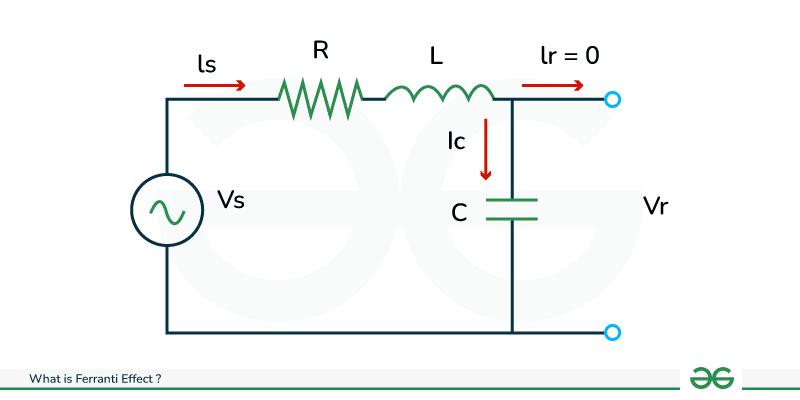
Temporary overvoltages caused by load rejection are a function of the load rejected, the system topology after disconnection, and the characteristics of the sources, i.e., short-circuit power at the station, speed and voltage regulation of the generators, etc. These overvoltages are especially important in the case of load rejection at the remote end of a long line due to the Ferranti effect. Primarily, it affects the apparatus at the station connected on the line side of the remote circuit breaker. A distinction should be made between various system configurations when large loads are rejected. A system with relatively short lines and high short circuit power at terminal stations will have low overvoltages. A system with long lines and low short circuit power at generating sites will have high overvoltages. In a symmetrical three-phase power system the same relative overvoltages occur phase-ground and phasephase. The longitudinal temporary o...
free counters