The conductivity of aluminum is not as great as that of copper for a given size. For example, checking
Table 310.15(B)(16), an 8 AWG Type THHN copper conductor has an allowable ampacity of 55 amperes.
An 8 AWG Type THHN aluminum or copper-clad aluminum conductor has an ampacity of 45 amperes. In 240.4(D), the maximum overcurrent protection for a 12 AWG copper conductor is 20 amperes but only 15 amperes for a 12 AWG aluminum or copper-clad aluminum conductor.
Aluminum conductors have a higher resistance compared to a copper conductor of the same size. When considering voltage drop, a conductor’s resistance is a key ingredient.
Common Connection Problems
Some common problems associated with aluminum conductors when not properly connected may be summarized as follows:
• A corrosive action is set up when dissimilar wires come in contact with one another when moisture is present.
• The surface of aluminum oxidizes as soon as it is exposed to air. If this oxidized surface is not
penetrated, a poor connection results. When installing aluminum conductors, particularly in large sizes, an inhibitor (antioxidant) is brushed onto the aluminum conductor, and then the conductor is scraped with a stiff brush where the connection is to be made.
The process of scraping the conductor breaks through the oxidation, and the inhibitor keeps the air from coming into contact with the conductor. Thus, further oxidation is prevented. Aluminum connectors of the compression type usually have an inhibitor paste already factory installed inside of the connector.
• Aluminum wire expands and contracts to a greater degree than does copper wire for an equal load. This is referred to as creep or cold flow.
This factor is another possible cause of a poor connection. Crimp connectors for aluminum conductors are usually longer than those for Older texts used the term MCM, which also means “thousand circular mils.” The first letter “M” refers to the Roman numeral that represents 1000.
Thus, 500 MCM means the same as 500 kcmil. Roman numerals are no longer used in the electrical industry for expressing conductor sizes.
PERMISSIBLE LOADS ON BRANCH CIRCUITS BASED ON NEC BASICS AND TUTORIALS
The NEC is very specific about the loads permitted on branch circuits. Here is a recap of these requirements.
• The load shall not exceed the branch-circuit rating.
• The branch circuit must be rated 15, 20, 30, 40, or 50 amperes when serving two or more outlets, NEC 210.3.
• An individual branch circuit may supply any size load.
• 15- and 20-ampere branch circuits

a. may supply lighting, other equipment, or both types of loads.
b. for cord-and-plug-connected equipment, shall not exceed 80% of the branch-circuit rating.
c. for equipment fastened in place, shall not exceed 50% of the branch-circuit rating if the branch circuit also supplies lighting, other cord-and-plug-connected equipment, or both types of loads.
• The 20-ampere small-appliance circuits in homes shall not supply other loads, NEC 210.11(C)(1).
• 30-ampere branch circuits may supply equipment such as dryers, cooktops, water heaters, and so forth. Cord-and-plug-connected equipment shall not exceed 80% of the branch-circuit rating.
• 40- and 50-ampere branch circuits may supply cooking equipment that is fastened in place, such as an electric range, as well as HVAC equipment.
• Over 50-ampere-rated branch circuits are for electric furnaces, large heat pumps, air-conditioning equipment, large double ovens, and similar large loads.
• The load shall not exceed the branch-circuit rating.
• The branch circuit must be rated 15, 20, 30, 40, or 50 amperes when serving two or more outlets, NEC 210.3.
• An individual branch circuit may supply any size load.
• 15- and 20-ampere branch circuits

a. may supply lighting, other equipment, or both types of loads.
b. for cord-and-plug-connected equipment, shall not exceed 80% of the branch-circuit rating.
c. for equipment fastened in place, shall not exceed 50% of the branch-circuit rating if the branch circuit also supplies lighting, other cord-and-plug-connected equipment, or both types of loads.
• The 20-ampere small-appliance circuits in homes shall not supply other loads, NEC 210.11(C)(1).
• 30-ampere branch circuits may supply equipment such as dryers, cooktops, water heaters, and so forth. Cord-and-plug-connected equipment shall not exceed 80% of the branch-circuit rating.
• 40- and 50-ampere branch circuits may supply cooking equipment that is fastened in place, such as an electric range, as well as HVAC equipment.
• Over 50-ampere-rated branch circuits are for electric furnaces, large heat pumps, air-conditioning equipment, large double ovens, and similar large loads.
DIFFERENCE BETWEEN LUMEN AND ILLUMINANCE BASICS AND TUTORIALS
Light output is measured in lumens. According to The American Heritage Dictionary of Science, a lumen is a unit of luminous flux equal to the amount of light from a source of one candela radiating equally in all directions. A candela is a unit of luminous intensity equal to 1/60 of the radiating power of one square centimeter of a black body at 1,772°C.
You can draw two conclusions from this information:
➤ The higher the lumen measurement, the more light you’ll have to work with from a fixture.
➤ Authors can easily get carried away when they have too many reference books at their disposal.
Illuminance, which is measured in foot-candles, is the amount of light hitting a point on a surface. A foot-candle is (easily enough) defined as the amount of light produced by one candle on a surface one foot away. We can’t see illuminance, but we do see luminance or brightness, although this is somewhat subjective.
(What appears to be dim light to me might be plenty bright to you.) Architects and lighting consultants take all these measurements into consideration when they calculate the lighting needs of buildings.
Comfortable lighting selections and light levels are determined by the tasks that require the lighting,
the distance between the light and the task, and the degree of glare.
One definition of glare is excessive contrast between the intensity of light on a particular
object or surface and the surrounding area or background; indirect glare is the glare produced from a reflective surface.
Too much contrast between them causes glare. (Computer screens are a common example.) You can reduce this glare by …
➤ Installing fixtures that keep the light level appropriate for the task at hand.
➤ Using a louver or a lens to block or redirect the light.
➤ Carefully considering the placement and spacing of light fixtures.
Another measurement of lighting quality is how well it enables you to see colors accurately. The better the color rendering, the more pleasing the living space.
Color-rendering capability is based, naturally enough, on the color-rendering index (CRI), which measures from 1 to 100. (Natural daylight measures at 100.)
The higher the rating on the CRI, the more lifelike and accurate the object being viewed.
You can draw two conclusions from this information:
➤ The higher the lumen measurement, the more light you’ll have to work with from a fixture.
➤ Authors can easily get carried away when they have too many reference books at their disposal.
Illuminance, which is measured in foot-candles, is the amount of light hitting a point on a surface. A foot-candle is (easily enough) defined as the amount of light produced by one candle on a surface one foot away. We can’t see illuminance, but we do see luminance or brightness, although this is somewhat subjective.
(What appears to be dim light to me might be plenty bright to you.) Architects and lighting consultants take all these measurements into consideration when they calculate the lighting needs of buildings.
Comfortable lighting selections and light levels are determined by the tasks that require the lighting,
the distance between the light and the task, and the degree of glare.
One definition of glare is excessive contrast between the intensity of light on a particular
object or surface and the surrounding area or background; indirect glare is the glare produced from a reflective surface.
Too much contrast between them causes glare. (Computer screens are a common example.) You can reduce this glare by …
➤ Installing fixtures that keep the light level appropriate for the task at hand.
➤ Using a louver or a lens to block or redirect the light.
➤ Carefully considering the placement and spacing of light fixtures.
Another measurement of lighting quality is how well it enables you to see colors accurately. The better the color rendering, the more pleasing the living space.
Color-rendering capability is based, naturally enough, on the color-rendering index (CRI), which measures from 1 to 100. (Natural daylight measures at 100.)
The higher the rating on the CRI, the more lifelike and accurate the object being viewed.
INSTALLING A NEW RECEPTACLE IN YOUR HOME GUIDE AND TUTORIALS
Receptacles are a little more straightforward than three- and four-way switches. With a single duplex receptacle, you’re dealing with one or two cables coming into the box.


An end-of-the-run receptacle will have one cable, and a middle-of-the-run will have two. The receptacle has two sets of terminal screws, silver for the neutral wires and brass for the hot.

After shutting off the power and testing the terminal screws, remove the outlet by loosening the screws attaching it to the box.

Remove the hot and neutral wires, noting their position on the outlet (hot upper, hot lower, neutral upper, neutral lower) by marking the position on an attached piece of masking tape.
Reconnect to the new receptacle in the same locations, and gently push the wires back into the box while reattaching the new receptacle.

Turn on the power at the service panel or fuse box and test.

An end-of-the-run receptacle will have one cable, and a middle-of-the-run will have two. The receptacle has two sets of terminal screws, silver for the neutral wires and brass for the hot.

After shutting off the power and testing the terminal screws, remove the outlet by loosening the screws attaching it to the box.

Remove the hot and neutral wires, noting their position on the outlet (hot upper, hot lower, neutral upper, neutral lower) by marking the position on an attached piece of masking tape.
Reconnect to the new receptacle in the same locations, and gently push the wires back into the box while reattaching the new receptacle.

Turn on the power at the service panel or fuse box and test.
TYPES OF HEATING LOADS BASICS AND TUTORIALS
The heating category may be conveniently divided into residential (small) and industrial (large) applications.
Residential Heating
Residential heating includes ranges for cooking; hot water heaters; toasters, irons, clothes dryers, and other such appliances; and house heating. These are all resistance loads, varying from a relatively few watts to several kilowatts, most of which operate at 120 V, while the larger ones are served at 240 V; all are single-phase.
The power factor of such devices is essentially unity. The resistance of the elements involved is practically constant; hence current will vary directly as the applied voltage. The effect of reduced voltage and accompanying reduced current is merely to cause a corresponding reduction in the heat produced or a
slowing down of the operation of the appliance or device.
While voltage variation, therefore, is not critical, it is usually kept to small values since very often the smaller devices are connected to the same circuits as are lighting loads, although hot water heaters, ranges, and other larger loads are usually supplied from separate circuits. (Microwave ovens employ high-frequency induction heating and are described below.)
Industrial Heating
Industrial heating may include large space heaters, ovens (baking, heat-treating, enameling, etc.), furnaces (steel, brass, etc.), welders, and high-frequency heating devices. The first two are resistance-type loads and operate much as the smaller residential devices, with operation at 120 or 240 V, single-phase, and at unity power factor. Ovens, however, may be operated almost continuously for reasons of economy, and some may be three-phase units.
Electric Furnaces
Furnaces may draw heavy currents more or less intermittently during part of the heat process and a fairly steady lesser current for the rest; on the whole, the power factor will be fairly high since continuous operation is indicated for economy reasons. The power factor of a furnace load varies with the type of furnace from as low as 60 percent to as high as 95 percent, with the greater number about 75 or 80 percent.
Sizes of furnaces vary widely; smaller units with a rating of several hundred kilowatts are single-phase, while the larger, of several thousand kilowatts, are usually three-phase. Voltage regulation, while not critical, should be fairly close because of its possible effect on the material in the furnace.
Welders
Welders draw very large currents for very short intermittent periods of time. They operate at a comparatively low voltage of 30 to 50 V, served from a separate transformer having a high current capacity.
Larger welders may employ a motor-generator set between the welder and the power system to prevent annoying voltage dips. The power fac tor of welder loads is relatively low, varying with the load. The timing of the weld is of great importance and may be regulated by electronic timing devices.
Residential Heating
Residential heating includes ranges for cooking; hot water heaters; toasters, irons, clothes dryers, and other such appliances; and house heating. These are all resistance loads, varying from a relatively few watts to several kilowatts, most of which operate at 120 V, while the larger ones are served at 240 V; all are single-phase.
The power factor of such devices is essentially unity. The resistance of the elements involved is practically constant; hence current will vary directly as the applied voltage. The effect of reduced voltage and accompanying reduced current is merely to cause a corresponding reduction in the heat produced or a
slowing down of the operation of the appliance or device.
While voltage variation, therefore, is not critical, it is usually kept to small values since very often the smaller devices are connected to the same circuits as are lighting loads, although hot water heaters, ranges, and other larger loads are usually supplied from separate circuits. (Microwave ovens employ high-frequency induction heating and are described below.)
Industrial Heating
Industrial heating may include large space heaters, ovens (baking, heat-treating, enameling, etc.), furnaces (steel, brass, etc.), welders, and high-frequency heating devices. The first two are resistance-type loads and operate much as the smaller residential devices, with operation at 120 or 240 V, single-phase, and at unity power factor. Ovens, however, may be operated almost continuously for reasons of economy, and some may be three-phase units.
Electric Furnaces
Furnaces may draw heavy currents more or less intermittently during part of the heat process and a fairly steady lesser current for the rest; on the whole, the power factor will be fairly high since continuous operation is indicated for economy reasons. The power factor of a furnace load varies with the type of furnace from as low as 60 percent to as high as 95 percent, with the greater number about 75 or 80 percent.
Sizes of furnaces vary widely; smaller units with a rating of several hundred kilowatts are single-phase, while the larger, of several thousand kilowatts, are usually three-phase. Voltage regulation, while not critical, should be fairly close because of its possible effect on the material in the furnace.
Welders
Welders draw very large currents for very short intermittent periods of time. They operate at a comparatively low voltage of 30 to 50 V, served from a separate transformer having a high current capacity.
Larger welders may employ a motor-generator set between the welder and the power system to prevent annoying voltage dips. The power fac tor of welder loads is relatively low, varying with the load. The timing of the weld is of great importance and may be regulated by electronic timing devices.
WIRE SIZING AND LOADING BASICS AND TUTORIALS
The NEC establishes some very important fundamentals that weave their way through the decision making
process for an electrical installation. They are presented here in brief form, and are covered in detail as required throughout this text.
The NEC defines a branch circuit as The circuit conductors between the final overcurrent device protecting the circuit and the outlet(s).* See Figure 3-1. In the residence discussed in this text, the wiring to wall outlets, the dryer, the range, and so on, are all
examples of a branch circuit.

The NEC defines a feeder as All circuit conductors between the service equipment, the source of a
separately derived system, or other power supply source and the final branch-circuit overcurrent device.* In the residence discussed in this text, the wiring between Main Panel A and Subpanel B is a feeder.
The ampacity (current-carrying capacity) of a conductor must not be less than the rating of the overcurrent device protecting that conductor, NEC 210.19 and NEC 210.20. A common exception to this is a motor branch circuit, where it is quite common to have overcurrent devices (fuses or breakers) sized larger than the ampacity of the conductor.
Motors and motor circuits are covered specifically in NEC Article 430. The ampere rating of the branch circuit overcurrent protective device (fuse or circuit breaker) determines the rating of the branch circuit.
For example, if a 20-ampere conductor is protected by a 15-ampere fuse, the circuit is considered to be a
15-ampere branch circuit, NEC 210.3. Standard branch circuits that serve more than one receptacle outlet or more than one lighting outlet are rated 15, 20, 30, 40, and 50 amperes.
A branch circuit that supplies an individual load can be of any ampere rating, NEC 210.3. If the ampacity of the conductor does not match up with a standard rating of a fuse or breaker, the next higher standard size overcurrent device may be used, provided the overcurrent device does not exceed 800 amperes, NEC 240.4(B).
This deviation is not permitted if the circuit supplies receptacles where “plug-connected” appliances, and so on, could be used, because too many “plug-in” loads could result in an overload condition, NEC 240.4(B)(1).
process for an electrical installation. They are presented here in brief form, and are covered in detail as required throughout this text.
The NEC defines a branch circuit as The circuit conductors between the final overcurrent device protecting the circuit and the outlet(s).* See Figure 3-1. In the residence discussed in this text, the wiring to wall outlets, the dryer, the range, and so on, are all
examples of a branch circuit.

The NEC defines a feeder as All circuit conductors between the service equipment, the source of a
separately derived system, or other power supply source and the final branch-circuit overcurrent device.* In the residence discussed in this text, the wiring between Main Panel A and Subpanel B is a feeder.
The ampacity (current-carrying capacity) of a conductor must not be less than the rating of the overcurrent device protecting that conductor, NEC 210.19 and NEC 210.20. A common exception to this is a motor branch circuit, where it is quite common to have overcurrent devices (fuses or breakers) sized larger than the ampacity of the conductor.
Motors and motor circuits are covered specifically in NEC Article 430. The ampere rating of the branch circuit overcurrent protective device (fuse or circuit breaker) determines the rating of the branch circuit.
For example, if a 20-ampere conductor is protected by a 15-ampere fuse, the circuit is considered to be a
15-ampere branch circuit, NEC 210.3. Standard branch circuits that serve more than one receptacle outlet or more than one lighting outlet are rated 15, 20, 30, 40, and 50 amperes.
A branch circuit that supplies an individual load can be of any ampere rating, NEC 210.3. If the ampacity of the conductor does not match up with a standard rating of a fuse or breaker, the next higher standard size overcurrent device may be used, provided the overcurrent device does not exceed 800 amperes, NEC 240.4(B).
This deviation is not permitted if the circuit supplies receptacles where “plug-connected” appliances, and so on, could be used, because too many “plug-in” loads could result in an overload condition, NEC 240.4(B)(1).
ELECTROCUTION - WHAT TO DO? BASICS AND TUTORIALS
The following is taken in part from the OSHA, NIOSH, NSC regulations, and the American Heart Association recommendations. These are steps that should be taken in the event of a possible electrocution
(cardiac arrest).
You need to refer to the actual cardiopulmonary resuscitation (CPR) instructions for complete and detailed requirements, and to take CPR training.
• First of all, you must recognize that an emergency exists. Timing is everything. The time between the accident and arrival of paramedics is crucial. Call 911 immediately. Don’t delay.
• Don’t touch the person if he or she is still in contact with the live circuit.
• Shut off the power.
• Stay with the person while someone else contacts the paramedics, who have training in the basics of life support. In most localities, telephoning 911 will get you to the paramedics.
• Have the caller verify that the call was made and that help is on the way.
• Don’t move the person.
• Check for bleeding; stop the bleeding if it occurs.
• If the person is unconscious, check for breathing.
• The ABCs of CPR are: airway must be clear; breathing is a must, either by the victim or the rescuer; and circulation (check pulse).
• Perform CPR if the victim is not breathing— within 4 minutes is critical. If the brain is deprived of oxygen for more than 4 minutes, brain damage will occur. If it is deprived of oxygen for more than 10 minutes, the survival rate is 1 in 100. CPR keeps oxygenated blood flowing to the brain and heart.
• Defibrillation may be necessary to reestablish a normal heartbeat. Ventricular fibrillation is common with electric shock, which causes the heartbeat to be uneven and unable to properly pump blood.
• By now, the trained paramedics should have arrived to apply advanced care.
• When it comes to an electrical shock, timing is everything!
(cardiac arrest).
You need to refer to the actual cardiopulmonary resuscitation (CPR) instructions for complete and detailed requirements, and to take CPR training.
• First of all, you must recognize that an emergency exists. Timing is everything. The time between the accident and arrival of paramedics is crucial. Call 911 immediately. Don’t delay.
• Don’t touch the person if he or she is still in contact with the live circuit.
• Shut off the power.
• Stay with the person while someone else contacts the paramedics, who have training in the basics of life support. In most localities, telephoning 911 will get you to the paramedics.
• Have the caller verify that the call was made and that help is on the way.
• Don’t move the person.
• Check for bleeding; stop the bleeding if it occurs.
• If the person is unconscious, check for breathing.
• The ABCs of CPR are: airway must be clear; breathing is a must, either by the victim or the rescuer; and circulation (check pulse).
• Perform CPR if the victim is not breathing— within 4 minutes is critical. If the brain is deprived of oxygen for more than 4 minutes, brain damage will occur. If it is deprived of oxygen for more than 10 minutes, the survival rate is 1 in 100. CPR keeps oxygenated blood flowing to the brain and heart.
• Defibrillation may be necessary to reestablish a normal heartbeat. Ventricular fibrillation is common with electric shock, which causes the heartbeat to be uneven and unable to properly pump blood.
• By now, the trained paramedics should have arrived to apply advanced care.
• When it comes to an electrical shock, timing is everything!
NUCLEAR FUELED POWER PLANT DEVELOPMENT PAST AND PRESENT TRENDS
The development of nuclear-fueled steam-electric plants
underwent substantial change in the 1970s.At the beginning of the decade,
orders for nuclear-fueled plants were increasing to a peak of 38 per year.
Following the oil crisis of 1973 to 1974, changes in the
economy began to affect the cost of, and consequently the demand for, electric
power. Opposition to the use of nuclear energy for electric power production
increased; litigation was frequently employed.
Near the end of the decade, sociopolitical aspects of
nuclear-fueled plants became as involved and time-consuming as the technical
aspects. In order to participate effectively in the design, construction, and
operation of nuclearfueled plants, one must be familiar with the energy
perspective; the concerns about the use of nuclear energy; and the functions of
advocates, intervenors, and regulators.
With the maturity of the nuclear-fueled plants, more
emphasis was placed on project management (Pederson 1978). Siting of the plants
became a major task (Winter and Conner 1978). Because of the reduced demand for
electric power, the increased cost of money, and the difficulty of resolving
the objections raised, orders for nuclear-fueled plants began to decrease
sharply after the middle of the decade.
Some orders were canceled. Then in March 1979, a major
accident occurred at the Three Mile Island plant, causing serious damage to the
plant. This event raised questions about the operation of nuclear fueled plants
and a review of the value of nuclear energy (Rubenstein 1979).
At the end of the decade, orders for new nuclear-fueled
plants had been reduced to zero and a sizable number of plant orders had been
canceled.
The beginning of the decade of the 1980s saw reinforcement
of the need for commercial use of nuclear energy (Greenhalgh 1980), but also
heralded changes in the safety, control, and maintenance systems. In the
electrical area, the most notable changes were the redesign of control rooms
and stations and the increased use of computers in more sophisticated safety
systems (Hanes et al. 1982).
The study of incidents and malfunctions by means of
computers has provided another means to inform and guide operators and to
evaluate possible trouble spots (Kaplan 1983). The availability and capability
of the microprocessor has provided new ways to improve the safety and
performance of
plant instrumentation, control, and safety systems.
With fewer new nuclear plants being built worldwide than
originally anticipated, much attention has been on methods to achieve “life
extension” of present plants (retrofitting to allow operation beyond the
traditional 20-year life cited for power plants).
At the same time, procedures for decontamination and
decommissioning of plants being shut down are being refined. The NRC is
simultaneously developing streamlined procedures for licensing new plants, with
the anticipation that utilities may turn to nuclear energy in the future in the
form of the new passive-safe type reactors.
This effort, the deregulation of the utility industry in the
United States, plus the possible emphasis on nuclear energy as a way to meet
goals for reduction of CO2 greenhouse gases (Schmidt 1998), could have a
profound effect on the evolution of the nuclear industry.
There has been a growing belief in recent years that a
‘rebirth” of nuclear energy has begun. This has been driven by the rapid
increase in oil process coupled with a desire by countries like the U.S. To
achieve energy independence, while future energy needs will be met by a
combination of conservation plus use of a wide range of energy sources (solar,
wind, bio renewable energy sources).
INCIDENCE OF LIGHTNING TO POWER LINES CALCULATION BASIC AND TUTORIALS
One of the most accepted expressions to determine the number
of direct strikes to an overhead line in an open ground with no nearby trees or
buildings, is that described by Eriksson (1987):
N = Ng
(58h^06 + n)/10 eq 10.3
where
h is the pole or tower height (m) — negligible for
distribution lines
b is the structure width (m)
Ng is the Ground Flash Density (flashes/km2/year)
N is the number of flashes striking the line/100 km/year.
For unshielded distribution lines, this is comparable to the fault index due to
direct lightning hits. For transmission lines, this is an indicator of the
exposure of the line to direct strikes. (The response of the line being a
function of overhead ground wire shielding angle on one hand and on
conductor-tower surge impedance and footing resistance on the other hand).
Note the dependence of the incidence of strikes to the line
with height of the structure. This is important since transmission lines are
several times taller than distribution lines, depending on their operating
voltage level.
Also important is that in the real world, power lines are to
different extents shielded by nearby trees or other objects along their
corridors. This will decrease the number of direct strikes estimated by Eq.
(10.3) to a degree determined by the distance and height of the objects.
In IEEE Std. 1410-1997, a shielding factor is proposed to
estimate the shielding effect of nearby objects to the line. An important
aspect of this reference work is that objects within 40 m from the line,
particularly if equal or higher that 20 m, can attract most of the lightning
strikes that would otherwise hit the line.
Likewise, the same objects would produce insignificant
shielding effects if located beyond 100 m from the line. On the other hand,
sectors of lines extending over hills or mountain ridges may increase the
number of strikes to the line.
The above-mentioned effects may, in some cases, cancel each
other so that the estimation obtained form Eq. (10.3) can still be valid.
However, it is recommended that any assessment of the incidence of lightning
strikes to a power line be performed by taking into account natural shielding
and orographic
conditions along the line route.
This also applies when identifying troubled sectors of the
line for installation of metal oxide surge arresters to improve its lightning
performance.
Finally, although meaningful only for distribution lines,
the inducing effects of lightning, also described in De la Rosa et al. (1998)
and Anderson et al. (1984), have to be considered to properly understand their
lightning performance or when dimensioning the outage rate improvement after
application of any
mitigation action.
LIGHTING LOADS - LOAD CHARACTERISTICS BASIC AND TUTORIALS
Included
under lighting are incandescent and fluorescent lamps, neon lights, and mercury
vapor, sodium vapor, and metal halide lights. Nominal voltages specified for
lighting are usually 120, 240, and 277 Volts (variations may exist from the
base 120-V value, e.g., 115 and 125 V). All operate with dc or single-phase ac;
the discussion will be in terms of ac, with comments concerning dc operation
where applicable.
Incandescent
Lighting
Incandescent
lamps operate at essentially unity power factor. Their light output drops
considerably at reduced voltage, being some 16 percent less with a 5 percent
lowered voltage, and decreasing at a geometrically faster rate from then on.
They are
also sensitive to sudden rapid voltage variations, producing a noticeable (and
annoying) flicker at variations of as little as 3 Volts (on a 120-V base).
Street lighting of the incandescent type can be operated in a multiple or a
series fashion.
The former
operates as other lighting in a multiple or parallel circuit, while the light
output for the series type depends on the amount of deviation from the standard
value of current flowing through it (usually 6.6, 15, or 20 A); it is sensitive
to variations of as little as 1 percent in the value of the current. The life
of incandescent lamps is considerably reduced at voltages appreciably above
normal.
Fluorescent
and Neon Lighting
Fluorescent
lamps and neon lights operate at power factors of about 50 percent, but usually
have corrective capacitors included so that, for planning purposes, they may
also be considered to operate at 100 percent or unity power factor. Their light
output, per unit input of electrical energy, is considerably greater (25
percent or more) than that of a similarly rated incandescent lamp.
The life of
fluorescent lamps and neon lights is affected by the number of switching
operations they undergo. If fluorescent lamps are used on dc circuits, special
auxiliaries and series resistance must be employed; operation is inferior to
that on ac, with much less light produced per unit of energy and rated life
reduced 20 percent.
Neon lights
are not usually employed on dc circuits. Fluorescent lamps, neon lights,
mercury and sodium vapor, and metal halide lights may, if improperly installed
or when deteriorating, cause radio and TV interference.
BROADBAND PLC BASICS AND TUTORIALS
Broadband PLC systems provide significantly higher data rates (more than 2 Mbps) than narrowband PLC systems. Where the narrowband networks can realize only a small number of voice channels and data transmission with very low bit rates, broadband PLC networks offer the realization of more sophisticated telecommunication services; multiple voice connections, high-speed data transmission, transfer of video signals, and narrowband services as well. Therefore, PLC broadband systems are also considered a capable telecommunications technology.
The realization of broadband communications services over powerline grids offers a great opportunity for cost-effective telecommunications networks without the laying of new cables. However, electrical supply networks are not designed for information transfer and there are some limiting factors in the application of broadband PLC technology.
Therefore, the distances that can be covered, as well as the data rates that can be realized by PLC systems, are limited. A further very important aspect for application of broadband PLC is its Electromagnetic Compatibility (EMC).
For the realization of broadband PLC, a significantly wider frequency spectrum is needed (up to 30MHz) than is provided within CENELEC bands. On the other hand, a PLC network acts as an antenna becoming a noise source for other communication systems working in the same frequency range (e.g. various radio services).
Because of this, broadband PLC systems have to operate with a limited signal power, which decreases their performance (data rates, distances). Current broadband PLC systems provide data rates beyond 2Mbps in the outdoor arena, which includes medium- and low-voltage supply networks, and up to 12 Mbps in the in-home area.
Some manufacturers have already developed product prototypes providing much higher data rates (about 40 Mbps). Medium-voltage PLC technology is usually used for the realization of point-to-point connections bridging distances up to several hundred meters.
Typical application areas of such systems is the connection of local area networks (LAN) networks between buildings or within a campus and the connection of antennas and base stations of cellular communication systems to their backbone networks.
Low-voltage PLC technology is used for the realization of the so-called “last mile” of telecommunication access networks. Because of the importance of telecommunication access, current development of broadband PLC technology is mostly directed toward applications in access networks including the in-home area.
In contrast to narrowband PLC systems, there are no specified standards that apply to broadband PLC networks.
The realization of broadband communications services over powerline grids offers a great opportunity for cost-effective telecommunications networks without the laying of new cables. However, electrical supply networks are not designed for information transfer and there are some limiting factors in the application of broadband PLC technology.
Therefore, the distances that can be covered, as well as the data rates that can be realized by PLC systems, are limited. A further very important aspect for application of broadband PLC is its Electromagnetic Compatibility (EMC).
For the realization of broadband PLC, a significantly wider frequency spectrum is needed (up to 30MHz) than is provided within CENELEC bands. On the other hand, a PLC network acts as an antenna becoming a noise source for other communication systems working in the same frequency range (e.g. various radio services).
Because of this, broadband PLC systems have to operate with a limited signal power, which decreases their performance (data rates, distances). Current broadband PLC systems provide data rates beyond 2Mbps in the outdoor arena, which includes medium- and low-voltage supply networks, and up to 12 Mbps in the in-home area.
Some manufacturers have already developed product prototypes providing much higher data rates (about 40 Mbps). Medium-voltage PLC technology is usually used for the realization of point-to-point connections bridging distances up to several hundred meters.
Typical application areas of such systems is the connection of local area networks (LAN) networks between buildings or within a campus and the connection of antennas and base stations of cellular communication systems to their backbone networks.
Low-voltage PLC technology is used for the realization of the so-called “last mile” of telecommunication access networks. Because of the importance of telecommunication access, current development of broadband PLC technology is mostly directed toward applications in access networks including the in-home area.
In contrast to narrowband PLC systems, there are no specified standards that apply to broadband PLC networks.
DIELECTRIC BREAKDOWN BASICS AND TUTORIALS
Dielectric
breakdown
Breakdown
depends on many factors, especially thermal ones, and is a function of the time
of application of the p.d.
A dielectric
material must possess:
(a) a high
insulation resistivity to avoid leakage conduction, which dissipates the
capacitor energy in heat;
(b) a
permittivity suitable for the purpose - high for capacitors and low for
insulation
generally;
and
(c) a high
electric strength to withstand large voltage gradients, so that only thin
material is required. It is rarely possible to secure optimum properties in one
and the same material.
A practical
dielectric will break down (i.e. fail to insulate) when the voltage gradient
exceeds the value that the material can withstand. The breakdown mechanism is
complex.
Gases
With gaseous
dielectrics (e.g. air and hydrogen), ions are always present, on account of
light, heat, sparking, etc. These are set in motion, making additional
ionisation, which may be cumulative, causing glow discharge, sparking or arcing
unless the field strength is below a critical value.
Field
strength of the order of 3MV/m is a limiting value for gases at normal
temperature and pressure. The dielectric strength increases with the gas
pressure.
The
polarisation in gases is small, on account of the comparatively large distances
between molecules. Consequently, the relative permittivity is not very
different from unity.
Liquids
When very
pure, liquids may behave like gases. Usually, however, impurities are present.
A small proportion of the molecules forms positive or negative ions, and
foreign particles in suspension (fibres, dust, water, droplets) are prone to
align themselves into semiconducting filaments: heating produces vapour, and
gaseous breakdown may be initiated. Water, because of its exceptionally high
permittivity, is especially deleterious in liquids such as oil.
Solids
Solid
dielectrics are rarely homogeneous, and are often hygroscopic. Local space
charges may appear, producing absorption effects; filament conducting paths may
be present; and local heating (with consequent deterioration) may occur.
MANUAL TOWER SPOTTING OF TRANSMISSION LINES DESIGN BASIC AND TUTORIALS
A celluloid template, shaped to the
form of the suspended conductor, is used to scale the distance from the
conductor to the ground and to adjust structure locations and heights to (1)
provide proper clearance to the ground; (2) equalize spans; and (3) grade the
line.
The template is cut as a parabola on the maximum sag
(usually at 49#C) of the ruling span and should be extended by computing the
sag as proportional to the square of the span for spans both shorter and longer
than the ruling span.
By extending the template to a span of several thousand
feet, clearances may be scaled on steep hillsides. The form of the template is
based on the fact that, at the time when the conductor is erected, the
horizontal tensions must be equal in all spans of every length, both level and
inclined, if the insulators hang plumb.
This is still very nearly true at the maximum temperature.
The template, therefore, must be cut to a catenary or, approximately, a
parabola. The parabola is accurate to within about one-half of 1% for sags up
to 5% of the span, which is well within the necessary refinement.
Since vertical ground clearances are being established, the
49 deg C no-wind curve is used in the template. Special conditions may call for
clearance checks. For example, if it is known that a line will have high
temperature rise because of load current, conductor clearance should be checked
for the estimated maximum conductor temperature.
One crossing over a navigable stream was designed for 88 deg
C at high water. Ice and wet snow many times cause weights several times that
of the 1/2-in radial ice loading, and conductors have been known to sag to
within reach of the ground.
Such occurrences are not normally considered in line design,
and when they occur, the line is taken out of service until the ice or snow
drops. Checks made afterward have nearly always shown no permanent deformation.
The template must be used subject to a “creep” correction
for aluminum conductors. Creep is a nonelastic conductor stretch which
continues for the life of the line, with the rate of elongation decreasing with
time.
For example, the creep elongation during the first 6 months
is equal to that of the next 91/2 years. All conductors of all materials are
subject to creep, but to date only aluminum conductors have had intensive
study. Creep is not substantial in other conductors, but the conductor
manufacturers should be consulted.
The IEEE Committee Report, “Limitations on Stringing and
Sagging Conductors,” in the December 1964 Transactions of the IEEE Power Group
discusses creep, and the reader should examine that report.
OVERHEAD AC POWER TRANSMISSION LINE SYSTEM BASICS AND TUTORIALS
Overhead transmission of electric power remains one of the
most important elements of today’s electric power system. Transmission systems
deliver power from generating plants to industrial sites and to substations
from which distribution systems supply residential and commercial service.
Those transmission systems also interconnect electric
utilities, permitting power exchange when it is of economic advantage and to
assist one another when generating plants are out of service because of damage
or routine repairs. Total investment in transmission and substations is
approximately 10% of the investment in generation.
Since the beginning of the electrical industry, research has
been directed toward higher and higher voltages for transmission. As systems
have grown, higher-voltage systems have rarely displaced existing systems, but
have instead overlayed them. Economics have typically dictated that an overlay
voltage should be between 2 and 3 times the voltage of the system it is
reinforcing.
Thus, it is common to see, for example, one system using lines
rated 115, 230, and 500 kilovolts (kV). The highest ac voltage in commercial
use is 765 kV although 1100 kV lines have seen limited use in Japan and Russia.
Research and test lines have explored voltages as high as 1500 kV, but it is
unlikely that, in the foreseeable future, use will be made of voltages higher
than those already in service.
This plateau in growth is due to a corresponding plateau in
the size of generators and power plants, more homogeneity in the geographic
pattern of power plants and loads, and adverse public reaction to overhead
lines. Recognizing this plateau, some focus has been placed on making
intermediate voltage lines more compact.
Important advances in design of transmission structures as
well as in the components used in line construction, particularly insulators,
were made during the mid-1980s to mid-1990s. Current research promises some
further improvements in lines of existing voltage including uprating and now
designs for HVDC.
The fundamental purpose of the electric utility transmission
system is to transmit power from generating units to the distribution system
that ultimately supplies the loads. This objective is served by transmission
lines that connect the generators into the transmission network, interconnect
various areas of the transmission network, interconnect one electric utility
with another, or deliver the electrical power from various areas within the
transmission network to the distribution substations.
Transmission system design is the selection of the necessary
lines and equipment which will deliver the required power and quality of
service for the lowest overall average cost over the service life. The system
must also be capable of expansion with minimum changes to existing facilities.
Electrical design of ac systems involves (1) power flow
requirements; (2) system stability and dynamic performance; (3) selection of
voltage level; (4) voltage and reactive power flow control; (5) conductor
selection; (6) losses; (7) corona-related performance (radio, audible, and
television noise); (8) electromagnetic field effects; (9) insulation and
overvoltage design; (10) switching arrangements; (11) circuit-breaker duties;
and (12) protective relaying.
Mechanical design includes (1) sag and tension calculations;
(2) conductor composition; (3) conductor spacing (minimum spacing to be
determined under electrical design); (4) types of insulators; and (5) selection
of conductor hardware.
COMMON SOLAR POWER PHOTOVOLTAIVS (PV) APPLICATIONS
PV is best suited for remote site applications that have
small to moderate power requirements, or small power consuming applications
even where the grid is in existence. A few power companies are also promoting
limited grid-connected PV systems, but the large market for this technology is
for stand-alone (off-grid) applications. Some common PV applications are as
follows:
Water Pumping. Pumping water is one of the most
competitive arenas for PV power since it is simple, reliable, and requires almost
no maintenance. Agricultural watering needs are usually greatest during sunnier
periods when more water can be pumped with a solar system. PV-powered pumping
systems are excellent for small to medium scale pumping needs (e.g., livestock
tanks) and rarely exceed applications requiring more than a 2 hp motor.
There are thousands of agricultural PV water pumping systems
in the field today throughout Texas. PV pumping systems’ main advantages are
that no fuel is required and little maintenance is needed. A PV-powered water
pumping system is similar to any other pumping system, only the power source is
solar energy; PV pumping systems have, as a minimum, a PV array, a motor, and a
pump.
PV water pumping arrays are fixed mounted or sometimes
placed on passive trackers (which use no motors) to increase pumping time and
volume. AC and dc motors with centrifugal or displacement pumps are used with
PV pumping systems.
The most inexpensive PV pumpers cost less than $1,500, while
the large systems can run over $20,000.
Most PV water pumpers rarely exceed 2 hp in size. Well installed quality
PV water pumping systems can provide over 20 years of reliable and continuous
service.
Gate Openers. Commercially available PV-powered
electric gate openers use wireless remote controls that start a motorized
actuator that releases a gate latch, opens the gate, and closes the gate behind
the vehicle. Gates are designed to stop if resistance is met as a safety
mechanism. Units are available that can be used on gates up to 16 ft wide and
weighing up to 250 lb.
Batteries are charged by small PV modules of only a few
watts. Digital keypads are available to allow access with an entry code for
persons without a transmitter. Solar-powered gate-opening assemblies with a PV
module and transmitter sell for about $700.
Electric Fences. P-power can be used to electrify
fences for livestock and animals. Commercially available packaged units have
maintenance free 6 or 12-V sealed gel cell batteries (never need to add water)
for day and night operation. T
hese units deliver safe (non-burning) power spikes (shocks)
typically in the 8,000 to 12,000 V range. Commercial units are UL (Underwriters
Laboratories) rated and can effectively electrify about 25 to 30 miles of
fencing. Commercially packaged units are available from about $150 to $300,
depending on voltage and other features.
Water Tank Deicers. For the north plains of Texas in
the winter, PV power can be used to melt ice
for livestock tanks, which frees a rancher from going out to
the tank with an ax to break the surface ice so the cows can drink the water.
The PV module provides power to a small compressor on the tank bottom that
generates air bubbles underwater, which rise to the surface of the tank.
FARADAY'S LAW OF INDUCTION CALCULATION BASICS AND TUTORIALS
According to Faraday’s law, in any closed linear path in
space, when the magnetic flux φ surrounded by the path varies with time, a
voltage is induced around the path equal to the negative rate of change of the
flux in webers per second.
V = - ∂φ/
∂t Eq. (2-2)
The minus sign denotes that the direction of the induced
voltage is such as to produce a current opposing the flux. If the flux is
changing at a constant rate, the voltage is numerically equal to the increase
or decrease in webers in 1 s. The closed linear path (or circuit) is the
boundary of a surface and is a geometric line having length but infinitesimal
thickness and not having branches in parallel. It can vary in shape or
position.
If a loop of wire of negligible cross section occupies the
same place and has the same motion as the path just considered, the voltage
will tend to drive a current of electricity around the wire, and this voltage
can be measured by a galvanometer or voltmeter connected in the loop of wire.
As with the path, the loop of wire is not to have branches in parallel; if it
has, the problem of calculating the voltage shown by an instrument is more
complicated and involves the resistances of the branches.
For accurate results, the simple Eq. (2-2) cannot be applied
to metallic circuits having finite cross section. In some cases, the finite
conductor can be considered as being divided into a large number of filaments
connected in parallel, each having its own induced voltage and its own
resistance.
In other cases, such as the common ones of D.C. generators
and motors and homopolar generators, where there are sliding and moving
contacts between conductors of finite cross section, the induced voltage
between neighboring points is to be calculated for various parts of the
conductors.
These can then be summed up or integrated. For methods of
computing the induced voltage between two points, see text on electromagnetic
theory.
In cases such as a D.C. machine or a homopolar generator,
there may at all times be a conducting path for current to flow, and this may
be called a circuit, but it is not a closed linear circuit without parallel
branches and of infinitesimal cross section, and therefore, Eq. (2-2) does not
strictly apply to such a circuit in its entirety, even though, approximately
correct numerical results can sometimes be obtained.
If such a practical circuit or current path is made to
enclose more magnetic flux by a process of connecting one parallel branch
conductor in place of another, then such a change in enclosed flux does not
correspond to a voltage according to Eq. (2-2).
Although it is possible in some cases to describe a loop of
wire having infinitesimal cross section and sliding contacts for which Eq.
(2-2) gives correct numerical results, the equation is not reliable, without
qualification, for cases of finite cross section and sliding contacts. It is
advisable not to use equations involving directly on complete circuits where
there are sliding or moving contacts.
POWER METERING TERMINOLOGIES ABBREVIATIONS BASIC AND TUTORIALS
Kh - Kh is the meter disk watt-hour constant representing
the number of watt-hours per revolution of the disk.
Rr - Rr is the register ratio. This is the relationship
between the first take off gear on the meter’s register and the far right hand
dial on the front of the register.
Rs - Rs represents the first shaft reduction. This is the
relationship between the worm wheel on the disk shaft and the first take off
gear on the meter’s register.
Rg - Rg is the relationship between the worm wheel on the
disk shaft and the far right hand dial on the meter. It may be calculated by
multiplying Rs times Rr.
Kr - The term "Kr" is used to represent the dial
multiplier for the meter.
CT - Current Transformer.
VT - Voltage Transformer.
TF - Transformer Factor may be determined from the turns
ratio of the CT’s and VT’s. The transformer factor is VT ratio times CT ratio
or simply CT ratio if VT’s are not being used.
RF - Rating Factor is the overload factor for current
transformers. Exceeding this rating may cause metering inaccuracies as well as
risking damage to the CT.
PKh - Primary Kh represents the true disk watt-hour constant
for instrument rated meters. PKh may be determined by multiplying Kh times the
instrument transformer ratios (TF).
CL - Class rating is the maximum amperage rating of the
current coils in the meter. This value is clearly stamped on the nameplate of
all modern meters.
TA - Test amp rating. Meters are given a full load test at
rated voltage with this value of current. In addition, they are tested with 10%
of the
TA rating for a light load accuracy test.
W - Number of circuit wires the meter’s stator is designed
to meter. The neutral counts as one of the wires. Furthermore, under certain
conditions, meters are applied to circuits with more or less circuit wires than
stated on the meter’s nameplate.
BRIEF HISTORY OF ELECTRICAL ENGINEERING
The historical evolution of electrical engineering can be attributed, in part, to the work and discoveries of the people in the following list. You will find these scientists, mathematicians, and physicists referenced throughout the text.
William Gilbert (1540–1603), English physician, founder of magnetic science, published De Magnete, a treatise on magnetism, in 1600.
Charles A. Coulomb (1736–1806), French engineer and physicist, published the laws of electrostatics in seven memoirs to the French Academy of Science between 1785 and 1791. His name is associated with the
unit of charge.
JamesWatt (1736–1819), English inventor, developed the steam engine. His name is used to represent the unit of power.
Alessandro Volta (1745–1827), Italian physicist, discovered the electric pile. The unit of electric potential and the alternate name of this quantity (voltage) are named after him.
Hans Christian Oersted (1777–1851), Danish physicist, discovered the connection between electricity and magnetism in 1820. The unit of magnetic field strength is named after him.
Andr´e Marie Amp`ere (1775–1836), French mathematician, chemist, and physicist, experimentally quantified the relationship between electric current and the magnetic field. His works were summarized in a treatise published in 1827. The unit of electric current is named after him.
Georg Simon Ohm (1789–1854), German mathematician, investigated the relationship between voltage and current and quantified the phenomenon of resistance. His first results were published in 1827. His name is used to represent the unit of resistance.
Michael Faraday (1791–1867), English experimenter, demonstrated electromagnetic induction in 1831. His electrical transformer and electromagnetic generator marked the beginning of the age of electric power. His name is associated with the unit of capacitance.
Joseph Henry (1797–1878), American physicist, discovered self-induction around 1831, and his name has been designated to represent the unit of inductance. He had also recognized the essential structure of the telegraph, which was later perfected by Samuel F. B. Morse.
Carl Friedrich Gauss (1777–1855), German mathematician, and
Wilhelm Eduard Weber (1804–1891), German physicist, published atreatise in 1833 describing the measurement of the earth’s magnetic field. The gauss is a unit of magnetic field strength, while the weber is a unit of magnetic flux.
James Clerk Maxwell (1831–1879), Scottish physicist, discovered the electromagnetic theory of light and the laws of electrodynamics. The modern theory of electromagnetics is entirely founded upon Maxwell’s equations.
ErnstWerner Siemens (1816–1892) andWilhelm Siemens (1823–1883), German inventors and engineers, contributed to the invention and development of electric machines, as well as to perfecting electrical science. The modern unit of conductance is named after them.
Heinrich Rudolph Hertz (1857–1894), German scientist and experimenter, discovered the nature of electromagnetic waves and published his findings in 1888. His name is associated with the unit of
frequency.
Nikola Tesla (1856–1943), Croatian inventor, emigrated to the United States in 1884. He invented polyphase electric power systems and the induction motor and pioneered modern AC electric power systems. His name is used to represent the unit of magnetic flux density.
William Gilbert (1540–1603), English physician, founder of magnetic science, published De Magnete, a treatise on magnetism, in 1600.
Charles A. Coulomb (1736–1806), French engineer and physicist, published the laws of electrostatics in seven memoirs to the French Academy of Science between 1785 and 1791. His name is associated with the
unit of charge.
JamesWatt (1736–1819), English inventor, developed the steam engine. His name is used to represent the unit of power.
Alessandro Volta (1745–1827), Italian physicist, discovered the electric pile. The unit of electric potential and the alternate name of this quantity (voltage) are named after him.
Hans Christian Oersted (1777–1851), Danish physicist, discovered the connection between electricity and magnetism in 1820. The unit of magnetic field strength is named after him.
Andr´e Marie Amp`ere (1775–1836), French mathematician, chemist, and physicist, experimentally quantified the relationship between electric current and the magnetic field. His works were summarized in a treatise published in 1827. The unit of electric current is named after him.
Georg Simon Ohm (1789–1854), German mathematician, investigated the relationship between voltage and current and quantified the phenomenon of resistance. His first results were published in 1827. His name is used to represent the unit of resistance.
Michael Faraday (1791–1867), English experimenter, demonstrated electromagnetic induction in 1831. His electrical transformer and electromagnetic generator marked the beginning of the age of electric power. His name is associated with the unit of capacitance.
Joseph Henry (1797–1878), American physicist, discovered self-induction around 1831, and his name has been designated to represent the unit of inductance. He had also recognized the essential structure of the telegraph, which was later perfected by Samuel F. B. Morse.
Carl Friedrich Gauss (1777–1855), German mathematician, and
Wilhelm Eduard Weber (1804–1891), German physicist, published atreatise in 1833 describing the measurement of the earth’s magnetic field. The gauss is a unit of magnetic field strength, while the weber is a unit of magnetic flux.
James Clerk Maxwell (1831–1879), Scottish physicist, discovered the electromagnetic theory of light and the laws of electrodynamics. The modern theory of electromagnetics is entirely founded upon Maxwell’s equations.
ErnstWerner Siemens (1816–1892) andWilhelm Siemens (1823–1883), German inventors and engineers, contributed to the invention and development of electric machines, as well as to perfecting electrical science. The modern unit of conductance is named after them.
Heinrich Rudolph Hertz (1857–1894), German scientist and experimenter, discovered the nature of electromagnetic waves and published his findings in 1888. His name is associated with the unit of
frequency.
Nikola Tesla (1856–1943), Croatian inventor, emigrated to the United States in 1884. He invented polyphase electric power systems and the induction motor and pioneered modern AC electric power systems. His name is used to represent the unit of magnetic flux density.
WHAT IS PROTECTIVE RELAYING?
We usually think of an electric power system in terms of its more impressive parts the big generating stations, transformers, high-voltage lines, etc. While these are some of the basic elements, there are many other necessary and fascinating components.
Protective relaying is one of these.
The role of protective relaying in electric-power-system design and operation is explained by a brief examination of the over-all background. There are three aspects of a power system that will serve the purposes of this examination. These aspects are as follows:
A. Normal operation
B. Prevention of electrical failure.
C. Mitigation of the effects of electrical failure.
The term "normal operation" assumes no failures of equipment, no mistakes of personnel, nor "acts of God." It involves the minimum requirements for supplying the existing load and a certain amount of anticipated future load. Some of the considerations are:
A. Choice between hydro, steam, or other sources of power.
B. Location of generating stations.
C. Transmission of power to the load.
D. Study of the load characteristics and planning for its future growth.
E. Metering
F. Voltage and frequency regulation.
G. System operation.
E. Normal maintenance.
The provisions for normal operation involve the major expense for equipment and operation, but a system designed according to this aspect alone could not possibly meet present-day requirements. Electrical equipment failures would cause intolerable outages.
There must be additional provisions to minimize damage to equipment and interruptions to the service when failures occur.
Protective relaying is one of these.
The role of protective relaying in electric-power-system design and operation is explained by a brief examination of the over-all background. There are three aspects of a power system that will serve the purposes of this examination. These aspects are as follows:
A. Normal operation
B. Prevention of electrical failure.
C. Mitigation of the effects of electrical failure.
The term "normal operation" assumes no failures of equipment, no mistakes of personnel, nor "acts of God." It involves the minimum requirements for supplying the existing load and a certain amount of anticipated future load. Some of the considerations are:
A. Choice between hydro, steam, or other sources of power.
B. Location of generating stations.
C. Transmission of power to the load.
D. Study of the load characteristics and planning for its future growth.
E. Metering
F. Voltage and frequency regulation.
G. System operation.
E. Normal maintenance.
The provisions for normal operation involve the major expense for equipment and operation, but a system designed according to this aspect alone could not possibly meet present-day requirements. Electrical equipment failures would cause intolerable outages.
There must be additional provisions to minimize damage to equipment and interruptions to the service when failures occur.
SEMICONDUCTOR MATERIALS BASIC AND TUTORIALS
There are numerous different mixtures of elements that work as semiconductors. The two most common materials are silicon and a compound of gallium and arsenic known as gallium arsenide (often abbreviated GaAs).
In the early years of semiconductor technology, germanium formed the basis for many semiconductors; today it is seen occasionally, but not often. Other substances that work as semiconductors are selenium, cadmium compounds, indium compounds, and various metal oxides.
Many of the elements found in semiconductors can be mined from the earth. Others are “grown” as crystals under laboratory conditions.
Silicon
Silicon (chemical symbol Si) is widely used in diodes, transistors, and integrated circuits. Generally, other substances, or impurities, must be added to silicon to give it the desired properties. The best quality silicon is obtained by growing crystals in a laboratory. The silicon is then fabricated into wafers or chips.
Gallium arsenide
Another common semiconductor is the compound gallium arsenide. Engineers and technicians call this material by its acronym-like chemical symbol, GaAs, pronounced “gas.” If you hear about “gasfets” and “gas ICs,” you’re hearing about gallium-arsenide technology.
Gallium arsenide works better than silicon in several ways. It needs less voltage, and will function at higher frequencies because the charge carriers move faster. GaAs devices are relatively immune to the effects of ionizing radiation such as X rays and gamma rays.
GaAs is used in light-emitting diodes, infrared-emitting diodes, laser diodes, visible-light and infrared detectors, ultra-high-frequency amplifying devices, and a variety of integrated circuits. The primary disadvantage of GaAs is that it is more expensive to produce than silicon.
Selenium
Selenium has resistance that varies depending on the intensity of light that falls on it. All semiconductor materials exhibit this property, known as photoconductivity, to a greater or lesser degree, but selenium is especially affected. For this reason, selenium is useful for making photocells.
Selenium is also used in certain types of rectifiers. This is a device that converts ac to dc. The main advantage of selenium over silicon is that selenium can withstand brief transients, or surges of abnormally high voltage.
Germanium
Pure germanium is a poor electrical conductor. It becomes a semiconductor when impurities are added. Germanium was used extensively in the early years of semiconductor technology. Some diodes and transistors still use it.
A germanium diode has a low voltage drop (0.3 V, compared with 0.6 V for silicon and 1 V for selenium) when it conducts, and this makes it useful in some situations. But germanium is easily destroyed by heat. Extreme care must be used when soldering the leads of a germanium component.
Metal oxides
Certain metal oxides have properties that make them useful in the manufacture of semiconductor devices. When you hear about MOS (pronounced “moss”) or CMOS (pronounced “sea moss”) technology, you are hearing about metal-oxide semiconductor and complementary metal-oxide semiconductor devices, respectively.
One advantage of MOS and CMOS devices is that they need almost no power to function. They draw so little current that a battery in a MOS or CMOS device lasts just about as long as it would on the shelf.
Another advantage is high speed. This allows operation at high frequencies, and makes it possible to perform many calculations per second.
Certain types of transistors, and many kinds of integrated circuits, make use of this technology. In integrated circuits, MOS and CMOS allows for a large number of discrete diodes and transistors on a single chip. Engineers would say that MOS/CMOS has high component density.
The biggest problem with MOS and CMOS is that the devices are easily damaged by static electricity. Care must be used when handling components of this type.
In the early years of semiconductor technology, germanium formed the basis for many semiconductors; today it is seen occasionally, but not often. Other substances that work as semiconductors are selenium, cadmium compounds, indium compounds, and various metal oxides.
Many of the elements found in semiconductors can be mined from the earth. Others are “grown” as crystals under laboratory conditions.
Silicon
Silicon (chemical symbol Si) is widely used in diodes, transistors, and integrated circuits. Generally, other substances, or impurities, must be added to silicon to give it the desired properties. The best quality silicon is obtained by growing crystals in a laboratory. The silicon is then fabricated into wafers or chips.
Gallium arsenide
Another common semiconductor is the compound gallium arsenide. Engineers and technicians call this material by its acronym-like chemical symbol, GaAs, pronounced “gas.” If you hear about “gasfets” and “gas ICs,” you’re hearing about gallium-arsenide technology.
Gallium arsenide works better than silicon in several ways. It needs less voltage, and will function at higher frequencies because the charge carriers move faster. GaAs devices are relatively immune to the effects of ionizing radiation such as X rays and gamma rays.
GaAs is used in light-emitting diodes, infrared-emitting diodes, laser diodes, visible-light and infrared detectors, ultra-high-frequency amplifying devices, and a variety of integrated circuits. The primary disadvantage of GaAs is that it is more expensive to produce than silicon.
Selenium
Selenium has resistance that varies depending on the intensity of light that falls on it. All semiconductor materials exhibit this property, known as photoconductivity, to a greater or lesser degree, but selenium is especially affected. For this reason, selenium is useful for making photocells.
Selenium is also used in certain types of rectifiers. This is a device that converts ac to dc. The main advantage of selenium over silicon is that selenium can withstand brief transients, or surges of abnormally high voltage.
Germanium
Pure germanium is a poor electrical conductor. It becomes a semiconductor when impurities are added. Germanium was used extensively in the early years of semiconductor technology. Some diodes and transistors still use it.
A germanium diode has a low voltage drop (0.3 V, compared with 0.6 V for silicon and 1 V for selenium) when it conducts, and this makes it useful in some situations. But germanium is easily destroyed by heat. Extreme care must be used when soldering the leads of a germanium component.
Metal oxides
Certain metal oxides have properties that make them useful in the manufacture of semiconductor devices. When you hear about MOS (pronounced “moss”) or CMOS (pronounced “sea moss”) technology, you are hearing about metal-oxide semiconductor and complementary metal-oxide semiconductor devices, respectively.
One advantage of MOS and CMOS devices is that they need almost no power to function. They draw so little current that a battery in a MOS or CMOS device lasts just about as long as it would on the shelf.
Another advantage is high speed. This allows operation at high frequencies, and makes it possible to perform many calculations per second.
Certain types of transistors, and many kinds of integrated circuits, make use of this technology. In integrated circuits, MOS and CMOS allows for a large number of discrete diodes and transistors on a single chip. Engineers would say that MOS/CMOS has high component density.
The biggest problem with MOS and CMOS is that the devices are easily damaged by static electricity. Care must be used when handling components of this type.
STATIC ELECTRICITY BASICS AND TUTORIALS
Charge carriers, particularly electrons, can build up, or become deficient, on things without flowing anywhere. You’ve probably experienced this when walking on a carpeted floor during the winter, or in a place where the humidity was very low.
An excess or shortage of electrons is created on and in your body. You acquire a charge of static electricity. It’s called “static” because it doesn’t go anywhere.
You don’t feel this until you touch some metallic object that is connected to earth ground or to some large fixture; but then there is a discharge, accompanied by a spark that might well startle you.
It is the current, during this discharge, that causes the sensation that might make you jump. If you were to become much more charged, your hair would stand on end, because every hair would repel every other.
Like charges are caused either by an excess or a deficiency of electrons; they repel. The spark might jump an inch, two inches, or even six inches. Then it would more than startle you; you could get hurt. This doesn’t happen with ordinary carpet and shoes, fortunately.
But a device called a Van de Graaff generator, found in some high school physics labs, can cause a spark this large (Fig. 1-7).
 You have to be careful when using this device for physics experiments. the earth’s atmosphere. This spark is just a greatly magnified version of the little spark you get after shuffling around on a carpet. Until the spark occurs, there is a static charge in the clouds, between different clouds or parts of a cloud, and the ground.
In Fig. 1-8, cloud-to-cloud (A) and cloud-to-ground (B) static buildups are shown. In the case at B, the positive charge in the earth follows along beneath the thunderstorm cloud like a shadow as the storm is blown along by the prevailing winds.
 The current in a lightning stroke is usually several tens of thousands, or hundreds of thousands, of amperes. But it takes place only for a fraction of a second. Still, many coulombs of charge are displaced in a single bolt of lightning.
An excess or shortage of electrons is created on and in your body. You acquire a charge of static electricity. It’s called “static” because it doesn’t go anywhere.
You don’t feel this until you touch some metallic object that is connected to earth ground or to some large fixture; but then there is a discharge, accompanied by a spark that might well startle you.
It is the current, during this discharge, that causes the sensation that might make you jump. If you were to become much more charged, your hair would stand on end, because every hair would repel every other.
Like charges are caused either by an excess or a deficiency of electrons; they repel. The spark might jump an inch, two inches, or even six inches. Then it would more than startle you; you could get hurt. This doesn’t happen with ordinary carpet and shoes, fortunately.
But a device called a Van de Graaff generator, found in some high school physics labs, can cause a spark this large (Fig. 1-7).

In Fig. 1-8, cloud-to-cloud (A) and cloud-to-ground (B) static buildups are shown. In the case at B, the positive charge in the earth follows along beneath the thunderstorm cloud like a shadow as the storm is blown along by the prevailing winds.

BIOELECTRIC PHENOMENA BASICS AND TUTORIALS
The application of engineering principles and technology to medicine and biology has had an increasing influence on the practice of medicine. The most visible of these contributions is in the form of medical devices.
This article, however, describes the engineering introduction of quantitative methods in the field of bioelectricity. When such contributions first be- came evident, in the early 1950s many physiology researchers were already employing modern quantitative methods to develop and utilize governing equations and suitable models of bioelectric phenomena.
Today it appears that systems physiology lives on as biomedical engineering, while physiology has become more concerned with cell and molecular biology. On the other hand, biomedical engineering is also currently involved in efforts to develop and apply quantitative approaches in cellular and molecular levels.
This article, which is concerned with the electric behavior of tissues, reviews what is known about the biophysics of excitable membranes and the volume conductor in which they are embedded. Our approach emphasizes the quantitative nature of physical models.
We formulate an engineering description of sources associated with the propagating action potential and other excitable cellular phenomena. With such sources and a mathematical description of fields generated in a
volume conductor the forward problem, namely a determi-nation of the potential field at the body surface from underlying bioelectric activity, can be formulated.
The cardiac forward problem starts with a quantitative description of the sources in the heart; the resulting body surface potentials are known as the electrocardiogram. In a similar way sources associated with the activation of skeletal muscle lead to the electromyogram.
We will also consider the electroencephalogram and electrogastrogram, where we will discover bases for sources other than propagating action potentials. We consider these applications of basic theory only in an introductory way, because there are separate articles for each. It is the goal of this article to elucidate the underlying principles that apply to each of the aforementioned and other applications.
This article, however, describes the engineering introduction of quantitative methods in the field of bioelectricity. When such contributions first be- came evident, in the early 1950s many physiology researchers were already employing modern quantitative methods to develop and utilize governing equations and suitable models of bioelectric phenomena.
Today it appears that systems physiology lives on as biomedical engineering, while physiology has become more concerned with cell and molecular biology. On the other hand, biomedical engineering is also currently involved in efforts to develop and apply quantitative approaches in cellular and molecular levels.
This article, which is concerned with the electric behavior of tissues, reviews what is known about the biophysics of excitable membranes and the volume conductor in which they are embedded. Our approach emphasizes the quantitative nature of physical models.
We formulate an engineering description of sources associated with the propagating action potential and other excitable cellular phenomena. With such sources and a mathematical description of fields generated in a
volume conductor the forward problem, namely a determi-nation of the potential field at the body surface from underlying bioelectric activity, can be formulated.
The cardiac forward problem starts with a quantitative description of the sources in the heart; the resulting body surface potentials are known as the electrocardiogram. In a similar way sources associated with the activation of skeletal muscle lead to the electromyogram.
We will also consider the electroencephalogram and electrogastrogram, where we will discover bases for sources other than propagating action potentials. We consider these applications of basic theory only in an introductory way, because there are separate articles for each. It is the goal of this article to elucidate the underlying principles that apply to each of the aforementioned and other applications.
CANADIAN ELECTRICAL STANDARDS BASIC TUTORIALS AND LINKS
CANADIAN STANDARDS ASSOCIATION
The Canadian Standards Association is a not-for-profit membership-based association serving business, industry, government and consumers in Canada and the global marketplace.
As a solutions-oriented organization, we work in Canada and around the world to develop standards that address real needs, such as enhancing public safety and health. Advancing the quality of life. Helping to preserve the environment. Facilitating trade.
We help people understand standards through education and information products and services. Each year, thousands of people benefit from the training materials, workshops and seminars offered by the CSA Education & Training.
Electrical standards are part of our everyday lives. From the products you buy to make your life more enjoyable to the systems of lines and towers that deliver the electricity to power these products, Canadian Standards Associations (CSA) offers over 700 CSA electrical standards and application tools to keep you safer.
Our Electrical standards address everything from fuses and light bulbs to sophisticated equipment for control and laboratory use. They are developed by of experts and stakeholders, representing all interested groups.
Since 1927, CSA's Canadian Electrical (CE) Code has provided the signature standards for addressing shock and fire hazards of electrical products in Canada. Regularly updated to address changing technology and operating conditions Read more...
CANADIAN ELECTRICAL CODE
Whether you're a contractor, installer, designer or manufacturer, it's your responsibility to ensure that you follow the most up-to-date safe electrical installation requirements. The 2012 Canadian Electrical Code, Part I, builds on an 80-year legacy as a key component of the Canadian electrical safety system.
The 22nd edition of the CE Code contains over 180 updates and revisions - the most comprehensive set of changes ever. New and extensively updated sections apply to emerging technology, renewable energy sources including solar & wind, new requirements for electric vehicles, and more.
Ensure that your company and employees are in full compliance with local jurisdictions Minimize costly reworks due to use of out-of-date or incorrect installation practices. Enhance your competitive advantage by understanding impacts of key emerging technologies.
In addition to ensuring your company and its workers are following the most up-to-date electrical installation requirements to help reduce risk and improve safety, the extensive updates and revisions to the 2012 Canadian Electrical Code can also positively benefit your specific business, regardless of industry: Read more...
CANADIAN ELECTRICITY ASSOCIATION
Producers, transmitters, distributors, and customers of electricity have a fundamental interest in the safety, performance, efficiency, power quality, reliability and compatibility of electrical operating systems. Standards are an essential tool which support and complement these interests.
Standards are both technical blueprints necessary for interoperability and connectivity and are a means with significant public policy and economic importance. Further to this, technical standardization, though all too often underappreciated by the general public, has significant public interest implications with respect to safety, welfare, trade, economic growth, competitiveness, and cost.
With the changing regulatory environment of the electric power industry in Canada, North America, and internationally, greater reliance has been placed on recognized international, regional and national standards related to electrical system safety, reliability, compatibility, efficiency, cost-effectiveness, and performance to ensure due diligence on the part of electric utilities. Read more...
ELECTRICAL SAFETY REGULATION OF BRITISH COLUMBIA
1 Definition for the Act
2 Definitions
3 Application to utilities
3.1 Residential electricity consumption
3.2 Relation to the Safety Standards General Regulation
Part 1 — General Qualification and Licensing Provisions
Division 1 — Individuals Who May Perform Regulated Electrical Work
4 Individuals who may perform electrical work
5 Repealed
Division 2 — Certificates of Qualification for Field Safety Representatives
6 Who may apply for a certificate of qualification as a field safety representative
7 Classes of field safety representative
8 Requirements for classes A, B or C certificates for industry training credential holders
9 Field safety representative certificates for applied technologists
10 Field safety representative certificates for professional engineers
Part 2 — Permits, Inspections and Regulated Products
Division 1 — Permits
11 Permits for electrical work
12 Supervision ratios under installation permits
13 Exemption if electrical work subsumed in permit for elevating device or gas work
14 Operating permit
15 Operating permit not required
16 Duties of a utility representative named on an operating permit
17 When a homeowner may perform electrical work under a permit
18 When permit is not required for electrical work
19 Inspection of electrical work Read more...
ONTARIO ELECTRICAL CODE
The Electrical Safety Authority is designated by Ontario Regulation 89/99 as the responsible authority for purposes of section 113 of the Electricity Act, 1998 and regulations made thereunder. The only such regulation is Ontario Regulation 164/99 as amended by Ontario Regulation 10/02.
This regulation adopts, by reference, the Canadian Electrical Code together with specific Ontario amendments and is referred to as the Ontario Electrical Safety Code (the OESC).
The Ontario Electrical Safety Code is primarily a technical document and it is prescriptive in approach. The OESC describes the standards for electrical installations in detail.
Risk associated with technical compliance can be decreased by taking appropriate measures to ensure that those who perform electrical work are qualified, competent and appropriately certified or licensed. Read more...
The Canadian Standards Association is a not-for-profit membership-based association serving business, industry, government and consumers in Canada and the global marketplace.
As a solutions-oriented organization, we work in Canada and around the world to develop standards that address real needs, such as enhancing public safety and health. Advancing the quality of life. Helping to preserve the environment. Facilitating trade.
We help people understand standards through education and information products and services. Each year, thousands of people benefit from the training materials, workshops and seminars offered by the CSA Education & Training.
Electrical standards are part of our everyday lives. From the products you buy to make your life more enjoyable to the systems of lines and towers that deliver the electricity to power these products, Canadian Standards Associations (CSA) offers over 700 CSA electrical standards and application tools to keep you safer.
Our Electrical standards address everything from fuses and light bulbs to sophisticated equipment for control and laboratory use. They are developed by of experts and stakeholders, representing all interested groups.
Since 1927, CSA's Canadian Electrical (CE) Code has provided the signature standards for addressing shock and fire hazards of electrical products in Canada. Regularly updated to address changing technology and operating conditions Read more...
CANADIAN ELECTRICAL CODE
Whether you're a contractor, installer, designer or manufacturer, it's your responsibility to ensure that you follow the most up-to-date safe electrical installation requirements. The 2012 Canadian Electrical Code, Part I, builds on an 80-year legacy as a key component of the Canadian electrical safety system.
The 22nd edition of the CE Code contains over 180 updates and revisions - the most comprehensive set of changes ever. New and extensively updated sections apply to emerging technology, renewable energy sources including solar & wind, new requirements for electric vehicles, and more.
Ensure that your company and employees are in full compliance with local jurisdictions Minimize costly reworks due to use of out-of-date or incorrect installation practices. Enhance your competitive advantage by understanding impacts of key emerging technologies.
In addition to ensuring your company and its workers are following the most up-to-date electrical installation requirements to help reduce risk and improve safety, the extensive updates and revisions to the 2012 Canadian Electrical Code can also positively benefit your specific business, regardless of industry: Read more...
CANADIAN ELECTRICITY ASSOCIATION
Producers, transmitters, distributors, and customers of electricity have a fundamental interest in the safety, performance, efficiency, power quality, reliability and compatibility of electrical operating systems. Standards are an essential tool which support and complement these interests.
Standards are both technical blueprints necessary for interoperability and connectivity and are a means with significant public policy and economic importance. Further to this, technical standardization, though all too often underappreciated by the general public, has significant public interest implications with respect to safety, welfare, trade, economic growth, competitiveness, and cost.
With the changing regulatory environment of the electric power industry in Canada, North America, and internationally, greater reliance has been placed on recognized international, regional and national standards related to electrical system safety, reliability, compatibility, efficiency, cost-effectiveness, and performance to ensure due diligence on the part of electric utilities. Read more...
ELECTRICAL SAFETY REGULATION OF BRITISH COLUMBIA
1 Definition for the Act
2 Definitions
3 Application to utilities
3.1 Residential electricity consumption
3.2 Relation to the Safety Standards General Regulation
Part 1 — General Qualification and Licensing Provisions
Division 1 — Individuals Who May Perform Regulated Electrical Work
4 Individuals who may perform electrical work
5 Repealed
Division 2 — Certificates of Qualification for Field Safety Representatives
6 Who may apply for a certificate of qualification as a field safety representative
7 Classes of field safety representative
8 Requirements for classes A, B or C certificates for industry training credential holders
9 Field safety representative certificates for applied technologists
10 Field safety representative certificates for professional engineers
Part 2 — Permits, Inspections and Regulated Products
Division 1 — Permits
11 Permits for electrical work
12 Supervision ratios under installation permits
13 Exemption if electrical work subsumed in permit for elevating device or gas work
14 Operating permit
15 Operating permit not required
16 Duties of a utility representative named on an operating permit
17 When a homeowner may perform electrical work under a permit
18 When permit is not required for electrical work
19 Inspection of electrical work Read more...
ONTARIO ELECTRICAL CODE
The Electrical Safety Authority is designated by Ontario Regulation 89/99 as the responsible authority for purposes of section 113 of the Electricity Act, 1998 and regulations made thereunder. The only such regulation is Ontario Regulation 164/99 as amended by Ontario Regulation 10/02.
This regulation adopts, by reference, the Canadian Electrical Code together with specific Ontario amendments and is referred to as the Ontario Electrical Safety Code (the OESC).
The Ontario Electrical Safety Code is primarily a technical document and it is prescriptive in approach. The OESC describes the standards for electrical installations in detail.
Risk associated with technical compliance can be decreased by taking appropriate measures to ensure that those who perform electrical work are qualified, competent and appropriately certified or licensed. Read more...
RELEVANT IEEE GROUNDING STANDARDS
ANSI=IEEE Std 80-1986: IEEE Guide for Safety in AC
Substation Grounding
Presents essential guidelines for assuring safety through
proper grounding at AC substations at all voltage levels. Provides design
criteria to establish safe limits for potential differences within a station,
under fault conditions, between possible points of contact. Uses a step-by-step
format to describe test methods, design and testing of grounding systems.
Provides English translations of three fundamental papers on grounding by
Rudenberg, Laurent, and Zeitschrift that are not available in Std 80-2000.
ANSI=IEEE Std 80-2000: IEEE Guide for Safety in AC
Substation Grounding
Provides an improved methodology for interpreting two-layer
soil resistivity and using the values in the design of AC substations. Provides
methods for determining the maximum grid current at substations,= some of which
also predict the maximum fault currents available on lines close by. Provides a
number of new worked-examples in appendices.
IEEE Std 81-1983: IEEE Guide for Measuring Earth
Resistivity, Ground Impedance, and Earth Surface Potentials of a Ground System
The present state of the technique of measuring ground
resistance and impedance, earth resistivity, and potential gradients from
currents in the earth, and the prediction of the magnitude of ground resistance
and potential gradients from scale-model tests are described and discussed.
Factors influencing the choice of instruments and the techniques for various
types of measurements are covered. These include the purpose of the
measurement, the accuracy required, the type of instruments available possible
sources of error, and the nature of the ground or grounding system under test.
The intent is to assist the engineer or technician in obtaining and
interpreting accurate, reliable data. The test procedures described promote the
safety of personnel and property and prevent interference with the operation of
neighboring facilities. The standard is under revision as of September 2005.
IEEE Std 81.2-1991: IEEE Guide for Measurement of
Impedance and Safety Characteristics of Large, Extended, or Interconnected
Grounding Systems
Practical instrumentation methods are presented for
measuring the AC characteristics of large, extended, or interconnected
grounding systems. Measurements of impedance to remote earth, step and touch
potentials, and current distributions are covered for grounding systems ranging
in complexity from small grids (less than 900 m2) with only a few connected
overhead or direct-burial bare concentric neutrals, to large grids (greater
than 20,000 m2) with many connected neutrals, overhead ground wires (sky
wires), counterpoises, grid tie conductors, cable shields, and metallic pipes.
This standard addresses measurement safety; earth-return mutual errors;
low-current measurements; power-system staged faults; communication and control
cable transfer impedance; current distribution (current splits) in the
grounding system; step, touch, mesh, and profile measurements; the
foot-equivalent electrode earth resistance; and instrumentation characteristics
and limitations.
IEEE Std 367-1996: IEEE Recommended Practice for
Determining the Electric Power Station Ground Potential Rise and Induced
Voltage from a Power Fault
Information for the determination of the appropriate values
of fault-produced power station ground potential rise (GPR) and induction for use in the design of
protection systems is provided. Included are the determination of the appropriate value of fault current
to be used in the GPR calculation; taking into account the waveform, probability, and duration of the
fault current; the determination of inducing currents, the mutual impedance between power and telephone
facilities, and shield factors; the vectorial summation of GPR and induction; considerations regarding the
power station GPR zone of influence; and communications channel time requirements for
noninterruptible services. Guidance for the calculation of power station GPR
and longitudinal induction (LI) voltages is provided, as well as guidance for
their appropriate reduction from worst-case values, for use in metallic
telecommunication protection design.
IEEE Std 524a-1993: IEEE Guide to Grounding During the
Installation of Overhead Transmission Line Conductors—Supplement to IEEE Guide
to the Installation of Overhead Transmission Line Conductors
General recommendations for the selection of methods and
equipment found to be effective and practical for grounding during the
stringing of overhead transmission line conductors and overhead ground wires
are provided. The guide is directed to transmission voltages only. The aim is
to present in one document sufficient details of present day grounding
practices and equipment used in effective grounding and to provide electrical
theory and considerations necessary to safeguard personnel during the stringing
operations of transmission lines.
IEEE Std 789-1988 (R1994): IEEE Standard Performance
Requirements for Communications and Control Cables for Application in
High-Voltage Environments
Requirements are set forth for wires and cables used
principally for power system communications and control purposes that are
located within electric power stations, installed within the zone of influence
of the power station GPR, or buried adjacent to electric power transmission and
distribution lines. The cables can be subjected to high voltages either by
conduction or induction coupling, or both. Cable specifications that ensure
overall reliability in high-voltage environments are provided. Environmental
considerations, operating service conditions, installation practices, and
cable-design requirements are covered. Design tests, routine production tests,
and physical and electrical tests are included.
IEEE Std 837-1989 (R1996): IEEE Standard for Qualifying
Permanent Connections Used in Substation Grounding
Directions and methods for qualifying permanent connections
used for substation grounding are provided. Particular attention is given to
the connectors used within the grid system, connectors used to join ground
leads to the grid system, and connectors used to join the ground leads to
equipment and structures. The purpose is to give assurance to the user that
connectors meeting the requirements of this standard will perform in a
satisfactory manner over the lifetime of the installation provided, that the
proper connectors are selected for the application, and that they are installed
correctly. Parameters for testing grounding connections on aluminum, copper,
steel, copper-clad steel, galvanized steel, stainless steel, and stainless-clad
steel are addressed. Performance criteria are established, test procedures are
provided, and mechanical, current–temperature cycling, freeze–thaw, corrosion,
and fault-current tests are specified.
IEEE Std 1048-1990: IEEE Guide for Protective Grounding
of Power Lines
Guidelines are provided for safe protective grounding
methods for persons engaged in de-energized overhead transmission and
distribution line maintenance. They comprise state-of-the-art information on
protective grounding as currently practiced by power utilities in North
America. The principles of protective grounding are discussed. Grounding
practices and equipment, power-line construction, and ground electrodes are
covered.
IEEE Std 1050-1996: IEEE Guide for Instrumentation and
Control Equipment Grounding in Generating Stations
Information about grounding methods for generating station
instrumentation and control (I & C) equipment is provided. The
identification of I & C equipment grounding methods to achieve both a
suitable level of protection for personnel and equipment is included, as well
as suitable noise immunity for signal ground references in generating stations.
Both ideal theoretical methods and accepted practices in the electric utility
industry are presented.
IEEE Std 1243-1997: IEEE Guide for Improving the
Lightning Performance of Transmission Lines
Procedures for evaluating the lightning outage rate of
overhead transmission lines at voltage levels of 69 kV or higher are described.
Effects of improved insulation, shielding, coupling and grounding on
backflashover, and shielding failure rates are then discussed.
IEEE Std 1313.1-1996: IEEE Standard for Insulation
Coordination— Definitions, Principles, and Rules
The procedure for selection of the withstand voltages for
equipment phase-to-ground and phase to phase insulation systems is specified. A
list of standard insulation levels, based on the voltage stress to which the
equipment is being exposed, is also identified. This standard applies to
three-phase AC systems above 1 kV.
IEEE Std 1410-2004: IEEE Guide for Improving the
Lightning Performance of Distribution Lines
Procedures for evaluating the lightning outage rate of
overhead distribution lines at voltage levels below 69 kVare described. Effects
of improved insulation, shielding, coupling and grounding for direct strokes,
and induced over-voltage are then discussed.
POWER TRANSMISSION LINES SWITCHING OPERATIONS BASICS AND TUTORIALS
Surges associated with switching transmission lines
(overhead, SF6, or cable) include those that are
generated by line energizing, reclosing (three phase and
single phase operations), fault initiation, line dropping (deenergizing), fault
clearing, etc.
During an energizing operation, for example, closing a
circuit breaker at the instant of crest system voltage results in a 1 pu surge
traveling down the transmission line and being reflected at the remote, open
terminal.
The reflection interacts with the incoming wave on the phase
under consideration as well as with the traveling waves on adjacent phases. At
the same time, the waves are being attenuated and modified by losses.
Consequently, it is difficult to accurately predict the
resultant waveshapes without employing sophisticated simulation tools such as a
transient network analyzer (TNA) or digital programs such as the
Electromagnetic Transients Program (EMTP).
Transmission line overvoltages can also be influenced by the
presence of other equipment connected to the transmission line—shunt reactors,
series or shunt capacitors, static var systems, surge arresters, etc. These
devices interact with the traveling waves on the line in ways that can either
reduce or increase the severity of the overvoltages being generated.
When considering transmission line switching operations, it
can be important to distinguish between ‘‘energizing’’ and ‘‘reclosing’’
operations, and the distinction is made on the basis of whether the line’s
inherent capacitance retains a trapped charge at the time of line closing
(reclosing operation) or whether no trapped charge exists (an energizing
operation).
The distinction is important as the magnitude of the
switching surge overvoltage can be considerably higher when a trapped charge is
present; with higher magnitudes, insulation is exposed to increased stress, and
devices such as surge arresters will, by necessity, absorb more energy when
limiting the higher magnitudes.
Two forms of trapped charges can exist—DC and oscillating. A
trapped charge on a line with no other equipment attached to the line exists as
a DC trapped charge, and the charge can persist for some minutes before
dissipating (Beehler, 1964).
However, if a transformer (power or wound potential
transformer) is connected to the line, the charge will decay rapidly (usually
in less than 0.5 sec) by discharging through the saturating branch of the
transformer (Marks, 1969). If a shunt reactor is connected to the line, the
trapped charge takes on an oscillatory waveshape due to the interaction between
the line capacitance and the reactor inductance.
This form of trapped charge decays relatively rapidly
depending on the Q of the reactor, with the charge being reduced by as much as
50% within 0.5 seconds.
The power system configuration behind the switch or circuit
breaker used to energize or reclose the transmission line also affects the
overvoltage characteristics (shape and magnitude) as the traveling wave
interactions occurring at the junction of the transmission line and the system
(i.e., at the circuit breaker) as well as reflections and interactions with
equipment out in the system are important.
In general, a stronger system (higher short circuit level)
results in somewhat lower surge magnitudes than a weaker system, although there
are exceptions. Consequently, when performing simulations to predict
overvoltages, it is usually important to examine a variety of system
configurations (e.g., a line out of service or contingencies) that might be
possible and credible.
Single phase switching as well as three phase switching
operations may also need to be considered. On EHV transmission lines, for
example, most faults (approximately 90%) are single phase in nature, and
opening and reclosing only the faulted phase rather than all three phases,
reduces system stresses.
Typically, the over voltages associated with single phase switching
have a lower magnitude than those
that occur with three phase switching (Koschik et al.,
1978). Switching surge over voltages produced by line switching are statistical
in nature—that is, due to the way that circuit breaker poles randomly close (excluding
specially modified switchgear designed to close on or near voltage zero), the
instant of electrical closing may occur at the crest of the system voltage, at
voltage zero, or somewhere in between.
Subscribe to:
Comments (Atom)
Ferranti Effect vs. Corona Effect vs. Reactive Power Effects
Ferranti Effect vs. Corona Effect vs. Reactive Power Effects A complete technical comparison for long AC transmission lines This is a n...
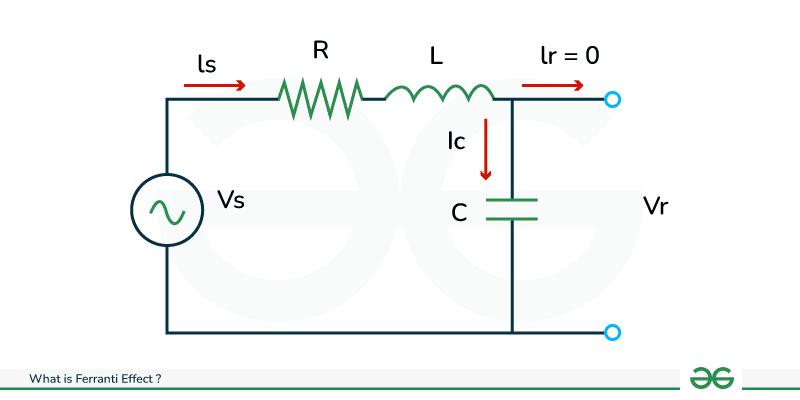
-
 When a conductor is covered with ice and/or is exposed to wind, the effective conductor weight per unit length increases. During occasions o...
 -
Hello. In this blog, we will try to create a steel pole model, using the PLS Pole software of Power Lines System. This created pole will pr...
-
 Yup, you read it right. This is about the World's Longest Overhead Transmission Line as of today. It is around 1700 km in length, trans...
