Analog controllers can be classified by the relationship between the error signal input to them and the
control action they produce:
a. Proportional (P) controllers produce an output that is directly proportional to the error signal. A defining characteristic of P control is that the error signal must always be non-zero to produce a control action; therefore, proportional control alone cannot return the process to setpoint following an external disturbance.
This non-zero error signal that is characteristic of P controllers is the steady-state offset. The adjustable value of the proportionality constant of a P controller is the gain. The higher the gain, the greater the control action for a given error signal and the faster the response.
An example of a P controller is a governor on an engine-generator operating in droop mode, in which the governor opens the fuel valve proportionately to the difference between the desired revolutions per minute (RPM) setpoint and actual RPM; as load on the generator increases, RPM decreases and the governor increases the fuel flow to allow the engine to carry the additional load.
Similarly, as load decreases, RPM increases and the governor responds by reducing fuel flow to match the new load condition. For any condition other than noload, the actual RPM will be slightly different from the setpoint RPM (steady-state offset).
b. Proportional plus Integral (PI) controllers produce a control action that is proportional to the error signal plus the integral of the error signal. The addition of the integrator allows the controller to eliminate the steady state offset, and return the process variable to the setpoint value.
The adjustable value of the integration constant of the PI controller is called the reset, because it has the effect of resetting the error signal to zero. An engine governor operating in isochronous mode, in which constant RPM is maintained over the full load range, uses PI control to accomplish this.
c. Proportional plus Integral plus Derivative (PID) controllers add a component of control action that is proportional to the derivative of the error signal, or the rate at which the error signal is changing.
This mode of control allows the controller to anticipate changes in the process variable by increasing control action for rapid changes, making it useful for systems that require very fast response times, or are inherently unstable without the controller. The adjustable value of the derivative constant in a PID controller is the rate.
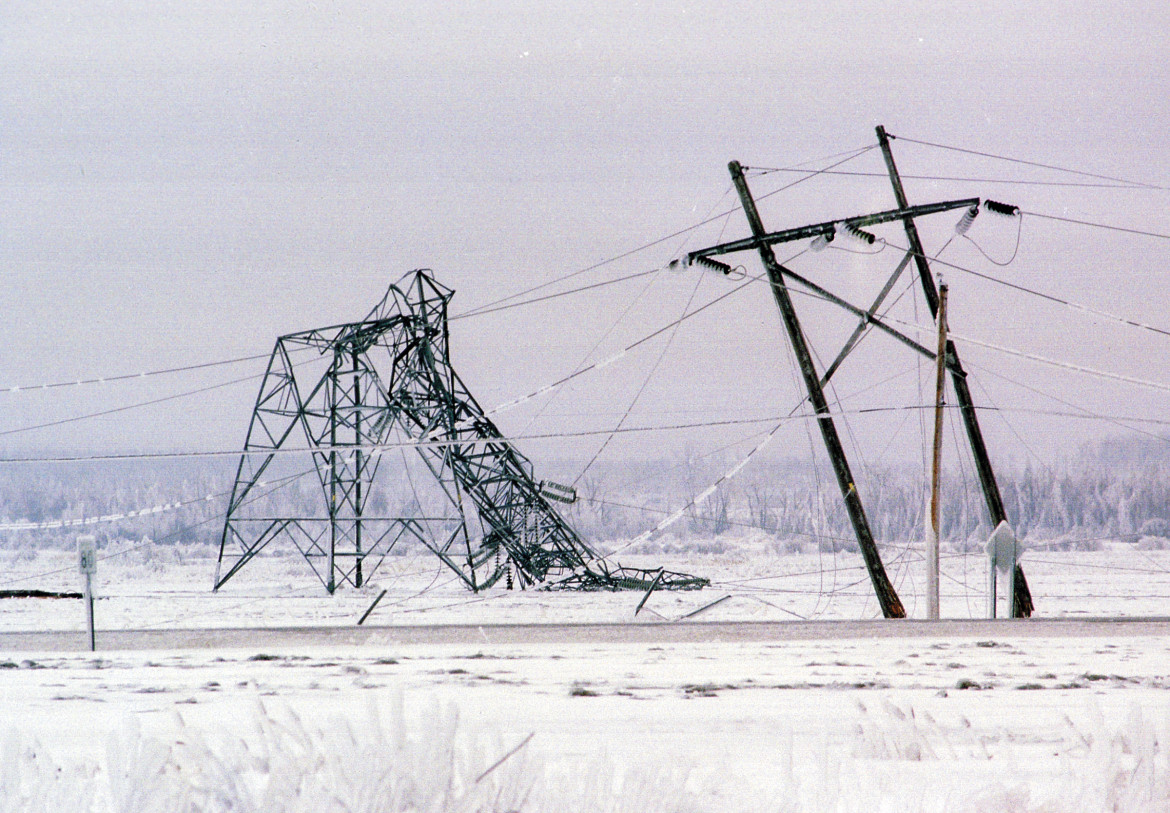
Top 5 Worst Transmission Line Disasters in History
Top 5 Worst Transmission Line Disasters in History Causes, technical failures, cascading effects, and engineering lessons learned This a...
-
Back-to-back HVDC converter stations are integrated within ac transmission links and play a role similar to that of transmission tie statio...
-
Hello. In this blog, we will try to create a steel pole model, using the PLS Pole software of Power Lines System. This created pole will pr...
-
 When a conductor is covered with ice and/or is exposed to wind, the effective conductor weight per unit length increases. During occasions o...

No comments:
Post a Comment