The electrical operating performance of a transmission line depends primarily on the insulation. An insulator not only must have sufficient mechanical strength to support the greatest loads of ice and wind that may be reasonably expected, with an ample margin, but must be so designed as to withstand severe mechanical abuse, lightning, and power arcs without mechanically failing.
It must prevent a flashover for practically any power-frequency operating condition and many transient voltage conditions, under any conditions of humidity, temperature, rain, or snow, and with such accumulations of dirt, salt, and other contaminants that are not periodically washed off by rains.
Insulator Standards. The NEMA Publication High Voltage Insulator Standards, and AIEE Standard 41 have been combined in ANSI C29.1 through C29.9. Standard C29.1 covers all electrical and mechanical tests for all types of insulators.
The standards for the various insulators covering flashover voltages; wet, dry, and impulse; radio influence; leakage distance; standard dimensions; and mechanical-strength characteristics are as follows:
C29.2, suspension; C29.3, spool; C29.4, strain; C29.5, low- and medium-voltage pin; C29.6, high-voltage pin; C29.7, high-voltage line post; C29.8, apparatus pin; C29.9, apparatus post. These standards should be consulted when specifying or purchasing insulators.
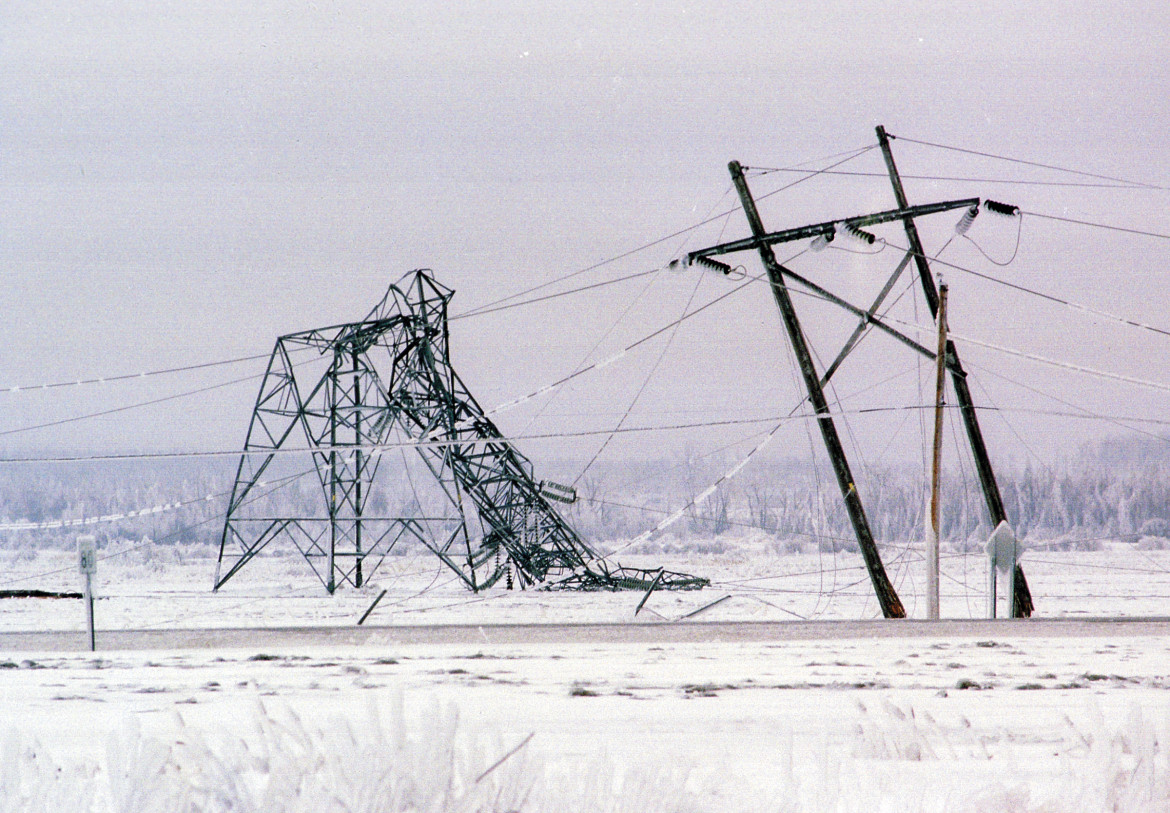
Top 5 Worst Transmission Line Disasters in History
Top 5 Worst Transmission Line Disasters in History Causes, technical failures, cascading effects, and engineering lessons learned This a...
-
Hello. In this blog, we will try to create a steel pole model, using the PLS Pole software of Power Lines System. This created pole will pr...
-
 When a conductor is covered with ice and/or is exposed to wind, the effective conductor weight per unit length increases. During occasions o...
 -
 Yup, you read it right. This is about the World's Longest Overhead Transmission Line as of today. It is around 1700 km in length, trans...

No comments:
Post a Comment