Blondel’s theorem of polyphase metering describes the measurement of power in a polyphase system made up of an arbitrary number of conductors.
The theorem provides the basis for correctly metering power in polyphase circuits. In simple terms, Blondel’s theorem states that the total power in a system of (N) conductors can be properly measured by using (N) wattmeters or watt-measuring elements.
The elements are placed such that one current coil is in each of the conductors and one potential coil is connected between each of the conductors and some common point.
If this common point is chosen to be one of the (N) conductors, there will be zero voltage across one of the measuring element potential coils. This element will register zero power.
Therefore, the total power is correctly measured by the remaining (N – 1) elements.
In application, this means that to accurately measure the power in a four-wire three-phase circuit (N = 4), the meter must contain (N – 1) or three measuring elements. Likewise, for a three-wire three-phase circuit (N = 3), the meter must contain two measuring elements.
There are meter designs available that, for commercial reasons, employ less than the minimum number of elements (N – 1) for a given circuit configuration. These designs depend on balanced phase voltages for proper operation.
Their accuracy suffers as voltages become unbalanced.
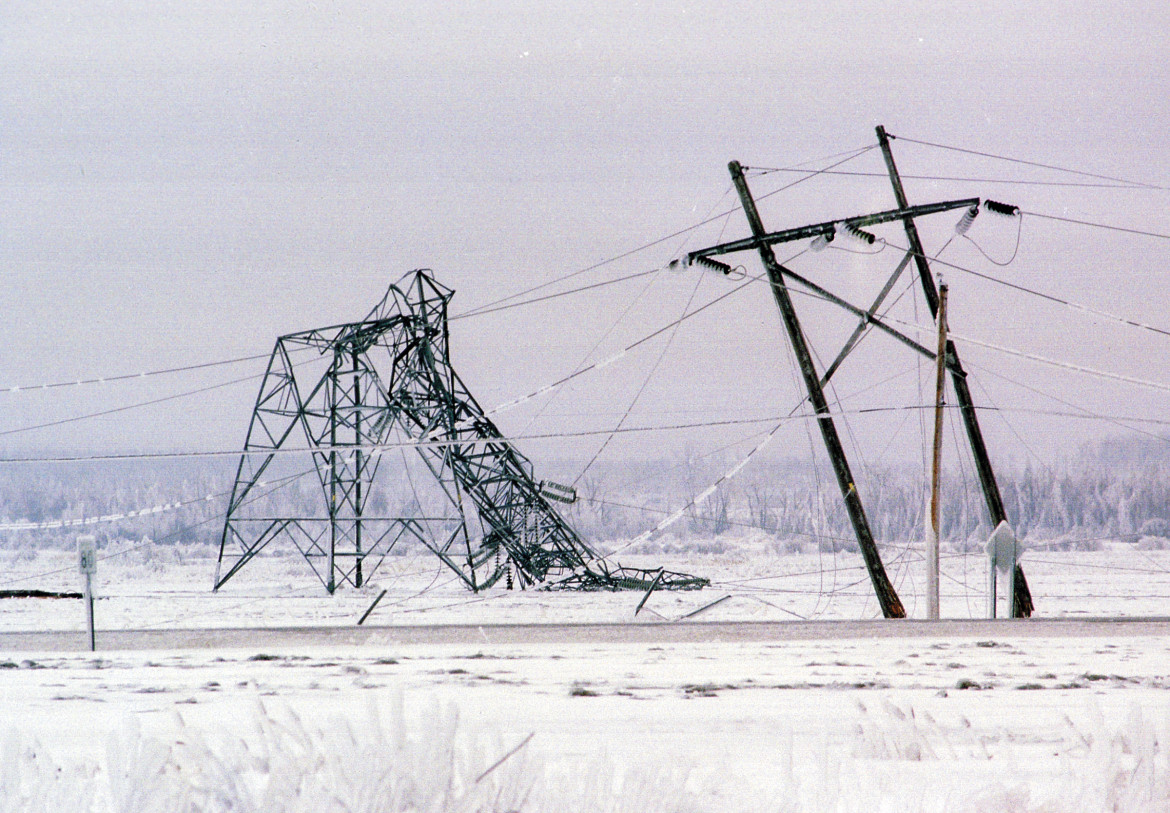
Top 5 Worst Transmission Line Disasters in History
Top 5 Worst Transmission Line Disasters in History Causes, technical failures, cascading effects, and engineering lessons learned This a...
-
Hello. In this blog, we will try to create a steel pole model, using the PLS Pole software of Power Lines System. This created pole will pr...
-
 When a conductor is covered with ice and/or is exposed to wind, the effective conductor weight per unit length increases. During occasions o...
 -
 Yup, you read it right. This is about the World's Longest Overhead Transmission Line as of today. It is around 1700 km in length, trans...

No comments:
Post a Comment