Transmission and Distribution line's lightning performance can be improved by several special methods that have been used with some success. This article will give a brief review of the best known of these special methods. Designers should recognize, however, that industry experience has usually been limited to a few applications, and more experience is being accumulated.
Additional shield wires
Since the mid 1910s, it has been recognized that OHGWs on a transmission line reduce the lightning voltage
created across the insulators. This reduction comes about in the three following ways:
a) By intercepting strokes that would otherwise hit the phase conductors
b) By draining off part of the stroke current that would otherwise ßow through the footing impedance
c) By increasing the common-mode coupling of voltage surges on the shield wires to the phase conductors,
causing the insulator voltage at the tower to be reduced
Only the first of these effects requires the grounded wire to be above the phase conductors. One or more shield wires under the phase conductors will not intercept lightning strokes, but they may improve coupling and reduce insulator lightning voltages almost as effectively as if they were above the phase conductors.
The large improvement is caused mainly by the increase in coupling coefficient from shield wires to phases rather than in the small reduction in total shield-wire surge impedance.
Guy wires on transmission towers
In some cases, towers are uprated by putting new or additional guy wires from the tower to rock or soil anchors. This treatment should also improve lightning performance in two ways. First, each new guy anchor will behave as an additional ground electrode.
The anchors may be grouted with low-resistivity material such as concrete, and bonded to any existing counterpoise or structure, to maximize the benefitt. Second, the guy wires will mitigate the tower surge response. Four widely separated guy wires may reduce the impedance of a tower from 100 W to 50 W. This factor alone may reduce the outage rate of a tall line by 30%.
Ground wire on separate structures
OHGWs may be supported by separate outboard towers or poles instead of being mounted on the same
structure that supports the phase conductors. This arrangement may give extreme negative shielding angles,
which minimize induction losses and provide excellent security from shielding failures. Tower height and wind loading may also be reduced.
While an expensive option, OHGWs on separate structures may result in excellent lightning performance. Connections from the OHGWs to towers, if required for ac fault-current management, should be designed to have a high impedance to lightning through long interconnection length to minimize risk of back flashover.
Line surge arresters
Surge arresters at every insulator location (line arresters) present an alternative to the OHGWs both for new construction and for improvements to older unshielded lines when improved lightning performance is required. For special applications such as river crossings and on one circuit of double-circuit lines, properly applied line arresters may also provide specific benefits such as reduced double-circuit outage rate.
Line arresters have been successfully used on many transmission lines. Excellent results were reported on a line that crossed mountain ridges of high ground resistivity (usually rock) and high lightning exposure, leading to frequent lightning flashovers and insulator damage.
Unbalanced insulation on double-circuit lines
Unbalanced insulation on double-circuit lines, first applied by Kawai, is a deliberate effort to force most of the flashovers onto one circuit so that the other circuit will experience few flashovers, if any. When the weaker circuit flashes over, its phase conductors are suddenly connected to the tower by the flashover path, thereby making them momentarily underbuilt shield wires until the breaker opens.
Insulator voltages on the unfaulted circuits are reduced by draining away some stroke current into the phase surge impedance. Common-mode voltage coupling is also enhanced, decreasing the normal-mode voltage appearing across the insulation. The lowest circuits have the lowest surge impedances to ground. They will also offer the greatest improvement in coupling, and would logically be selected as the weaker circuits.
return the total flashover rate to acceptable levels.
Active air terminals
In some cases, older lines were constructed with shielding angles that are now considered to be poor. Line shielding may be somewhat improved by increasing the proportion of strikes that hit the tower. This has traditionally been done through the addition of lightning masts at existing towers, although other products are now offered commercially. At this time, there is little full-scale evidence that either supports or contradicts the additional effectiveness of these devices.
Any projection will increase the effective tower height and the resulting lightning incidence, which leads to
more back flashovers. However, an advantageous trade-off may sometimes be made. Rizk describes the two important physical conditions for positive leader inception from a structure or conductor. These conditions are basically determined by structure or by wire height above ground. Under negative leader space charge, small details of the structure surface would appear to have only minor effects on the lightning incidence.
POWER UNIT SUBSTATION REQUIREMENTS STANDARD RATINGS AS PER ANSI ANSI C37.121-1989
ANSI C37.121-1989 standard covers the requirements for three-phase unit substations for step-down operation in the range of 112.5 kVA through 10 000 kVA at primary voltages of 601 volts through 38 kilovolts.
The standard is intended for use as the basis for the coordination of equipment by assisting in the selection of
components. A variety of designs for unit substations are possible using various combinations of incoming sections, transformer sections, outgoing sections, and transition (throat) sections. Since the transformer section determines the kVA and voltage capabilities of a unit substation, the ratings of the various types of unit substations are described in terms of transformer capability.
Below are the unit substation requirement standard ratings as per ANSI C37.121-1989
The rating of each section of a unit substation shall comply with the applicable standards for its components and shall be equal to or greater than the rating of the unit substation. The kVA, high-voltage, and low-voltage ratings of the transformer section shall be the basis for those ratings of the unit substation. Other sections shall be coordinated with those ratings. The unit substation shall have the following ratings:
Rated Frequency
The rated frequency of a unit substation shall be the frequency of the circuit for which it is designed.
Rated kVA
The rated kVA of a unit substation shall be the rated kVA of the three-phase power transformer. The kVA rating of a double-ended unit substation shall be the total kVA of the two transformers.
Rated High Voltage (or Primary Voltage) and Rated Low Voltage (or Secondary Voltage)
In combination with the rated kVA of a unit substation, the rated voltages.
Rated Continuous Current
The rated continuous current of a unit substation shall be the maximum current in root-mean-square (rms) amperes, at rated frequency, which is intended to be carried continuously by the circuit components, including buses and connections, without raising temperatures above the limits specified in applicable standards.
The rated continuous current for high-voltage and low-voltage equipment of a unit substation shall be equal to, or greater than, the respective high-voltage and low-voltage full-load c urrents of the transformer section.
Rated Short-Circuit Current (Carrying)
The rated short-circuit current (carrying) of a unit substation is the rms short-circuit current that is intended to be carried for a specified period of time without causing electrical, thermal, or mechanical damage. The current shall be the rms value determined over the specified period of time.
The rated short-circuit current (carrying) rating of a unit substation shall be the rated short-circuit current (carrying) rating of the high-voltage interrupting device. If no high-voltage interrupting device is present, the rated short-circuit current (carrying) rating of the unit substation shall be the let-through short-circuit current of the transformer, in terms of primary amperes.
Rated Short-Circuit Current Withstand (Momentary)
The rated short-circuit current withstand of a unit substation is the maximum rms total current that is intended to be carried momentarily without causing electrical, thermal, or mechanical damage or permanent deformation. The current shall be the rms value, including the direct-current component, at the major peak of the maximum cycle, as determined from the envelope of the current wave during the test period.
The rated short-circuit current-withstand rating of a unit substation shall be the rated short-circuit current-withstand rating of the high-voltage interrupting device. If no high-voltage interrupting device is present, the rated short-circuit current-withstand rating of the unit substation shall be the let-through current of the transformer, in terms of primary amperes.
Rated Low-Frequency, One-Minute Withstand Voltage
The rated low-frequency, one-minute withstand voltage of a unit substation is the maximum alternating-current voltage that it is intended to withstand for one minute. The alternating-current voltage shall have a crest value equal to 1.41 times the rms value, shall be as close to a sine wave as practical, and shall have a frequency not less than the rated frequency.
The rated low-frequency, one-minute withstand voltage of the unit substation, on its high-voltage end, shall be the lesser rating of adjacent high-voltage sections. On its low voltage end, the rated low-frequency one-minute withstand voltage of the unit substation shall be the lesser rating of adjacent low-voltage sections.
Rated Impulse-Withstand Voltage (BIL)
The rated impulse-withstand voltage of a unit substation is the maximum impulse voltage that it can withstand. The impulse voltage shall be a 1.2 ´ 50 microsecond full wave with a wave shape as defined in ANSI/IEEE 4-1978.
The rated impulse-withstand voltage of the unit substation on its high-voltage end shall be the lesser rating of adjacent high-voltage sections. The rated impulse-withstand voltage of the unit substation on its low-voltage end shall be the lesser rating of adjacent low-voltage sections. If the unit substation is to operate in an environment that requires a greater impulse-withstand capability, surge arrestors should be used to ensure that the equipment is properly protected at the required impulse level. Impulse levels are not applicable to low-voltage equipment below 1000 V.
SCHAUM'S EASY OUTLINE OF ELECTROMAGNETICS FREE EBOOK DOWNLOAD LINK
 |
| Schaum's Easy Outline Electromagnetics |
Boiled-down essentials of the top-selling Schaum's Outline series for the student with limited time
What could be better than the bestselling Schaum's Outline series? For students looking for a quick nuts-and-bolts overview, it would have to be Schaum's Easy Outline series.
Every book in this series is a pared-down, simplified, and tightly focused version of its predecessor. With an emphasis on clarity and brevity, each new title features a streamlined and updated format and the absolute essence of the subject, presented in a concise and readily understandable form.
Graphic elements such as sidebars, reader-alert icons, and boxed highlights stress selected points from the text, illuminate keys to learning, and give students quick pointers to the essentials.
Designed to appeal to underprepared students and readers turned off by dense text
Cartoons, sidebars, icons, and other graphic pointers get the material across fast
Concise text focuses on the essence of the subject
Delivers expert help from teachers who are authorities in their fields
Perfect for last-minute test preparation
So small and light that they fit in a backpack!
About the Author
McGraw-Hill authors represent the leading experts in their fields and are dedicated to improving the lives, careers, and interests of readers worldwide.
MACHINERY'S HANDBOOK FREE EBOOK DOWNLOAD LINK
 |
| Machinery's Handbook
Celebrating nearly 100 years as The Bible of the Mechanical Industries , the book brings together volumes of knowledge, information and data gathered, revised and improved upon from experts throughout the mechanical industries. Extraordinarily comprehensive yet easy to use since it premiered, Machinery s Handbook provides mechanical and manufacturing engineers, designers, draftsmen, toolmakers, and machinists with a broad range material, from the very basic to the more advanced.
|
It has always, and continues to provide industry fundamentals and standards while it moves into the 21st century with material reflecting technological advances and offering vast editorial improvements, making it the best tool...ever!
A new more usable organization...every section has been reformatted so that you will never have to search outside of that area for information on the topic you are exploring.
30% MORE math coverage...from the basic to the advanced, you'll find fractions, positive and negative numbers, derivatives and integrals, analytical geometry, circular segments, matrices and engineering economics.
New or revised material on...cutting tools, screw threads, symbols and abbreviations, threads and threading, disc springs, properties and materials, sine bars, and sheet metal.
Updated Standards.
New individual indices for standards, materials, and interactive equations.
TRANSMISSION LINE CONDUCTORS COMPARISON TUTORIALS
These aerial cables consist of separate conductors which use spacing between conductors to obtain a voltage rating. There are three major types of aerial conductors used for electrical transmission and distribution.
AAC - All Aluminium Conductor
AAAC - All Aluminium Alloy Conductor
ACSR - Aluminium Conductor Steel Reinforced
The choice of conductor is determined by current rating and stringing
conditions (span length, sag, everyday stress, ambient temperature and wind velocity, and worst case conditions of wind and ice). Conductor characteristics such as strength to weight ratio, ultimate tensile strength, modulus of elasticity, area, coefficient of linear expansion, AC resistance will determine the most suitable conductor.
AAC - All Aluminium Conductor is made up of one or more strands of hard drawn 1350 Aluminium Alloy. Because of its relatively poor strength-to-weight ratio, AAC has had limited use in transmission lines and rural distribution because of the long spans utilized. However, AAC has seen extensive use in urban areas where spans are usually short but high conductivity is required. The excellent corrosion resistance of aluminium has made AAC a conductor of choice in coastal areas.
ACSR - Aluminium Conductor Steel Reinforced consists of a solid or stranded steel core surrounded by one or more layers of strands of 1350 aluminium. The high-strength ACSR 8/1, 12/7 and 16/19 strandings, are used mostly for overhead ground wires, extra long spans, river crossings, etc. The inner core wires of ACSR may be of zinc coated (galvanized) steel.
AAAC(1120) - A high strength Aluminium-Magnesium-Silicon Alloy cable was developed to replace the high strength 6/1 ACSR conductors. This alloy conductor offers excellent electrical characteristics, excellent sag-tension characteristics and superior corrosion resistance to that of ACSR.
Equivalent aluminum alloy conductors have approximately the same ampacity and strength as their ACSR counterparts with a much improved strength-to-weight ratio,and also exhibit substantially better electrical loss characteristics than their equivalent single layer ACSR constructions. The thermal coefficient of expansion is greater than that of ACSR.
As compared to ACSR, AAAC's ligher weight, comparable strength and current carrying capacity, lower electrical losses and superior corrosion resistance have given this conductor wide acceptance as a distribution conductor. It has found limited use, however, as a transmission conductor.
AAC - All Aluminium Conductor
AAAC - All Aluminium Alloy Conductor
ACSR - Aluminium Conductor Steel Reinforced
The choice of conductor is determined by current rating and stringing
conditions (span length, sag, everyday stress, ambient temperature and wind velocity, and worst case conditions of wind and ice). Conductor characteristics such as strength to weight ratio, ultimate tensile strength, modulus of elasticity, area, coefficient of linear expansion, AC resistance will determine the most suitable conductor.
AAC - All Aluminium Conductor is made up of one or more strands of hard drawn 1350 Aluminium Alloy. Because of its relatively poor strength-to-weight ratio, AAC has had limited use in transmission lines and rural distribution because of the long spans utilized. However, AAC has seen extensive use in urban areas where spans are usually short but high conductivity is required. The excellent corrosion resistance of aluminium has made AAC a conductor of choice in coastal areas.
ACSR - Aluminium Conductor Steel Reinforced consists of a solid or stranded steel core surrounded by one or more layers of strands of 1350 aluminium. The high-strength ACSR 8/1, 12/7 and 16/19 strandings, are used mostly for overhead ground wires, extra long spans, river crossings, etc. The inner core wires of ACSR may be of zinc coated (galvanized) steel.
AAAC(1120) - A high strength Aluminium-Magnesium-Silicon Alloy cable was developed to replace the high strength 6/1 ACSR conductors. This alloy conductor offers excellent electrical characteristics, excellent sag-tension characteristics and superior corrosion resistance to that of ACSR.
Equivalent aluminum alloy conductors have approximately the same ampacity and strength as their ACSR counterparts with a much improved strength-to-weight ratio,and also exhibit substantially better electrical loss characteristics than their equivalent single layer ACSR constructions. The thermal coefficient of expansion is greater than that of ACSR.
As compared to ACSR, AAAC's ligher weight, comparable strength and current carrying capacity, lower electrical losses and superior corrosion resistance have given this conductor wide acceptance as a distribution conductor. It has found limited use, however, as a transmission conductor.
DIRECT CURRENT AND ALTERNATING CURRENT RELATIONSHIP IN OVERVOLTAGE TEST TUTORIALS
The relationship between the withstand voltage level using high direct voltage and the equivalent withstand voltage using power frequency voltage cannot be precisely stated because the relationship is composed of many factors.
The lack of a precise equivalence should not cause concern because the purpose of proof tests is to demonstrate that the insulation can withstand the overvoltages to be expected in service rather than to establish the precise value of electrical strength. The electrical strength has been found in cases studied to be associated with impulse strength.
Therefore, a direct voltage proof test may indicate ability of the insulation to withstand surges and short-time overvoltages approximating the same peak value. The test overvoltage value also provides for insulation deterioration in a further period of operation.
The proper high direct voltage proof test for insulation need not necessarily be related to the corresponding power frequency voltage proof test by the ratio of the electrical strength of sound insulation under power frequency voltage stress to that under direct voltage stress.
Some investigators point out that until a known equivalence can be established, the direct voltage test cannot be considered comparable in searching ability to the established power frequency voltage tests. Direct voltage acts to search out a faulty area in the insulation by establishing a leakage current from that area.
Although small currents may aggravate damage and lead to breakdown if the voltage is raised to a high enough level, this usually does not occur unless the weakness is significant and should be found. High temperature of the insulation usually increases the conductance of any solid insulation remaining in the fault path; dc conduction in fissures, however, may be reduced rather than increased by an increase in temperature.
The lack of a precise equivalence should not cause concern because the purpose of proof tests is to demonstrate that the insulation can withstand the overvoltages to be expected in service rather than to establish the precise value of electrical strength. The electrical strength has been found in cases studied to be associated with impulse strength.
Therefore, a direct voltage proof test may indicate ability of the insulation to withstand surges and short-time overvoltages approximating the same peak value. The test overvoltage value also provides for insulation deterioration in a further period of operation.
The proper high direct voltage proof test for insulation need not necessarily be related to the corresponding power frequency voltage proof test by the ratio of the electrical strength of sound insulation under power frequency voltage stress to that under direct voltage stress.
Some investigators point out that until a known equivalence can be established, the direct voltage test cannot be considered comparable in searching ability to the established power frequency voltage tests. Direct voltage acts to search out a faulty area in the insulation by establishing a leakage current from that area.
Although small currents may aggravate damage and lead to breakdown if the voltage is raised to a high enough level, this usually does not occur unless the weakness is significant and should be found. High temperature of the insulation usually increases the conductance of any solid insulation remaining in the fault path; dc conduction in fissures, however, may be reduced rather than increased by an increase in temperature.
HIGH DIRECT VOLTAGE TESTS SAFETY PRECAUTIONS AS PER IEEE - Std 95-1977
 |
| High Voltage Testing courtesy of Siemens Lab |
IEEE Std 95-1977 is entitled IEEE Recommended Practice for Insulation Testing of Large AC Rotating Machinery with High Direct Voltage. It speaks of recommended practice during and for of testing insulation with direct voltages higher than 5 kV of large ac rotating machines rated at 10000 kVA or greater.
The purpose of this recommended practice is:
1)To provide uniform procedures for performing high direct voltage acceptance tests and routine maintenance
tests on the main ground insulation of windings of large ac machines
2)To provide uniform procedures for analyzing the variations in measured current so that any possible relationship of the components of these variations to the condition of the insulation can be more effectively studied
3)To define terms which have a specific meaning as used in this document
Below is the recommended safety precaution during high direct voltage testing of insulation of Large AC Rotating Machines.
Personnel should be advised before the test that after application of high direct voltage there will be a residual charge in the winding which is dangerous and that de-energizing the test source will not immediately de energize the machine winding under test.
Windings which have been tested must be solidly grounded before being approached by personnel. There is a possibility that after a test, if a ground is removed before minimum grounding time, there will be a voltage buildup to a level that will be dangerous to personnel or equipment.
Ground should be kept in place until the winding is discharged. This may require several hours, depending upon the size of the machine winding.
Objects close to the machine under test should be grounded.
Upon completion of the high direct voltage test, the test voltage control should be turned to zero.
After the voltage has decayed to half value, the winding should be discharged through the special discharge resistor ordinarily provided with the test set.
The winding may be solidly grounded as soon as the voltage has been reduced to zero.
If a high alternating voltage test is to follow a high direct voltage test, it is advisable to double the minimum grounding time to ensure that the absorbed charge does not contribute to puncture when the alternating voltage test is applied.
Otherwise, the absorbed charge, superimposed upon the peak alternating voltage dielectric stress, may exceed the electric strength of the winding.
A machine should not be placed in service after a high direct voltage test until the winding has been grounded.
Dissipation of the absorbed charge cannot be accelerated by the application of alternating potential or by the application of direct voltage with reversed polarity. Severe insulation voltage gradients will be introduced in the winding if this is attempted.
HANDBOOK OF SMALL ELECTRIC MOTORS FREE EBOOK DOWNLOAD LINK
 |
| Handbook of Small Electric Motors |
A complete, definitive source for the design, manufacture, application, and testing of small electric motors less than ten horsepower *Gives motor design engineers, test technicians, and engineers top-to-bottom coverage of materials used in motor manufacturing, as well as how-to advice on selecting the right design and assembly method *Includes a full section on motor applications
A COMPENIUM OF EXPERT INFORMATION ON TODAY'S DESIGNS, METHODS, AND MATERIALS--
Get up to speed on the latest design and manufacturing tools and techniques with this expert guide from leaders of the motor industry. A superb source of innovative, productivity, and profit-increasing solutions, HANDBOOK OF SMALL ELECTRIC MOTORS gives you more help with selection, calculation, assembly methods, and on-the-spot data than you can find anywhere else.
There's no other source that approaches this unique reference for comprehensive, clear coverage of small motor design, production, and use. For cost-cutting, efficiency-boosting solutions, and the answers you need now, this is a resource that will prove its value every day on the job.
INFORMATION YOU CAN USE:
*A complete source for the design, manufacture, and application of electric motors of 10 hp or less
*Comprehensive introduction to electric motor basics
*Detailed coverage of more than 17 types of motors and drives
*Step-by-step calculation methods for design and application of all featured motors, with examples
*Best source for applications information
*Reference data on materials and manufacturing methods
*Key information on small electric motors for appliances, automobiles, computers, business machines, HVAC, power tools, industrial drives, and many other applications
About the Author
William H. Yeadon, P.E. is the President of Yeadon Engineering Services, P.C. and Yeadon Energy Systems, Inc. He helped to establish the motor college for the Small Motor and Motion Association (SMMA). His is a member of SMMA, Electrical Manufacturing and Coil Winding Association (EMCWA), National Society of Professional Engineers (NSPE) and The Institute of Electrical and Electronics Engineers, Inc. (IEEE).
He currently writes and teaches courses for the SMMA and EMCWA, designs motors, and is a consultant. He has more than 30 years of experience in electric motors, holding positions in design and development, management, production, and quality control with companies that include Redmond Motors, A.O. Smith, Warner Electric, and the motor division of Barber-Colman Company. Alan W. Yeadon, P.E. holds a degree from the University of Illinois.
He assisted in the establishment of the SMMA motor college and has taught PMDC motor design classes. He has design experience in ac induction motors, dc permanent-magnet and wound-field motors, electronically commuted bushless dc, and switched-reluctance motors. He has 12 years experience in product design, consulting, and development of software for electric motor of design and analysis. He is a registered professional engineer in Michigan and Illinois.
DOWNLOAD LINK
DOWNLOAD LINK
ELECTRIC MOTORS AND DRIVES: FUNDAMENTALS, TYPES, AND APPLICATIONS FREE EBOOK DOWNLOAD LINK
 |
| Electric Motors and Drives
Electric Motors and Drives is intended for non-specialist users of electric motors and drives, filling the gap between maths- and theory-based academic textbooks and the more prosaic 'handbooks', which provide useful detail but little opportunity for the development of real insight and understanding. The book explores all of the widely-used modern types of motor and drive, including conventional and brushless D.C., induction motors and servo drives, providing readers with the knowledge to select the right technology for a given job.
|
The third edition includes additional diagrams and worked examples throughout. New topics include digital interfacing and control of drives, direct torque control of induction motors and current-fed operation in DC drives. The material on brushless servomotors has also been expanded.
Austin Hughes' approach, using a minimum of maths, has established Electric Motors and Drives as a leading guide for electrical engineers and mechanical engineers, and the key to a complex subject for a wider readership, including technicians, managers and students.
* Acquire knowledge of and understanding of the capabilities and limitations of motors and drives without struggling through unnecessary maths and theory
* Updated material on the latest and most widely-used modern motors and drives, including brushless servomotors
Electric Motors and Drives is intended for non-specialist users of electric motors and drives, filling the gap between maths- and theory-based academic textbooks and the more prosaic 'handbooks', which provide useful detail but little opportunity for the development of real insight and understanding. The book explores all of the widely-used modern types of motor and drive, including conventional and brushless D.C., induction motors and servo drives, providing readers with the knowledge to select the right technology for a given job.
The third edition includes additional diagrams and worked examples throughout. New topics include digital interfacing and control of drives, direct torque control of induction motors and current-fed operation in DC drives. The material on brushless servomotors has also been expanded.
Austin Hughes' approach, using a minimum of maths, has established Electric Motors and Drives as a leading guide for electrical engineers and mechanical engineers, and the key to a complex subject for a wider readership, including technicians, managers and students.
DOWNLOAD LINK
PETERSEN COIL IN ELECTRICAL POWER SYSTEM TUTORIALS AND LINKS
 |
| Photo Courtesy of http://www.ohmic.com.br |
This entry is a collection of articles about Petersen Coil. Its significance, application, and technical papers that involves the use of Petersen Coil.
EARTH FAULT ARC SUPPRESSION COILS (Petersen Coils)
The arc suppression coil consists of several following basic parts: cylindrical tank made of smooth sheet with magnetic circuit and main, auxiliary aswell as measuring winding (connected to bushings placed on the tank cover) fixedinside the tank, undercarriage (for one coil type several undercarriages can be chosen), expansion tank taking the expanding oil. Read more...
NEW TECHNIQUES FOR COMPENSATED NETWORKS: TUNING THE PETERSENCOIL, DETERMINING THE NETWORK PARAMETERS AND PERFORMING EARTHFAULT CURRENT PREDICTION AND RECONSTRUCTION
This paper presents the advantages of a new technique ofpulse injection into the zero sequence system of compen-sated networks. With this technique all important networkparameters of the zero sequence system can be estimatedand the Petersen coil can be tuned. Furthermore, the maxi-mum of the expected current of a future single phase earthfault can be predicted and the current of an already oc-curred fault can be reconstructed as a function of time. Read more...
OPERATIONAL EXPERIENCES WITH THE NEW METHOD TOCONTROL PETERSEN COILS BY INJECTION OF TWO FREQUENCIES
In this paper we present field experiences of severalinstallations with the new method for the calculation of thezero-sequence network parameters and the control of Petersen coils in resonant grounded networks. The major problems for the correct calculation of the line-to-ground capacity, respectively of the resonant-point, arethe missing or very low zero-sequence voltage and the nonnegligible crosstalk of the varying load currents to the zero-sequence-voltage. As a consequence, the number of tuningoperations and non correct tuning operations increases intoday's networks. Read more...
EARTHING SYSTEM EVALUATION AND INFLUENCE ON PROTECTIONPERFORMANCE IN RESONANTLY EARTHED MV NETWORKS
In Zagreb distribution area, Petersen coils are installed infive 110/10(20) kV substations. The advantages ofresonantly earthed MV networks (continuous operation, arcself-extinction etc.) and some disadvantages (lowerprotection sensitivity) are well known. An overview of theprocedure implemented before putting Peterson coils inoperation is given, with emphasis on the earthing systemevaluation, which has proved to be rather important.Protection testing should be performed for different types offaults. All data are given for two distribution areas in whichPeterson coils have been recently installed. Read more...
Petersen Coils - Principle and Application
Peterson coils are used to in ungrounded 3-phase grounding systems to limit the arcing currents during ground faults. The coil was first developed by W. Petersen in 1916. Read more...
WALDEMAR PETERSEN - ELECTRICAL ENGINEERING HERO
 |
| Waldemar Petersen |
Waldemar or Valdemar in some language is a professor of Electrical Engineering at TH Darmstadt. He was born on June 10 1880 in Athens.
It was at Darmstadt where Petersen developed still further, then young AC technology. His involvement in the Alternating Current technology led to the invention of Petersen Coil. It is a grounding reactor, used in alternating-current power transmission systems, which is designed to limit the current flowing to ground at the location of a fault almost to zero by setting up a reactive current to ground that balances the capacitive current to ground flowing from the lines.
Aside from this, he invented a watt metric ELR, developed the W metric ELR, and developed the theory of the electric field and electric punch where he wrote the first basic textbooks on these areas.
Not is much known about Waldemar "Wayne" Petersen, except his coil. One thing's for sure though, he is a pioneer, a legend, and an Electrical Engineering Hero.
GROUNDING METHODS OF MEDIUM-VOLTAGE DISTRIBUTION NETWORKS
Proper system grounding will means safety. Its goals are to minimize voltage and thermal stresses on equipment, provide personnel safety, reduce communications system interference, and give assistance in rapid detection and elimination of ground faults.
With the exception of voltage stress, operating a system as ungrounded, high-impedance grounded, or resonant grounded restricts ground fault current magnitudes and achieves most of the goals listed above. The drawback of these grounding methods is that they also create fault detection (protection) sensitivity problems.
We can create a system grounding that reduces voltage stress at the cost of large fault current magnitudes. However, in such a system the faulted circuit must be de-energized immediately to avoid thermal stress, communications channel interference, and human safety hazards. The disadvantage of this system is that service must be interrupted even for temporary faults.
Ungrounded or Isolated Neutral

-System is connected to ground through the line-to-ground capacitances
-Systems can remain operational during sustained, low-magnitude
Effective or Solid Grounding
 Characteristics:
-(X0 / X1) ≤ 3 and (R0 / X1) ≤ 1, where X0 and R0 are the zerosequence reactance and resistance, and X1 is the positive-sequence reactance of the power system
-Load unbalance and ground fault currents divide between the neutral conductor and earth
-Detecting high-resistance ground faults on these systems is difficult because the protective relay measures

With the exception of voltage stress, operating a system as ungrounded, high-impedance grounded, or resonant grounded restricts ground fault current magnitudes and achieves most of the goals listed above. The drawback of these grounding methods is that they also create fault detection (protection) sensitivity problems.
We can create a system grounding that reduces voltage stress at the cost of large fault current magnitudes. However, in such a system the faulted circuit must be de-energized immediately to avoid thermal stress, communications channel interference, and human safety hazards. The disadvantage of this system is that service must be interrupted even for temporary faults.
Ungrounded or Isolated Neutral

Characteristics:
-Neutral has no intentional connection to ground-System is connected to ground through the line-to-ground capacitances
-Systems can remain operational during sustained, low-magnitude
-Fault detection is not selective
-Elements respond to the quadrature component of the zero-sequence current with respect to the zero-sequence voltage

-(X0 / X1) ≤ 3 and (R0 / X1) ≤ 1, where X0 and R0 are the zerosequence reactance and resistance, and X1 is the positive-sequence reactance of the power system
-Load unbalance and ground fault currents divide between the neutral conductor and earth
-Detecting high-resistance ground faults on these systems is difficult because the protective relay measures
the high-resistance ground fault current combined with the unbalance current
-Solid grounding reduces the risk of overvoltages during ground faults since these faults do not shift the system neutral
Low-Impedance Grounding
Characteristics:
-Grounded through a low-impedance resistor or reactor with the objective of limiting the ground fault current -This method is equivalent to solid grounding in many other ways, including ground fault protection methods
-Industrial plant engineers also use low-impedance grounding in their plant and distribution circuits.
High-Impedance Grounding
Characteristics
-Grounded through a high-impedance resistor or reactor with an impedance equal to or slightly less than the total system capacitive reactance to ground.
-High-impedance grounding method limits ground fault current to 25 A or less
-Grounding resistor may be connected in the neutral of a power or grounding transformer, generator or
generator-grounding bus, or across a broken delta connection of distribution transformers
Resonant Grounding

Characteristics:
-System is grounded through a high-impedance reactor
-Resonant grounding a system can reduce the ground fault current to about 3 to 10 percent of that for an ungrounded system
-Detecting high-impedance faults in compensated distribution circuits requires a device with a
very sensitive residual current input
-Residual current compensation methods inject a current through the reactor to the system during the fault, reducing the fault current almost to zero
THE POWER ELECTRONICS HANDBOOK FREE EBOOK DOWNLOAD LINK

This good resource includes individual authors who have familiar names and good reputations in the industry. This selection of topics is excellent with regard to devices and applications. Editor Skvarenina wisely has included the latest description of advanced motor and power control applications, offering this volume some staying power as a reference, as new technology and applications continue to emerge. Most of material is written at the upper academic level and would probably better satisfy the research or development engineer…
- CHOICE, September 2002
Product Description
Less expensive, lighter, and smaller than its electromechanical counterparts, power electronics lie at the very heart of controlling and converting electric energy, which in turn lies at the heart of making that energy useful. From household appliances to space-faring vehicles, the applications of power electronics are virtually limitless.
Until now, however, the same could not be said for access to up-to-date reference books devoted to power electronics. Written by engineers for engineers, The Power Electronics Handbook covers the full range of relevant topics, from basic principles to cutting-edge applications. Compiled from contributions by an international panel of experts and full of illustrations, this is not a theoretical tome, but a practical and enlightening presentation of the usefulness and variety of technologies that encompass the field.
For modern and emerging applications, power electronic devices and systems must be small, efficient, lightweight, controllable, reliable, and economical. The Power Electronics Handbook is your key to understanding those devices, incorporating them into controllable circuits, and implementing those systems into applications from virtually every area of electrical engineering.
DOWNLOAD LINK
TRANSFORMER AND INDUCTOR DESIGN HANDBOOK FREE EBOOK DOWNLOAD LINK

Not only would the expert working on a specific design benefit from this handbook, but also the general reader would get a very good working knowledge on transformer design because the book covers fundamentals and magnetic material characteristics in a very clearly written, easy-to-read style. … Along with all of the practical design examples, the book is filled with clear and well-annotated illustrations and circuit schematics that provide great insight; the many references make this book a must have for anyone designing transformers or inductors. -IEEE Electrical Insulation Magazine, Feb. 2005
Product Description
Extensively revised and expanded to present the state-of-the-art in the field, this Third Edition presents a practical approach to transformer and inductor design—extensively covering essential topics such as the area product, Ap, core geometry, and Kg while providing complete information on magnetic materials and core characteristics using step-by-step design examples.
About the Author
Colonel McLyman has forty-seven years of experience in the field of Magnetics, and holds fourteen United States Patents on Magnetics-related concepts. He retired as a Senior Member of the Avionics Equipment Section of the Jet Propulsion Laboratory (JPL) affiliated with the California Institute of Technology in Pasadena, California.
SURGE ARRESTER SPECIFICATIONS SAMPLE 72.5 kV
 |
| Surge Arresters w Corona Rings |
Below is a sample of a specification of Surge Arrester. Some of the basic parameter are covered. You may use it as a guide in selection and specifying Surge Arresters for your specific needs. Take note that not everything is covered on the specs. Use it only as a guide.
SURGE ARRESTERS
Brand: Brand of Choice
Class : Station Class
Installation: Outdoor Type
Voltage Rating (kV rms) : 60
MCOV Rating (kV rms) : 48
Front-of-Wave Protective Level (kV crest): 175
Maximum Discharge Voltage (kV crest) : - 1.5 KA 125
Switching Surge Protective Level (kV crest) @ 500 A : 117
Creepage Distance : 68 in.
Insulation Withstand Voltage :
- 1.2/50 Impulse (kV Crest) 358
- 60Hz dry 60 sec (kV rms) 200
Rated Arrester Discharge Energy >9 kJ/KV of MCOV
Conductive Material : Metal Oxide
Housing : Silicon Rubber/Polymer
Line Teminal Connection: NEMA Four-hole Pad
Ground Terminal Connection: NEMA Four-hole Pad
Mounting Arrangement : Mounting Base Located on Bottom (Standard Mounting)
NEMA RATING DEFINITION and TUTORIALS
NEMA Ratings are important. It is a classification system set up by NEMA or National Electrical Manufacturers Association.
NEMA is the trade association of choice for the electrical manufacturing industry. Founded in 1926 and headquartered near Washington, D.C., its approximately 450 member companies manufacture products used in the generation, transmission and distribution, control, and end-use of electricity.
In non-hazardous locations, there are several different NEMA ratings for specific enclosure "types", their applications, and the environmental conditions they are designed to protect against, when completely and properly installed.
The following provides an overview of the NEMA Types. For complete definitions, descriptions, and test criteria, see the National Electrical Manufacturers Association (NEMA) Standards Publication No. 250.
NEMA 1 – Enclosures constructed for indoor use to provide a degree of protection to personnel against incidental contact with the enclosed equipment and to provide a degree of protection against falling dirt.
NEMA 2 – Same as NEMA 1 including protection against dripping and light splashing of liquids.
NEMA 3 – Enclosures constructed for either indoor or outdoor use to provide a degree of protection to personnel against incidental contact with the enclosed equipment; to provide a degree of protection against falling dirt, rain, sleet, snow, and windblown dust; and that will be undamaged by the external formation of ice on the enclosure.
NEMA 3R – Same as NEMA 3 excluding protection against windblown dust.
NEMA 3S – Enclosures constructed for either indoor or outdoor use to provide a degree of protection to personnel against incidental contact with the enclosed equipment; to provide a degree of protection against falling dirt, rain, sleet, snow, and windblown dust; and in which the external mechanism(s) remain operable when ice laden.
NEMA 4 – Enclosures constructed for either indoor or outdoor use to provide a degree of protection to personnel against incidental contact with the enclosed equipment; to provide a degree of protection against falling dirt, rain, sleet, snow, windblown dust, splashing water, and hose-directed water; and that will be undamaged by the external formation of ice on the enclosure.
NEMA 4X – Same as NEMA 4 including protection against corrosion.
NEMA 5 – Enclosures constructed for indoor use to provide a degree of protection to personnel against incidental contact with the enclosed equipment; to provide a degree of protection against falling dirt; against settling airborne dust, lint, fibers, and to provide a degree of protection against dripping and light splashing of liquids.
NEMA 6 – Enclosures constructed for either indoor or outdoor use to provide a degree of protection to personnel against incidental contact with the enclosed equipment; to provide a degree of protection against falling dirt; against hose-directed water and the entry of water during occasional temporary submersion at a limited depth; and that will be undamaged by the external formation of ice on the enclosure.
NEMA 6P – Same as NEMA 6 including protection against the entry of water during prolonged submersion at a limited depth.
NEMA 7 – Enclosures are for indoor use in locations classified as Class I, Groups A, B, C, or D and shall be capable of withstanding the pressures resulting from an internal explosion of specified gases, and contain such an explosion sufficiently that an explosive gas-air mixture existing in the atmosphere surrounding the enclosure will not be ignited. Enclosed heat generating devices shall not cause external surfaces to reach temperatures capable of igniting explosive gas-air mixtures in the surrounding atmosphere. Enclosures shall meet explosion, hydro-static, and temperature design tests.
NEMA 9 – Enclosures are intended for indoor use in locations classified as Class II, Groups E, F, or G, and shall be capable of preventing the entrance of dust. Enclosed heat generating devices shall not cause external surfaces to reach temperatures capable of igniting or discoloring dust on the enclosure or igniting dust-air mixtures in the surrounding atmosphere. Enclosures shall meet dust penetration and temperature design tests, and aging of gaskets (if used).
NEMA 12 – Enclosures constructed (without knockouts) for indoor use to provide a degree of protection to personnel against incidental contact with the enclosed equipment; to provide a degree of protection against falling dirt; against circulating dust, lint, fibers, and against dripping and light splashing of liquids.
NEMA 12K – Same as NEMA 12 including enclosures constructed with knockouts.
NEMA 13 – Enclosures constructed for indoor use to provide a degree of protection to personnel against incidental contact with the enclosed equipment; to provide a degree of protection against falling dirt; against circulating dust, lint, fibers, and against the spraying, splashing, and seepage of water, oil, and non-corrosive coolants.
INFORMATION REQUIRED BY THE COMPANY WHEN A POWER OUTAGE OCURRS CAUSED BY TRANSMISSION & DISTRIBUTION LINES FAILURE.
The following are sample information that may be required by a utility company in the event that a power outage occurs due to transmission and distribution lines failure;
1.1 General Information
a) Date of power outage
b) Location of cause
c) Time occurred
d) Name of caller/informant
e) Name of crew who went to the location
f) Cause of the power outage
g) Voltage level of outage
h) Extent /Affected area of the power outage
i) Type of customers affected
j) Number of big and contestable customers affected
k) Estimated number of hours to restore power
l) Number of gangs and personnel needed to restore power
m) Assigned Gang and names of personnel who will do the job
1.2 Specific Information
1.2.1 138 kV Line
a) Type of structure.
- Wooden
- Concrete
- Lattice steel structure
- Tapered, self –guying steel pole
b) Structure’s present condition
- Severely damaged, temporary restoration is nil
- Severely damaged but can be temporarily restored
- Damage is manageable but needs immediate repair
c) Type of construction
d) Type of Guying needed
e) Equipment needed
f) Tools needed
g) Materials needed
- Size and type of pole needed
- Number of post insulators and type of base
- Number of suspension insulators
- Strain clamps, top clamps, and armor rods
1.2.2 69 kV Line
a) 69 kV line convention name ( Davao line, ERA 1,….etc.)
b) Size and type of wire
c) Type of structure
- Wooden
- Concrete
- Lattice Steel Structure
- Tapered, Self-guying steel pole
d) Structure’s present condition
- Severely damaged, temporary restoration is nil
- Severely damaged but can be temporarily restored
- Damage is manageable but needs immediate repair
e) Type of construction
f) Type of Guying needed
g) Equipment needed
h) Tools needed
i) Materials needed
- Size and type of pole
- Number of post insulators and type of base
- Number of suspension insulators
- Number and size of cross-arm needed
- Strain clamps, top clamps, and armor rods
1.2.3 13.8 kV Line, Backbone
a) 69 kV Substation connected, Number and name of feeder
b) Size and type of wire
c) Type of structure
- Wooden
- Tapered, self guying steel pole
d) Structure’s present condition
- Severely damaged, temporary restoration is nil
- Severely damaged but can be temporarily restored
- Damage is manageable but needs immediate repair
e) Type of construction
f) Type of Guying needed
g) Equipment needed
h) Tools needed
i) Materials needed
- Size and type of pole
- All other materials needed depends on the type of construction of the structure
1.2.4 13.8 kV, Main lateral line
a) 13.8 kV Feeder that the lateral is connected
b) Means of connection, (recloser, D.S., Fuse Cut-out)
c) Size and type of wire
d) Type of structure
- Wooden
- Tapered, self guying steel pole
e) Structure’s present condition
- Severely damaged, temporary restoration is nil
- Severely damaged but can be restored temporarily
- Damage is manageable but needs immediate repair
f) Type of construction
g) Type of Guying needed
h) Equipment needed
i) Tools needed
j) Materials needed
- Size and type of pole
- All other materials depends on the type of construction of the structure
1.2.5 Contestable Customers and Influential people
a) Name of affected customer
b) 13.8 kV Feeder the affected customer is connected
c) cause of outage
d) Size of transformer the customer is connected
e) Quickest possible way to restore power
1.1 General Information
a) Date of power outage
b) Location of cause
c) Time occurred
d) Name of caller/informant
e) Name of crew who went to the location
f) Cause of the power outage
g) Voltage level of outage
h) Extent /Affected area of the power outage
i) Type of customers affected
j) Number of big and contestable customers affected
k) Estimated number of hours to restore power
l) Number of gangs and personnel needed to restore power
m) Assigned Gang and names of personnel who will do the job
1.2 Specific Information
1.2.1 138 kV Line
a) Type of structure.
- Wooden
- Concrete
- Lattice steel structure
- Tapered, self –guying steel pole
b) Structure’s present condition
- Severely damaged, temporary restoration is nil
- Severely damaged but can be temporarily restored
- Damage is manageable but needs immediate repair
c) Type of construction
d) Type of Guying needed
e) Equipment needed
f) Tools needed
g) Materials needed
- Size and type of pole needed
- Number of post insulators and type of base
- Number of suspension insulators
- Strain clamps, top clamps, and armor rods
1.2.2 69 kV Line
a) 69 kV line convention name ( Davao line, ERA 1,….etc.)
b) Size and type of wire
c) Type of structure
- Wooden
- Concrete
- Lattice Steel Structure
- Tapered, Self-guying steel pole
d) Structure’s present condition
- Severely damaged, temporary restoration is nil
- Severely damaged but can be temporarily restored
- Damage is manageable but needs immediate repair
e) Type of construction
f) Type of Guying needed
g) Equipment needed
h) Tools needed
i) Materials needed
- Size and type of pole
- Number of post insulators and type of base
- Number of suspension insulators
- Number and size of cross-arm needed
- Strain clamps, top clamps, and armor rods
1.2.3 13.8 kV Line, Backbone
a) 69 kV Substation connected, Number and name of feeder
b) Size and type of wire
c) Type of structure
- Wooden
- Tapered, self guying steel pole
d) Structure’s present condition
- Severely damaged, temporary restoration is nil
- Severely damaged but can be temporarily restored
- Damage is manageable but needs immediate repair
e) Type of construction
f) Type of Guying needed
g) Equipment needed
h) Tools needed
i) Materials needed
- Size and type of pole
- All other materials needed depends on the type of construction of the structure
1.2.4 13.8 kV, Main lateral line
a) 13.8 kV Feeder that the lateral is connected
b) Means of connection, (recloser, D.S., Fuse Cut-out)
c) Size and type of wire
d) Type of structure
- Wooden
- Tapered, self guying steel pole
e) Structure’s present condition
- Severely damaged, temporary restoration is nil
- Severely damaged but can be restored temporarily
- Damage is manageable but needs immediate repair
f) Type of construction
g) Type of Guying needed
h) Equipment needed
i) Tools needed
j) Materials needed
- Size and type of pole
- All other materials depends on the type of construction of the structure
1.2.5 Contestable Customers and Influential people
a) Name of affected customer
b) 13.8 kV Feeder the affected customer is connected
c) cause of outage
d) Size of transformer the customer is connected
e) Quickest possible way to restore power
Handbook Of Electrical Design Details, 2Nd Edition (2003){Home Wiring Nec Ansi) FREE EBOOKS DOWNLOAD LINKS

This is the right book for the "need-to-know," practical aspects of electrical power who want to get "up to speed" on the subject, regardless of education or technical training.
A COMPREHENSIVE SOURCE OF TECHNICAL DETAILS ON ELECTRICAL POWER FROM GENERATION TO PRACTICAL APPLICATIONS
Reliable, low-cost electric power is a fundamental requirement for modern society, making possible such vital services as lighting, HVAC, transportation, communication, and data processing, in addition to driving motors of all sizes.
A mainstay of industrial productivity and economic prosperity, it is also essential for safeguarding human life and health. This handbook is a valuable information resource on electric power for everyone from technical professionals to students and laypeople.
This compact, user-friendly edition updates and expands on the earlier edition. Its core content of power generation, distribution, lighting, wiring, motors, and project planning has been supplemented by new topics:
* CAD for preparing electrical drawings and estimates
* Basic switch and receptacle circuit wiring
* Structured wiring for multimedia
* Swimming pool and low-voltage lighting
* Electrical surge protection
An easy-to-read style makes complex topics understandable. It’s a must-have reference for those with a need or desire to get up to speed on the entire subject of electric power or just familiarize themselves with the latest advances--regardless of their formal education or training. Reader-helpful features in this edition include:
* Up-front chapter summaries to save time in finding topics of interest.
* References to related articles in the National Electrical Code.
* A bibliography identifying additional sources for digging deeper.
* Approximately 300 illustrations
PHASE SHIFTING TRANSFORMERS TUTORIALS PDF DOWNLOAD LINKS
Phase-shifting transformers help control the real power flow
in transmission lines and systems interties. It is beneficial to use
phase-shifting transformers in the protection of lines and transformers.
Phase shifting transformers is used for protection from
thermal overload and to improve transmission system stability.
Phase shifting transformers enables you to control the power
flow between different networks, for parallel long distance overhead-lines or
for parallel cables.
Phase-shifting transformer is very often the most economic
approach to power flow management
This is a collection of tutorials and PDF links about phase
shifting transformers. Below are sites and links that discusses Phase Shifting
Transformers.
Phase-Shifting Transformers
Phase-shifting transformers (PST) are used to control the
flow of real power in transmission lines by manipulating the phase angle
difference. The phase angle shift is obtained by combining the voltages from
different phases in the PST. Phase-shifting transformers, when combined with
standard capacitors and reactors, can even provide control of reactive power
and fault current limitation. Read more...
Phase Shifting Transformers: Principles and Applications
The purpose of this paper is to give a short overview of
existing technologies regarding phase shifting transformers (PST’s). A classification
is made based on the symmetrical or asymmetrical and on the direct or indirect
character of the PST. As a case-study, the PST’s in Meeden, The Netherlands are
studied more profoundly. Furthermore, a model is developed on a real-time
digital simulator (RTDS) in order to demonstrate the capabilities of the PST.
Read more...
Power Flow Control By Use of Phase Shifting Transformer
The operation efficiency of electric transmission system can
be increased using of appropriate tools for the control of electric powers
flowing along the power lines. Phase - shifting transformers (PST’s) rank among
such tools. The purpose of this paper is to provide basic information about
these transformers. The paper explains the function of PST and the meaning of
PST application in electric transmission system. The influence of PST on power
distribution is described using the model created in Matlab software. Read more...
Current-Transformer Phase-Shift Compensation and
Calibration
This application report demonstrates a digital technique to
compensate and calibrate the phase shift of a current (or voltage) transformer
used in electric power or energy measurement. Traditional analog compensation
is replaced by a digital finite impulse response (FIR) filter. A technique
emulating a non-unity power factor (non-UPF) load makes the calibration fully
automatic. The calibration time is greatly reduced and it is more accurate and
consistent. Use of emulation removes the bulky expensive non-UPF load. Read more...
Protecting a 138 kV Phase Shifting Transformer: EMTP
Modeling and Model Power System Testing
This paper describes the protection of a 138 kV, 300 MVA
Phase Shifting Transformer (PST) installation, and the issues associated with
differential protection stability during external faults that cause PST series
winding saturation. In addition, this paper discusses PST modeling using the
Electromagnetic Transients Program (EMTP). EMTP modeling is necessary for these
complex devices, to verify the protective relaying settings for the particular
application and their applicability to different fault scenarios and operating
conditions. For the case study detailed in this paper, we verified the relay
settings by playing the EMTP transient data back into the protective relays
using an open loop approach. Read more...
STEEL POLE DESIGN CODES AND STANDARDS FOR TRANSMISSION LINES
 |
| Transmission Line Structure using Steel Pole |
Steel poles is fast becoming the pole of choice in construction of power lines. Most of the replacement of wooden poles have been to steel poles.
Steel poles has a distinct advantage over wood poles, primarily its durability and longer life span (if properly treated, like galvanizing).
This article is basically a guide on the standards and codes used in the design of steel poles. The standards presented herein are that of the US Rural Utilities Services.

Codes, standards, or other documents referred to in this specification shall be considered as part of its specification. The following codes and standards are referenced when designing and fabricating steel poles to be used as transmission or distribution poles in the areas within the US Rural Utilities Services.
a. American Institute of Steel Construction (AISC), Specification for the Design, Fabrication and Erection of Structural Steel for Buildings.
b. American Society of Civil Engineers (ASCE) Standard, Design of Steel Transmission Pole Structures, Manual 72, latest edition.
c. American Society for Testing and Materials (ASTM), various standards, latest revision.
d. American Concrete Institute (ACI), Building Code Requirements for Reinforced Concrete, ACI 318, latest edition.
e. American Welding Society (AWS), Structural Welding Code, AWS D1.1, latest edition.
f. American National Standards Institute (ANSI), National Electrical Safety Code, ANSI C2, latest edition.
g. Steel Structure Painting Council (SSPC), Surface Preparation Specification, SPCC-SP6, latest edition.
ELECTRIC POWER DISTRIBUTION SYSTEM ENGINEERING FREE EBOOK DOWNLOAD LINK

This is one of the first power systems textbooks to concentrate on modern electrical power distribution engineering. The book contains nearly 100 detailed numerical examples and about 125 problems, giving students ample exposure to and practice in solving and design of distribution systems.
Dr. Gonen's book on electric power distribution is an excellent resource guide for all levels of distribution engineers. This book contains a wealth of information covering all aspects of distribution engineering from basic system planning and concepts through distribution system protection and reliability.
Considering the wealth of information "Electric Power Distribution System Engineering" covers, this book is thoughtfully laid out with excellent diagrams and very useful examples and charts. Distribution planning and design considerations are especially well noted with emphasis placed on the analysis of subtransmission lines and distribution substations through the analytical design of primary and secondary systems.
When considering these systems, Dr. Gonen has went beyond the usual analytical and qualitative analysis of the subject area and has injected a great deal of emphasis on the economical explication and overall impact of the distribution design considerations discussed which should be especially important to distribution engineers in coming days of utility deregulation and cost cutting.
This book also goes into great detail on capacitor banks and voltage regulation, other very important aspects to distribution engineers as utilities continue to handle power quality issues and attempt to reliably "squeeze" the most out of their current system capacity.
In the final chapters, distribution protection and reliability are firmly covered with topics analyzing fuse and recloser coordination and design to fault analysis and distribution system reliability issues. I personally had a chance to be tutored under Dr. Gonen and found out first hand the knowledge, wisdom and experience Dr. Gonen has within the field of distribution engineering. He brings to the table years of experience and his background and knowledge in this field of study are thoughtfully compiled in this excellent book on distribution engineering.
Courtesy of amazon.com review.
Continue Reading the rest of the ebook on the link below:
POWER TRANSFORMER INSTALLATION, COMMISSIONING, AND MAINTENANCE MANUAL FREE EBOOK DOWNLOAD LINK
 |
| Power Transformer |
The purpose of this manual is to explain how the transformer should be installed, commissioned, operated and maintained in general. In addition to the instructions given in the manual, reference should be made to :
IEC-60076 Power Transformer
IEC-60296 Specification for unused mineral insulating oils for Transformer & Switchgear
IEC- 60137 Insulating Bushing for alternating voltage above 1000V.
IEC-60354 Loading Guide for oil immersed power transformer.
IEC-60364 Specification for Gas operated relays
IEC-156 Method for the determination of the electric strength of insulating oils.
IS-10028 Code of Practice for Installation of Transformers.
IS-335 Code of Practice for Maintenance of Transformers
IS-1866 Code of Practice for maintenance of Transformer oil
IS-1646 Code of Practice for Electrical Installation
Transformer is one of the most vital and important electrical machinery. The development of the present day power system is very much attributable to the large number and types of transformer that are in operation in the system, such as, generator transformers, step-up transformers, step-down transformers, interlinking transformers, power transformers & distribution transformers etc. Being a static machine, it is inherently reliable compared to other machines.
Distribution transformers are a important link between the power system and millions of electricity consumers. Any failure of this important equipment, apart from adversely affecting the consumers, will also mean considerable financial loss to the electricity undertaking. It is therefore of important that utmost care is taken in the design, manufacture, testing, installation, and maintenance of transformers
To Read the entire document, link of the free download link below:
LINK 1
THEORY OF COMPRESSIVE STRESS IN ALUMINUM OF ACSR (SAG 10 TECHNICAL PAPER)
 |
| ACSR Conductor |
This is a technical paper made by the people developing the Sag 10, and it is about the compressive stress of the aluminum part of an ACSR.
Consider an ACSR that has been subjected to some initial loading, following whuch the load is reduced. The unloading will follow the final stress-strain curve, and at some point the tension in the aluminum portion will go to zero.
Since the aluminum will have experienced some plastic deformation, while the steel will have experienced little if any, the steel will be under tension while the aluminum goes slack.
Read the rest of the technical paper on the down load link below:
LINK 1
LINK 2
Subscribe to:
Comments (Atom)
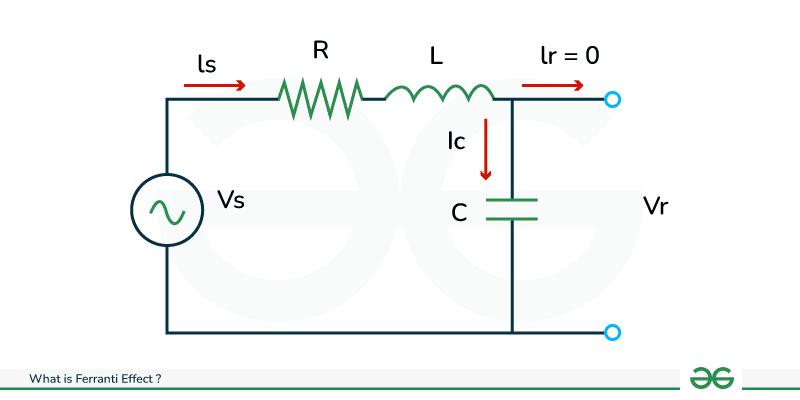
Ferranti Effect vs. Corona Effect vs. Reactive Power Effects
Ferranti Effect vs. Corona Effect vs. Reactive Power Effects A complete technical comparison for long AC transmission lines This is a n...
-
Hello. In this blog, we will try to create a steel pole model, using the PLS Pole software of Power Lines System. This created pole will pr...
-
 When a conductor is covered with ice and/or is exposed to wind, the effective conductor weight per unit length increases. During occasions o...
 -
Ruling Span in Transmission Line Design: Definition, Formula, Examples, and Engineering Standards An authoritative guide for electrical, t...
