Grounding Transformers, also called Earthing Transformers, or Neutral Couplers are used to create a neutral point in a three phase system which provides possibility for neutral earthing.
Grounding Transformers are used to provide a relatively low impedance path to ground. They also limit the magnitude of transient over voltages when re-striking ground faults occur.
Grounding Transformers likewise provide a source of ground fault current during line to ground faults which. It permit the connection of phase to neutral loads is desired.
Grounding Transformers can either be a transformer with just one winding that is zig zag connected, or a star/ delta connected winding.
Grounding Transformer Specifications usually consist of the following paramaters:
Primary Voltage - the system voltage to which the grounded winding is to be connected.
Rated KVA - the grounding transformer must be sized to carry the rated continuous primary phase current without exceeding its temperature limit
Continuous Neutral Current - three times the phase to current, or the zero sequence current.
Impedance - should be chosen so that the un-faulted phase voltages during a ground fault are within the temporary over-voltage capability of the transformer and associated equipment
Primary winding connection - Specify the type of primary connection, either Zig-Zag or grounded Wye.
Secondary connection - specify the secondary voltage and connection when applicable.
What Is a Grounding Transformer
Grounding is clearly one of the most important aspects of electrical design, but it steadfastly continues to be misinterpreted and misunderstood. Millions of dollars in liability and loss can be attributed to ground-fault arcing; thus, grounding-related issues should top the checklists of any electrical contractor. Continue Reading...
Neutral Grounding Transformer
Resistance grounding resistor systems protect power transformers and generators from damaging fault currents. Low resistance grounding of the neutral limits the ground fault current to a high level (typically 50 amps or more) in order to operate protective fault clearing relays and current transformers. These devices are then able to quickly clear the fault, usually within a few seconds. The limited fault current and fast response time also prevent over-heating and mechanical stress on conductors. Continue Reading...
Zigzag Transformer
The Zigzag grounding transformer is a commonly used option. It is a three-phase, dry-type, air- cooled auto-transformer with no secondary winding. Each phase has two identical windings, which are wound in opposite directions to give the high impedance to normal phase currents. The windings are connected in a Wye configuration. The neutral point is then connected either directly or through a neutral grounding resistor (NGR) to ground. Continue Reading...
Difference Between Grounding Transformer and Distribution Transformer
Grounding transformers (GT) differ from "standard distribution transformers" (DT) because they are used to establish a return path for ground fault currents on a system which is otherwise isolated or effectively un-grounded. This differentiates the construction in a couple of ways. Continue Reading...
Grounding Transformer Specification Sheet Sample
A specification sheet sample provided by Pacific Crest Transformers.
Largest Nuclear Power Plant in the World Kashiwazaki-Kariwa
The world's largest Nuclear Power Plant in terms of generated and rated capacity is Kashiwazaki-Kariwa power plant. It has a rated capacity of 8,212 megawatts, which provides more than 5 percent of Japan's total electricity.
 |
| Kashiwazaki-Kariwa Power Plant |
Kashiwazaki-Kariwa is located in Japan and is and is owned by Tokyo Electric Power Company. It has a total area of is 4.2 kilometres square . It also includes land in the towns of Kashiwazaki and Kariwa in the Niigata Prefecture, Japan on the coast of the Sea of Japan, from where it gets cooling water.
Kashiwazaki-KariwaIn was hit by an earthquake in 2007. This caused some damage and allowed a leak of a radioactive substance into the air and the water. The plant was subsequently closed and safety checks were completed. The plant was re-opened in May 2009.
Other Information Regarding the Largest Nuclear Power Plant in the World Kashiwazaki-Kariwa
The world’s largest nuclear power plant has been closed indefinitely, as it was designed only to cope with earthquakes of a magnitude up to 6.5. The quake has caused a number of accidents at the plant, calling into question its safety. Mildly radioactive water leaked into the sea whilst four hundred barrels of radioactive waste toppled over, 40 of them spilling their contents. There were, in total, fifty malfunctions at the plant following the earthquake. Continue Reading...
At TEPCO’s Kashiwazaki-Kariwa Nuclear Power Station, commercial operation of Units 7, 6 and 1 restarted on December 28, 2009, January 19, 2010 and August 4, 2010 respectively. We truly appreciate your sincere support and cooperation. Regarding Kashiwazaki-Kariwa Unit 5, its generation started on November 25, 2010, following approval for the restart by Niigata Prefecture, Kashiwazaki City and Kariwa Village. TEPCO is committed to working for the rest of tasks at Unit 5 with safety-first operations. Continue Reading...
Kashiwazaki-Kariwa is the world's largest rated nuclear power station. With seven reactors generating 8,212MW, the station, owned and operated by the Tokyo Electric Power Company (TEPCO), can provide electricity to 16 million households. Continue Reading...
Nuclear Power and Nuclear Power Plants Tutorials and Links
Nuclear power is energy that us produced thru controlled nuclear reaction, may it be nuclear fission or fusion. As of the moment, commercial and utility plants use nuclear fission reactions to heat water to produce steam, which is then used to generate electricity.
Nuclear power and the operation of nuclear power plants work similarly with fossil fuel-burning stations, except that a "chain reaction" inside a nuclear reactor makes the heat instead.
Nuclear fusion and nuclear fission are two different types of energy-releasing reactions in which energy is released from high-powered atomic bonds between the particles within the nucleus. The main difference between these two processes is that fission is the splitting of an atom into two or more smaller ones while fusion is the fusing of two or more smaller atoms into a larger one. Continue Reading...
Nuclear power plant's purpose is not to produce or release “Nuclear Power.” The purpose of a nuclear power plant is to produce electricity. It should not be surprising, then, that a nuclear power plant has many similarities to other electrical generating facilities. It should also be obvious that nuclear power plants have some significant differences from other plants. Continue Reading...
Among the many benefits of nuclear power, the main advantage this type of power has over other methods is that it is a clean way to produce energy as it does not result in the emission of any of the poisonous gases like carbon dioxide, sulfur dioxide or nitrogen dioxide. In today’s world when pollution of the atmosphere is one of our main worries, an option such as this is definitely preferable compared to burning of fossil fuels which causes so much of pollution. Continue Reading...
Nuclear energy originates from the splitting of uranium atoms in a process called fission. At the power plant, the fission process is used to generate heat for producing steam, which is used by a turbine to generate electricity. Continue Reading...
To turn nuclear fission into electrical energy, the first step for nuclear power plant operators is to be able to control the energy given off by the enriched uranium and allow it to heat water into steam. Enriched uranium is typically formed into inch-long pellets, each with approximately the same diameter as a dime. Next the pellets are arranged into long rods, and the rods are collected together into bundles. Continue Reading...
These mini reactors, which generate up to 300 megawatts compared to 1500 megawatts for traditional large nuclear power plants, are all the rage because they are versatile and cheap. My story focused on the smallest of the small reactors--the 25 megawatt Hyperion Power Module (a.k.a the nuclear battery) which Denver-based Hyperion Power hopes will soon fuel subdivisions, mining operations, military bases, hospitals, desalination plants and even cruise liners around the world soon. Continue Reading...
HOW TO REDUCE POWER FACTOR COST
About Power Factor
Low power factor is expensive and inefficient. Many utility companies charge you an additional fee if your power factor is less than 0.95. Low power factor also reduces your electrical system’s distribution capacity by increasing current flow and causing voltage drops. This fact sheet describes power factor and explains how you can improve your power factor to reduce electric bills and enhance your electrical system’s capacity.
REDUCING POWER FACTOR COST
To understand power factor, visualize a horse pulling a railroad car down a railroad track. Because
the railroad ties are uneven, the horse must pull the car from the side of the track. The horse is
pulling the railroad car at an angle to the direction of the car’s travel. The power required to move the car down the track is the working (real) power. The effort of the horse is the total (apparent) power.
Because of the angle of the horse’s pull, not all of the horse’s effort is used to move the car down the track. The car will not move sideways; therefore, the sideways pull of the horse is wasted effort or nonworking (reactive) power.
The angle of the horse’s pull is related to power factor, which is defined as the ratio of real (working) power to apparent (total) power. If the horse is led closer to the center of the track, the angle of side pull decreases and the real power approaches the value of the apparent power.
Therefore, the ratio
of real power to apparent power (the power factor) approaches 1. As the power factor approaches 1,
the reactive (nonworking) power approaches 0.
Cause of Low Power Factor
Low power factor is caused by inductive loads (such as transformers, electric motors, and high-intensity discharge lighting), which are a major portion of the power consumed in industrial complexes. Unlike resistive loads that create heat by consuming kilowatts, inductive loads require the current to create a magnetic field, and the magnetic field produces the desired work. The total or apparent power required by an inductive device is a composite of the following:
• Real power (measured in kilowatts, kW)
• Reactive power, the nonworking power caused by the magnetizing current, required to operate the device (measured in kilovars, kVAR)
Reactive power required by inductive loads increases the amount of apparent power (measured in kilovolt amps, kVA) in your distribution system. The increase in reactive and apparent power causes the power factor to decrease.
Why Improve Your Power Factor?
Some of the benefits of improving your power factor are as follows:
• Your utility bill will be smaller. Low power factor requires an increase in the electric utility’s generation and transmission capacity to handle the reactive power component caused by inductive loads. Utilities usually charge a penalty fee to customers with power factors less than 0.95. You can avoid this additional fee by increasing your power factor.
• Your electrical system’s branch capacity will increase. Uncorrected power factor will cause power losses in your distribution system. You may experience voltage drops as power losses increase. Excessive voltage drops can cause overheating and premature failure of motors and other inductive equipment.
Correcting Your Power Factor
Some strategies for correcting your power factor are:
• Minimize operation of idling or lightly loaded motors.
• Avoid operation of equipment above its rated voltage.
• Replace standard motors as they burn out with energy-efficient motors.
Even with energy-efficient motors, however, the power factor is significantly affected by variations in load. A motor must be operated near its rated capacity to realize the benefits of a high power factor design.
• Install capacitors in your AC circuit to decrease the magnitude of reactive
power.
Capacitor suppliers and engineering firms can provide the assistance you may need to determine the optimum power correction factor and to correctly locate and install capacitors in your electrical distribution system.
GROUNDING METHODS OF MEDIUM-VOLTAGE DISTRIBUTION NETWORKS
Ungrounded or Isolated Neutral
In an isolated neutral system, the neutral has no intentional connection to ground: the system is connected to ground through the line-to-ground capacitances. Single line-to-ground faults shift the system-neutral voltage but leave the phase-to-phase voltage triangle intact.
For these systems, two major ground fault current magnitude-limiting factors are the zero sequence line-to-ground capacitance and fault resistance. Because the voltage triangle is relatively undisturbed, these systems can remain operational during sustained, low-magnitude faults.
Self-extinction of ground faults in overhead-ungrounded lines is possible for low values of ground fault current. At higher magnitudes of fault current, faults are less likely to self extinguish at the fault current natural zero-crossing because of the high transient recovery voltage.
Effective or Solid Grounding
Effective, or solid, grounding is popular in the United States. To be classified as solidly grounded, the system must have (X0 / X1) ≤ 3 and (R0 / X1) ≤ 1, where X0 and R0 are the zero sequence reactance and resistance, and X1 is the positive-sequence reactance of the power system. In practice, solidly grounded systems have all power system neutrals connected to earth (or ground) without any intentional impedance between the neutral and earth.
There are two different practical implementations of solid grounding in medium-voltage distribution systems: uni grounded and multigrounded. In uni grounded systems there may only be three wires with all loads connected phase-to-phase , or there may be four wires with an isolated neutral and all loads connected phase-to-neutral.
Detecting high-resistance ground faults on these systems is difficult because the protective relay measures the high-resistance ground fault current combined with the unbalance current. Ground faults on these systems may produce high-magnitude currents that require tripping the
entire circuit and interrupting load to many customers.
Low-Impedance Grounding
In this type of grounding the system is grounded through a low-impedance resistor or reactor with the objective of limiting the ground fault current. By limiting the ground fault current magnitudes to tens or hundreds of amperes, you reduce equipment thermal stress, which allows you to purchase less expensive switchgear. This method is equivalent to solid grounding in many other ways, including ground fault protection methods.
Many of the distributed networks in France are low-resistance grounded. In rural distribution networks the ground fault current is limited to 150–300 A primary, and in the urban networks, which have higher capacitive currents, the resistor is selected to limit the ground fault current to a maximum of 1000 A. Industrial plant engineers also use low-impedance grounding in their plant and distribution circuits.
High-Impedance Grounding
In this method the system is grounded through a high-impedance resistor or reactor with an impedance equal to or slightly less than the total system capacitive reactance to ground. The high-impedance grounding method limits ground fault current to 25 A or less. High-resistance grounding limits transient over voltages to safe values during ground faults. The grounding resistor may be connected in the neutral of a power or grounding transformer, generator or generator-grounding bus, or across a broken delta connection of distribution transformers.
As with isolated neutral systems, ground faults on these systems shift the system neutral voltage without modifying the phase-to-phase voltage triangle. Again, this grounding method permits the utility to continue operating the system during sustained ground faults.
Non selective ground fault detection is possible by sensing system zero-sequence voltage magnitude and comparing it with an over voltage threshold, or by measuring all three phase-to ground voltages and comparing each voltage magnitude against an under voltage threshold. To find the faulted feeder, you must use sensitive zero-sequence directional elements or disconnect feeders to determine when the zero-sequence voltage drops to a normal level.
Resonant Grounding
In this method of grounding, the system is grounded through a high-impedance reactor, ideally tuned to the overall system phase-to-ground capacitance. The variable impedance reactor is called a Petersen coil after its inventor, who introduced the concept in 1917. It is also known as an arc-suppression coil or ground-fault neutralizer. The coil is typically connected to the neutral of the distribution transformer or a zigzag grounding transformer.
Systems with this type of grounding are often referred to as resonant-grounded or compensated systems. When the system capacitance is matched by the inductance of the coil, the system is fully compensated, or at 100 percent tuning. If the reactor inductance does not match the system capacitance, the system is off tuned. It can be over- or under compensated, depending on the relationship between inductance and capacitance.
THE IMPORTANCE OF THE X/R RATIO IN LOW VOLTAGE SHORT CIRCUIT STUDIES
The X/R ratio is important because it determines the peak asymmetrical fault current. The asymmetrical fault current can be much larger than the symmetrical fault current. In some short circuit studies, the X/R ratio is ignored when comparing the short circuit rating of the equipment to the available fault current at the equipment. What is not always realized is that when low voltage gear is tested, it is tested at a certain X/R ratio.
Purpose of a Short Circuit Study
The purpose of a short circuit study is to determine whether or not electrical equipment is rated properly for the maximum available fault current that the equipment may see. There are essentially four types of faults:
three-phase
single line-to-ground
double line-to-ground
line-to-line
Each of these types of faults can result in different magnitudes of fault current. In all types,
however, there is a common element: an abnormally low-impedance path for current to flow. Such a
condition can lead to extremely high currents.
By Ohm’s Law, voltage equals current times impedance (resistance). Therefore, when the impedance becomes very low and the voltage does not change, the current becomes very high. Large electrical currents produce a lot of heat transfer, which increases the temperature of cables, transformers, etc.
Obviously, fault conditions are undesirable. Therefore, protective devices like circuit breakers and fuses are used to remove the short-circuited part of the system from the power source(s). These devices are meant to interrupt very large electrical current. However, there are limits to how many amps they can interrupt.
In AC electrical systems, impedance has two components. The first is called reactance (X). Reactance depends on two things: (1) the inductance and (2) the frequency. Inductance reflects how hard it is to change the current. All conductors have some inductance, but a more useful example of a component having inductance is a coil of wire. Frequency is fixed at either 60 or 50Hz, depending upon where in the world the electrical system is, so the reactance is solely dependent upon the inductance.
The second component of impedance is the familiar resistance (R). Resistance is a measure of how hard it is for current to flow. When current flows through a material having resistance, heat is transferred from the material to the surroundings.
The resistance and reactance of a circuit establishes a power factor. The power factor (p.f.) is given by the following equation:
p.f. = cos(tan-1(X/R))
If the power factor is unity (1), then the impedance only has resistance. If the power factor is zero, then the impedance only has reactance.
If the calculated X/R ratio is larger than the test X/R ratio, then the equipment short circuit rating must be de-rated by a multiplying factor. This multiplying factor equals the ratio of the calculated peak asymmetrical fault current divided by the peak asymmetrical current corresponding to the rated symmetrical current and the test X/R ratio.
POWER SYSTEM HARMONICS TUTORIALS PDF EBOOK LINKS
Power system harmonics are integer multiples of the fundamental power system frequency created by non-linear devices connected to the power system. High levels of power system harmonics can create voltage distortion and power quality problems. Harmonics in power systems result in increased heating in the equipment and conductors, misfiring in variable speed drives, and torque pulsations in motors.
1. The Effect of Harmonics on Electric Metering
Power system harmonics distort the shape of the perfect voltage and current sinusoidal waveforms ideal to the power grid, and are multiples of the fundamental grid frequencies of 50 or 60 hertz found throughout the world. Problems caused by harmonics include overloaded circuits and higher system losses that can lead to premature equipment failure in utility and customer systems. Low utility power factor is generally associated with harmonics in electric metering.
Read more on this link http://www.ehow.com/about_6676198_effect-harmonics-electric-metering.html
2. Power System Harmonics Causes and Effects of Variable Frequency Drives Relative to the IEEE 519-1992 Standard
This document describes power system harmonics as they relate to AC variable frequency drives controlling centrifugal pumping applications. Some of the topics covered are:
o Definition of harmonics
o How AC variable frequency drives create harmonics
o Effects of variable frequency drives on the AC line
o Three-phase harmonics associated with phase-to-phase loads
o Controlling harmonics
o Information on the IEEE 519-1992 standard, “IEEE Recommended Practices
and Requirements for Harmonic Control in Electrical Power Systems”
Read more on this link http://www.alamedaelectric.com/Modicon%20Documents/AC%20Drive%20Power%20System%20Harmonics.pdf
3. POWER SYSTEM HARMONICS - A Reference Guide to Causes, Effects and Corrective Measures
This paper is intended to give an overview of power system harmonics and is aimed at those who have some electrical background but little or no knowledge of harmonics. The basics of harmonics including Fourier
theory are explained briefly. Common types of harmonic sources present in industry are addressed with particular emphasis on variable frequency drives.
The potential ill-effects due to harmonics are detailed. The recommendations of IEEE Std. 519-1992 are dealt with. A proactive approach for the addition of large non-linear loads is then presented and alternative methods for harmonic reduction are discussed.
Read more and free ebook download on this link http://samplecode.rockwellautomation.com/idc/groups/literature/documents/wp/mvb-wp011_-en-p.pdf
4. AN INTRODUCTION TO POWER SYSTEM HARMONICS
The objective of the electric utility is to deliver sinusoidal voltage at fairly constant magnitude throughout their system. This objective is complicated by the fact that there are loads on the system that produce harmonic currents. These currents result in distorted voltages and currents that can adversely impact the system
performance in different ways.
As the number of harmonic producing loads has increased over the years, it has become increasingly necessary to address their influence when making any additions or changes to an Installation.
Read more and free ebook download on this link http://www.powerstudies.com/articles/Harm_Intro.pdf
5. Harmonics in polyphase power systems
In the chapter on mixed-frequency signals, we explored the concept of harmonics in AC systems: frequencies that are integer multiples of the fundamental source frequency. With AC power systems where the source voltage waveform coming from an AC generator (alternator) is supposed to be a single-frequency sine wave, undistorted, there should be no harmonic content . . . ideally.
Read more and free ebook download on this link http://www.allaboutcircuits.com/pdf/AC.pdf
6. Tracking interference from power-system harmonics
Over the last few years, operation of the power system has undergone a dramatic change, driven by two factors: the increasing need for energy conservation and the emergence of low-cost power semiconductors. The combination of these forces has resulted in a large number of nonlinear loads being connected to the power system. These loads generate distorted currents, which contain higher-than-normal frequencies called harmonics. These harmonic currents, in turn, generate stray magnetic fields and ground loops--what we don`t want near our cabling system.
If you are going to successfully troubleshoot interference from power-system harmonics, you`ll need to understand some basics, including how harmonics are generated and how they flow around the power system. Next, you`ll need a systematic approach to finding the source of interference. And finally, some ideas for potential solutions will be helpful.
Read more on this link http://www.cablinginstall.com/index/display/article-display/62690/articles/cabling-installation-maintenance/volume-4/issue-9/contents/special-report/tracking-interference-from-power-system-harmonics.html
7. Power System Harmonics in Commercial and Industrial Applications
For many Power System designers, understanding the load requirement is only the first step. As equipment complexity increases, so does the diversity of use. One aspect seems to remain constant; the growth of non-linear loads due to DC equipment such as computers, fax machines, uninterruptible power supplies
(UPS’s), monitors and displays, fluorescent lighting, and many other devices that switch on and off rapidly such as variable frequency drives (VFD’s) for motors. The result of the introduction of such equipment is the proliferation of “harmonic pollution”.
Read more on this link http://www.fire-cables.co.uk/documents/Power%20System%20Harmonics.pdf
1. The Effect of Harmonics on Electric Metering
Power system harmonics distort the shape of the perfect voltage and current sinusoidal waveforms ideal to the power grid, and are multiples of the fundamental grid frequencies of 50 or 60 hertz found throughout the world. Problems caused by harmonics include overloaded circuits and higher system losses that can lead to premature equipment failure in utility and customer systems. Low utility power factor is generally associated with harmonics in electric metering.
Read more on this link http://www.ehow.com/about_6676198_effect-harmonics-electric-metering.html
2. Power System Harmonics Causes and Effects of Variable Frequency Drives Relative to the IEEE 519-1992 Standard
This document describes power system harmonics as they relate to AC variable frequency drives controlling centrifugal pumping applications. Some of the topics covered are:
o Definition of harmonics
o How AC variable frequency drives create harmonics
o Effects of variable frequency drives on the AC line
o Three-phase harmonics associated with phase-to-phase loads
o Controlling harmonics
o Information on the IEEE 519-1992 standard, “IEEE Recommended Practices
and Requirements for Harmonic Control in Electrical Power Systems”
Read more on this link http://www.alamedaelectric.com/Modicon%20Documents/AC%20Drive%20Power%20System%20Harmonics.pdf
3. POWER SYSTEM HARMONICS - A Reference Guide to Causes, Effects and Corrective Measures
This paper is intended to give an overview of power system harmonics and is aimed at those who have some electrical background but little or no knowledge of harmonics. The basics of harmonics including Fourier
theory are explained briefly. Common types of harmonic sources present in industry are addressed with particular emphasis on variable frequency drives.
The potential ill-effects due to harmonics are detailed. The recommendations of IEEE Std. 519-1992 are dealt with. A proactive approach for the addition of large non-linear loads is then presented and alternative methods for harmonic reduction are discussed.
Read more and free ebook download on this link http://samplecode.rockwellautomation.com/idc/groups/literature/documents/wp/mvb-wp011_-en-p.pdf
4. AN INTRODUCTION TO POWER SYSTEM HARMONICS
The objective of the electric utility is to deliver sinusoidal voltage at fairly constant magnitude throughout their system. This objective is complicated by the fact that there are loads on the system that produce harmonic currents. These currents result in distorted voltages and currents that can adversely impact the system
performance in different ways.
As the number of harmonic producing loads has increased over the years, it has become increasingly necessary to address their influence when making any additions or changes to an Installation.
Read more and free ebook download on this link http://www.powerstudies.com/articles/Harm_Intro.pdf
5. Harmonics in polyphase power systems
In the chapter on mixed-frequency signals, we explored the concept of harmonics in AC systems: frequencies that are integer multiples of the fundamental source frequency. With AC power systems where the source voltage waveform coming from an AC generator (alternator) is supposed to be a single-frequency sine wave, undistorted, there should be no harmonic content . . . ideally.
Read more and free ebook download on this link http://www.allaboutcircuits.com/pdf/AC.pdf
6. Tracking interference from power-system harmonics
Over the last few years, operation of the power system has undergone a dramatic change, driven by two factors: the increasing need for energy conservation and the emergence of low-cost power semiconductors. The combination of these forces has resulted in a large number of nonlinear loads being connected to the power system. These loads generate distorted currents, which contain higher-than-normal frequencies called harmonics. These harmonic currents, in turn, generate stray magnetic fields and ground loops--what we don`t want near our cabling system.
If you are going to successfully troubleshoot interference from power-system harmonics, you`ll need to understand some basics, including how harmonics are generated and how they flow around the power system. Next, you`ll need a systematic approach to finding the source of interference. And finally, some ideas for potential solutions will be helpful.
Read more on this link http://www.cablinginstall.com/index/display/article-display/62690/articles/cabling-installation-maintenance/volume-4/issue-9/contents/special-report/tracking-interference-from-power-system-harmonics.html
7. Power System Harmonics in Commercial and Industrial Applications
For many Power System designers, understanding the load requirement is only the first step. As equipment complexity increases, so does the diversity of use. One aspect seems to remain constant; the growth of non-linear loads due to DC equipment such as computers, fax machines, uninterruptible power supplies
(UPS’s), monitors and displays, fluorescent lighting, and many other devices that switch on and off rapidly such as variable frequency drives (VFD’s) for motors. The result of the introduction of such equipment is the proliferation of “harmonic pollution”.
Read more on this link http://www.fire-cables.co.uk/documents/Power%20System%20Harmonics.pdf
PRACTICAL GROUNDING, BONDING, SHIELDING, AND SURGE PROTECTION FREE PDF EBOOK DOWNLOAD LINKS

Practical Grounding, Bonding, Shielding and Surge Protection is a practical engineer's guide to the areas of grounding, shielding and surge protection designed to deliver reliable equipment and communications systems that comply with international and national codes.
Practical Grounding, Bonding, Shielding and Surge Protection unlike many books on grounding and shielding, provides straight-forward, practical solutions to commonly encountered real-world situations and enables one to better understand proper ground methods and to quickly recognize and solve existing grounding issues in a facility. Also, it covers not only low voltage grounding techniques but also power system grounding, which is generally not well covered in literature.
There are some very good examples illustrating how motor start-ups can induce a noise signal in signal cables through capacitive coupling into the conduit supplying the power to the motor. There are also many cases showing how ground loops can be formed and ways to prevent them.
The reader will get a very good understanding of proper grounding techniques by reading this book and will also learn about the existing standards for grounding. Readers who would benefit from this book include power engineers, consultants, instrumentation and control engineers, technicians, and anyone who designs layout for power and electronics systems or anyone trying to fix grounding issues.
Download link
ELECTRICAL POWER CABLE ENGINEERING FREE PDF EBOOK DOWNLOAD LINKS

Electrical Power Cable Engineering, Second Edition remains the foremost reference on universally used low- and medium-voltage electrical power cables, cataloging technical characteristics and assuring success for cable manufacture, installation, operation, and maintenance. While segments on electrical cable insulation and field assessment have been revamped to reflect industry transformations, new chapters tackle distinctive topics like the location of underground system faults and the thermal resistivity of concrete, proving that this expanded edition lays the soundest foundation for engineering decisions.
Electrical Power Cable Engineering, Second Edition meets its complex subject in a readable fashion, especially for those with limited background and experience…sufficient detail is provided for those with greater need in evaluating different cables for specific applications.
Electrical Power Cable Engineering, Second Edition remains the foremost reference on universally used low- and medium-voltage electrical power cables, cataloging technical characteristics and assuring success for cable manufacture, installation, operation, and maintenance. While segments on electrical cable insulation and field assessment have been revamped to reflect industry transformations, new chapters tackle distinctive topics like the location of underground system faults and the thermal resistivity of concrete, proving that this expanded edition lays the soundest foundation for engineering decisions.
Download links
ELECTRICAL ENGINEERING DICTIONARY FREE PDF EBOOK DOWNLOAD LINKS

Electrical Engineering Dictionary CRCnetBASE 2000 provides workable definitions for practicing engineers, serves as a reference and research tool for students, and offers practical information for scientists and engineers in other disciplines. Areas examined include applied electrical engineering,
microwave engineering, control engineering, power engineering,digital systems engineering, and device electronics. CRCnetBASE provides handbooks as living, evolving documents - expanding as knowledge expands, growing as technology advances, and reaching to meet your information
needs instantly.
If you don't seed you're going to confuse an anode and cathode when it really matters most.
Download link
BASICS OF ELECTRICITY TUTORIALS FREE PDF EBOOK DOWNLOAD LINKS
Upon completion of Basics of Electricity you will be able to:
• Explain the difference between conductors and insulators
• Use Ohm’s law to calculate current, voltage, and resistance
• Calculate equivalent resistance for series, parallel, or series-parallel circuits
• Calculate voltage drop across a resistor
• Calculate power given other basic values
• Identify factors that determine the strength and polarity of a current-carrying coil’s magnetic field
• Determine peak, instantaneous, and effective values of an AC sine wave
• Identify factors that effect inductive reactance and capacitive reactance in an AC circuit
• Calculate total impedance of an AC circuit
• Explain the difference between real power and apparent power in an AC circuit
• Calculate primary and secondary voltages of single-phase and three-phase transformers
• Calculate the required apparent power for a transformer
This knowledge will help you better understand customer applications In addition, you will be better able to describe products to customers and determine important differences between products.
Download link
http://www3.sea.siemens.com/step/pdfs/electricity.pdf
• Explain the difference between conductors and insulators
• Use Ohm’s law to calculate current, voltage, and resistance
• Calculate equivalent resistance for series, parallel, or series-parallel circuits
• Calculate voltage drop across a resistor
• Calculate power given other basic values
• Identify factors that determine the strength and polarity of a current-carrying coil’s magnetic field
• Determine peak, instantaneous, and effective values of an AC sine wave
• Identify factors that effect inductive reactance and capacitive reactance in an AC circuit
• Calculate total impedance of an AC circuit
• Explain the difference between real power and apparent power in an AC circuit
• Calculate primary and secondary voltages of single-phase and three-phase transformers
• Calculate the required apparent power for a transformer
This knowledge will help you better understand customer applications In addition, you will be better able to describe products to customers and determine important differences between products.
Download link
http://www3.sea.siemens.com/step/pdfs/electricity.pdf
Electrical Power Equipment Maintenance and Testing 2nd Edition FREE EBOOKS DOWNLOAD LINKS

It is an essential reference for engineers and technicians responsible for the operation, maintenance, and testing of power system equipment. Comprehensive coverage includes dielectric theory, dissolved gas analysis, cable fault locating, ground resistance measurements, and power factor, dissipation factor, DC, breaker, and relay testing methods.
This practical guide provides comprehensive and up-to-date information on the testing and maintenance of electrical power systems equipment and apparatus found in utility, industrial, commercial, and institutional facilities;demonstrating when and how to perform the appropriate tests to ensure maximum operational reliability. Integrating basic principles, theory, and practice, Electrical Power Equipment Maintenance and Testing discusses routine (field) and preoperational (acceptance) testing and maintenance procedures for assessing equipment reliability and dependability shows how to inspect and test equipment and apparatus insulation integrity and other operating characteristics.
Download link
http://www.4shared.com/document/tOuNDjsu/Electrical_Power_Equipment_Mai.htm
Electric Power Transmission System Engineering 2nd Edition FREE EBOOK PDF DOWNLOAD LINKS

See what’s new in the Second Edition:
· Topics such as automation of distribution systems, advanced SCADA systems, computer applications, substation grounding, lightning protection, and insulators
· Chapter on electric power quality
· New examples and MATLAB applications
· Substation grounding
· Lightning protection
· Insulators
Expanded topics include:
· Load forecasting techniques
· High-impedance faults
· A detailed review of distribution reliability indices
Divided into two sections—electrical and mechanical design and analysis—this book covers a broad spectrum of topics. These range from transmission system planning and in-depth analysis of balanced and unbalanced faults, to construction of overhead lines and factors affecting transmission line route selection. The text includes three new chapters and numerous additional sections dealing with new topics, and it also reviews methods for allocating transmission line fixed charges among joint users.
Uniquely comprehensive, and written as a self-tutorial for practicing engineers or students, this book covers electrical and mechanical design with equal detail. It supplies everything required for a solid understanding of transmission system engineering.
Download link
http://www.4shared.com/document/HHlleIAG/Electric_Power_Transmission_Sy.htm
Handbook of Electrical Engineering: For Practitioners in the Oil, Gas and Petrochemical Industry FREE EBOOKS DOWNLOADS LINKS
This book is a practical treatment of power system design within the oil, gas, petrochemical and offshore industries. These have significantly different characteristics to large-scale power generation and long distance public utility industries.
 Developed from a series of lectures on electrical power systems given to oil company staff and university students, Sheldrake's work provides a careful balance between sufficient mathematical theory and comprehensive practical application knowledge.
Features of the text include:
-Comprehensive handbook detailing the application of electrical engineering to the oil, gas and petrochemical industries
-Practical guidance to the electrical systems equipment used on off-shore production platforms, drilling rigs, pipelines, refineries and chemical plants
-Summaries of the necessary theories behind the design together with practical guidance on selecting the correct electrical equipment and systems required
-Presents numerous 'rule of thumb' examples enabling quick and accurate estimates to be made
-Provides worked examples to demonstrate the topic with practical parameters and data
Each chapter contains initial revision and reference sections prior to concentrating on the practical aspects of power engineering including the use of computer modelling. Offers numerous references to other texts, published papers and international standards for guidance and as sources of further reading material.
Presents over 35 years of experience in one self-contained reference
Comprehensive appendices include lists of abbreviations in common use, relevant international standards and conversion factors for units of measure
An essential reference for electrical engineering designers, operations and maintenance engineers and technicians.
Download link
http://www.4shared.com/get/ark8CmVg/Handbook_of_Electrical_Enginee.html

Features of the text include:
-Comprehensive handbook detailing the application of electrical engineering to the oil, gas and petrochemical industries
-Practical guidance to the electrical systems equipment used on off-shore production platforms, drilling rigs, pipelines, refineries and chemical plants
-Summaries of the necessary theories behind the design together with practical guidance on selecting the correct electrical equipment and systems required
-Presents numerous 'rule of thumb' examples enabling quick and accurate estimates to be made
-Provides worked examples to demonstrate the topic with practical parameters and data
Each chapter contains initial revision and reference sections prior to concentrating on the practical aspects of power engineering including the use of computer modelling. Offers numerous references to other texts, published papers and international standards for guidance and as sources of further reading material.
Presents over 35 years of experience in one self-contained reference
Comprehensive appendices include lists of abbreviations in common use, relevant international standards and conversion factors for units of measure
An essential reference for electrical engineering designers, operations and maintenance engineers and technicians.
Download link
http://www.4shared.com/get/ark8CmVg/Handbook_of_Electrical_Enginee.html
ANSI DEVICE NUMBERS
The ANSI Standard Device Numbers denote what features a protective device supports (such as a relay or circuit breaker). These types of devices protect electrical systems and components from damage when an unwanted event occurs, such as an electrical fault.
ANSI Standard Device Numbers are defined by ANSI (American National Standard Institute).
1 - Master Element
2 - Time Delay Starting or Closing Relay
3 - Checking or Interlocking Relay
4 - Master Contactor
5 - Stopping Device
6 - Starting Circuit Breaker
7 - Anode Circuit Breaker
8 - Control Power Disconnecting Device
9 - Reversing Device
10 - Unit Sequence Switch
11 - Reserved for future application
12 - Overspeed Device
13 - Synchronous-speed Device
14 - Underspeed Device
15 - Speed - or Frequency-Matching Device
16 - Reserved for future application
17 - Shunting or Discharge Switch
18 - Accelerating or Decelerating Device
19 - Starting to Running Transition Contactor
20 - Elect. operated valve (solenoid valve)
21 - Distance Relay
22 - Equalizer Circuit Breaker
23 - Temperature Control Device
24 - Over-Excitation Relay
25 - Synchronizing or Synchronism-Check Device
26 - Apparatus Thermal Device
27 - Undervoltage Relay
28 - Reserved for future application
29 - Isolating Contactor
30 - Annunciator Relay
31 - Separate Excitation Device
32 - Directional Power Relay
33 - Position Switch
34 - Motor-Operated Sequence Switch
35 - Brush-Operating or Slip-Ring Short-Circuiting Device
36 - Polarity or Polarizing Voltage Devices
37 - Undercurrent or Underpower Relay
38 - Bearing Protective Device
39 - Mechanical Conduction Monitor
40 - Field Relay
41 - Field Circuit Breaker
42 - Running Circuit Breaker
43 - Manual Transfer or Selector Device
44 - Unit Sequence Starting Relay
45 - Reserved for future application
46 - Reverse-phase or Phase-Balance Relay
47 - Phase-Sequence Voltage Relay
48 - Incomplete-Sequence Relay
49 - Machine or Transformer Thermal Relay
50 - Instantaneous Overcurrent
51 - AC Time Overcurrent Relay
52 - AC Circuit Breaker
53 - Exciter or DC Generator Relay
54 - High-Speed DC Circuit Breaker
55 - Power Factor Relay
56 - Field Application Relay
57 - Short-Circuiting or Grounding Device
58 - Power Rectifier Misfire Relay
59 - Overvoltage Relay
60 - Voltage or Current Balance Relay
61 - Machine Split Phase Current Balance
62 - Time-Delay Stopping or Opening Relay
63 - Pressure Switch
64 - Ground Detector Relay
65 - Governor
66 - Starts per Hour
67 - AC Directional Overcurrent Relay
68 - Blocking Relay
69 - Permissive Control Device
70 - Electrically Operated Rheostat
71 - Level Switch
72 - DC Circuit Breaker
73 - Load-Resistor Contactor
74 - Alarm Relay
75 - Position Changing Mechanism
76 - DC Overcurrent Relay
77 - Pulse Transmitter
78 - Phase-Angle Measuring or Out-of-Step Protective Relay
79 - AC-Reclosing Relay
80 - Reserved for future application
81 - Frequency Relay
82 - DC-Reclosing Relay
83 - Automatic Selective Control or Transfer Relay
84 - Operating Mechanism
85 - Carrier or Pilot-Wire Receiver Relay
86 - Lockout Relay
87 - Differential Protective Relay
88 - Auxiliary Motor or Motor Generator
89 - Line Switch
90 - Regulating Device
91 - Voltage Directional Relay
92 - Voltage and Power Directional Relay
93 - Field Changing Contactor
94 - Tripping or Trip-Free Relay
95 - Reluctance Torque Synchrocheck
96 - Autoloading Relay
97 - For specific applications where other numbers are not suitable
98 - For specific applications where other numbers are not suitable
99 - For specific applications where other numbers are not suitable
Note: A suffix letter may be used with the device number; for example, suffix N is used if the device is connected to a Neutral wire (example: 59N in Siemens Relay is used for protection against Neutral Displacement); and suffixes X,Y,Z are used for auxiliary devices. Similarly, the "G" suffix denotes a "ground", hence a "51G" being a time overcurrent ground relay[4].
ANSI Standard Device Numbers are defined by ANSI (American National Standard Institute).
1 - Master Element
2 - Time Delay Starting or Closing Relay
3 - Checking or Interlocking Relay
4 - Master Contactor
5 - Stopping Device
6 - Starting Circuit Breaker
7 - Anode Circuit Breaker
8 - Control Power Disconnecting Device
9 - Reversing Device
10 - Unit Sequence Switch
11 - Reserved for future application
12 - Overspeed Device
13 - Synchronous-speed Device
14 - Underspeed Device
15 - Speed - or Frequency-Matching Device
16 - Reserved for future application
17 - Shunting or Discharge Switch
18 - Accelerating or Decelerating Device
19 - Starting to Running Transition Contactor
20 - Elect. operated valve (solenoid valve)
21 - Distance Relay
22 - Equalizer Circuit Breaker
23 - Temperature Control Device
24 - Over-Excitation Relay
25 - Synchronizing or Synchronism-Check Device
26 - Apparatus Thermal Device
27 - Undervoltage Relay
28 - Reserved for future application
29 - Isolating Contactor
30 - Annunciator Relay
31 - Separate Excitation Device
32 - Directional Power Relay
33 - Position Switch
34 - Motor-Operated Sequence Switch
35 - Brush-Operating or Slip-Ring Short-Circuiting Device
36 - Polarity or Polarizing Voltage Devices
37 - Undercurrent or Underpower Relay
38 - Bearing Protective Device
39 - Mechanical Conduction Monitor
40 - Field Relay
41 - Field Circuit Breaker
42 - Running Circuit Breaker
43 - Manual Transfer or Selector Device
44 - Unit Sequence Starting Relay
45 - Reserved for future application
46 - Reverse-phase or Phase-Balance Relay
47 - Phase-Sequence Voltage Relay
48 - Incomplete-Sequence Relay
49 - Machine or Transformer Thermal Relay
50 - Instantaneous Overcurrent
51 - AC Time Overcurrent Relay
52 - AC Circuit Breaker
53 - Exciter or DC Generator Relay
54 - High-Speed DC Circuit Breaker
55 - Power Factor Relay
56 - Field Application Relay
57 - Short-Circuiting or Grounding Device
58 - Power Rectifier Misfire Relay
59 - Overvoltage Relay
60 - Voltage or Current Balance Relay
61 - Machine Split Phase Current Balance
62 - Time-Delay Stopping or Opening Relay
63 - Pressure Switch
64 - Ground Detector Relay
65 - Governor
66 - Starts per Hour
67 - AC Directional Overcurrent Relay
68 - Blocking Relay
69 - Permissive Control Device
70 - Electrically Operated Rheostat
71 - Level Switch
72 - DC Circuit Breaker
73 - Load-Resistor Contactor
74 - Alarm Relay
75 - Position Changing Mechanism
76 - DC Overcurrent Relay
77 - Pulse Transmitter
78 - Phase-Angle Measuring or Out-of-Step Protective Relay
79 - AC-Reclosing Relay
80 - Reserved for future application
81 - Frequency Relay
82 - DC-Reclosing Relay
83 - Automatic Selective Control or Transfer Relay
84 - Operating Mechanism
85 - Carrier or Pilot-Wire Receiver Relay
86 - Lockout Relay
87 - Differential Protective Relay
88 - Auxiliary Motor or Motor Generator
89 - Line Switch
90 - Regulating Device
91 - Voltage Directional Relay
92 - Voltage and Power Directional Relay
93 - Field Changing Contactor
94 - Tripping or Trip-Free Relay
95 - Reluctance Torque Synchrocheck
96 - Autoloading Relay
97 - For specific applications where other numbers are not suitable
98 - For specific applications where other numbers are not suitable
99 - For specific applications where other numbers are not suitable
Note: A suffix letter may be used with the device number; for example, suffix N is used if the device is connected to a Neutral wire (example: 59N in Siemens Relay is used for protection against Neutral Displacement); and suffixes X,Y,Z are used for auxiliary devices. Similarly, the "G" suffix denotes a "ground", hence a "51G" being a time overcurrent ground relay[4].
OVERCURRENT PROTECTION DEVICES TYPES
Overcurrent Circuit protection would be unnecessary if overloads and
short circuits could be eliminated. Unfortunately, overloads and short circuits
do occur. To protect a circuit against these currents, a protective device must
determine when a fault condition develops and automatically disconnect the
electrical equipment from the voltage source.


Circuit breakers provide a manual means of energizing and de-energizing
a circuit. In addition, circuit breakers provide automatic overcurrent
protection of a circuit. A circuit breaker allows a circuit to be reactivated
quickly after a short circuit or overload is cleared. Unlike fuses which must
be replaced when they open, a simple flip of the breaker’s handle restores the
circuit.
An overcurrent protection device must be able to recognize
the difference between overcurrents and
short circuits and respond in the proper way. Slight
overcurrents can be allowed to continue for some period of time, but as the
current magnitude increases, the protection device must open faster.
Short circuits must be interrupted instantly. Several
devices are available to accomplish this.
Fuse
A fuse is a one-shot device. The heat produced by
overcurrent causes the current carrying element to melt open, disconnecting the
load from the source voltage.
Non time-Delay Fuse Non time-delay fuses provide excellent short
circuit protection. When an overcurrent occurs, heat builds up rapidly in the fuse.
Non time-delay fuses usually hold 500% of their rating for approximately
one-fourth second, after which the current carrying element melts.

This means that these fuses cannot be used in motor circuits
which often have inrush currents greater than 500%.
Time-Delay Fuses Time-delay fuses provide overload and short
circuit protection. Time-delay fuses usually allow five times the rated current
for up to ten seconds to allow motors to start.
Circuit Breaker
The National Electrical Code defines a circuit breaker as a
device designed to open and close a circuit by no automatic means, and to open
the circuit automatically on a predetermined overcurrent without damage to
itself when properly applied within its rating.

Circuit breakers:
• SENSE when an overcurrent occurs.
• MEASURE the amount of overcurrent.
• ACT by tripping the circuit breaker in a time frame necessary
to prevent damage to itself and the associated load cables.
ULTRA HIGH VOLTAGE DOUBLE CIRCUIT TRANSMISSION LINE STRUCTURE STUDY
In order to analyze the electric characteristics of the UHV double circuit transmission line system , a simulation model is built on the Real Time Digital Simulator (RTDS) based on the design parameters of the very first UHV double circuit transmission line system in China .To study and master the electric characteristics of the UHV double circuit transmission line system thoroughly special compare between the UHV double circuit transmission line system and the UHV single line system and the compare between the UHV and EHV double circuit transmission line system model are made .
It can be concluded the double circuit transmission line system has the following features: The ingredient of the harmonics in the fault current and voltage are redundant .There are large DC components included in the fault current and the decaying process are very slow. The amplitude of the recovery voltage are quite high ,and the beat frequency are less visible compared to the EHV system. The capacitance current of the system are high before the compensation . The fault current with high resistance are much higher in the near side than in the far side.
The AC Ultra High Voltage pilot project has now successfully run into operation, which means that the voltage level and the electric power transmission ability in China is now going into a new high level. According to the planning of the State Grid of China Cooperation the first Ultra High Voltage system with double-circuit transmission lines on the same tower will be built in East China. Follow this, the research of the UHV system with double-circuit transmission lines will be push into deep degree. Based on the practical project, the modeling system are built on the Real Time Digital Simulator in the dynamic lab of China Electric Power
Research Institute . The characteristics of the modeling system are analyzed .Conclusions are drawn based on the dynamic simulation and test which can be used to the type selection of the protection relays in the practical project. Read more
Download File ===> Here
It can be concluded the double circuit transmission line system has the following features: The ingredient of the harmonics in the fault current and voltage are redundant .There are large DC components included in the fault current and the decaying process are very slow. The amplitude of the recovery voltage are quite high ,and the beat frequency are less visible compared to the EHV system. The capacitance current of the system are high before the compensation . The fault current with high resistance are much higher in the near side than in the far side.
The AC Ultra High Voltage pilot project has now successfully run into operation, which means that the voltage level and the electric power transmission ability in China is now going into a new high level. According to the planning of the State Grid of China Cooperation the first Ultra High Voltage system with double-circuit transmission lines on the same tower will be built in East China. Follow this, the research of the UHV system with double-circuit transmission lines will be push into deep degree. Based on the practical project, the modeling system are built on the Real Time Digital Simulator in the dynamic lab of China Electric Power
Research Institute . The characteristics of the modeling system are analyzed .Conclusions are drawn based on the dynamic simulation and test which can be used to the type selection of the protection relays in the practical project. Read more
Download File ===> Here
Three Phase Transformer Winding Configurations and Differential Relay Compensation
Most engineers have some familiarity with two commonly known delta connections that give
either a +30
0
or - 30
0
phase shift of positive sequence voltages and currents, and just these two configurations seem to cause extensive confusion. There are actually many other ways to configure a wye or delta that give other phase shifts, and to further complicate matters, there is the occasional zigzag winding application and the additional confusion over what occurs when CTs are connected in delta. These alternate transformer winding configurations are sometimes referred to by terms such as Dy# or Yy#, or Yd#, Dz#, and Yz#, and where the # can be, seemingly, almost any hour of the clock, hence the term “around the clock” phase shifting is sometimes heard. The paper will review the variety of possible winding configuration and give examples of the nomenclature that is used with them and how these various phase shifts are created.
The paper will also show how a transformer differential relay compensates for the effects of the various transformer winding configurations, as well as account for delta CT configurations. Many papers and instruction manuals refer to compensation in terms of phase shifting. This leads engineers to have a vague and misleading understanding that the relay is somehow phase shifting currents to compensate for the transformer phase shift. While a “sequence component differential” relay might be able to work this way, most transformer differential relays work outside of the sequence component domain and do some form of current balance calculation in the ABC domain.
You may download its pdf file on these sites:
http://www.4shared.com/file/nkoXyg8E/Three_Phase_Transformer_Windin.htm
http://www.basler.com/downloads/3phXfmrs.pdf
either a +30
0
or - 30
0
phase shift of positive sequence voltages and currents, and just these two configurations seem to cause extensive confusion. There are actually many other ways to configure a wye or delta that give other phase shifts, and to further complicate matters, there is the occasional zigzag winding application and the additional confusion over what occurs when CTs are connected in delta. These alternate transformer winding configurations are sometimes referred to by terms such as Dy# or Yy#, or Yd#, Dz#, and Yz#, and where the # can be, seemingly, almost any hour of the clock, hence the term “around the clock” phase shifting is sometimes heard. The paper will review the variety of possible winding configuration and give examples of the nomenclature that is used with them and how these various phase shifts are created.
The paper will also show how a transformer differential relay compensates for the effects of the various transformer winding configurations, as well as account for delta CT configurations. Many papers and instruction manuals refer to compensation in terms of phase shifting. This leads engineers to have a vague and misleading understanding that the relay is somehow phase shifting currents to compensate for the transformer phase shift. While a “sequence component differential” relay might be able to work this way, most transformer differential relays work outside of the sequence component domain and do some form of current balance calculation in the ABC domain.
You may download its pdf file on these sites:
http://www.4shared.com/file/nkoXyg8E/Three_Phase_Transformer_Windin.htm
http://www.basler.com/downloads/3phXfmrs.pdf
VIBRATION DAMPERS ON TRANSMISSION LINES
Vibration Dampers are used to absorb Aolian Vibrations of conductor of Transmission Lines, as well as ground wire, OPGW, and ADSS. It is mostly composed of the following; Weights – made up of cast iron, Clamp – made up of Aluminum Alloy, Nuts and Bolts made up of galvanized or stainless steel and Messenger cable made up of Galvanized Steel.

Vibration Dampers are used in areas of severe vibration. Dampers act to decrease aolian vibration amplitudes thereby reduce the dynamic bending stress at hardware location and extend conductor life.

An improperly located damper can affect the amount of protection and ability ofthe damper to suppress the damaging effects of aeolian vibration.

These fatigues stresses have maxima at suspension and dead end attachments. They can also occur at mass discontinuities and may lead to failures of individual strands. In composite conductors (ACSR, ACCR, etc. ) it may eventually lead to failure of all aluminum layers.
How Vibration Damper Works
When a vibration wave passes the damper location, the clamp of a suspension type damper
oscillates up and down, causing flexure of the damper cable and creating relative motion
between the damper clamp and damper weights.
Stored energy from the vibration wave is dissipated to the damper in the form of heat. For a damper to be effective, its response characteristics should be consistent with the frequencies of the conductor on which it is installed.
Vibration Damper Typical Types
Most utilities use Stockbridge Type Vibration Damper as standard for controlling vibration in case of single conductors.
Dampers of various designs are available from a number of manufactures. The number of
dampers required, as well as their location in the span should be determined by consultation with
the damper manufacturer.
It is a suspension type dampers that make use of the connecting cables between weights to dissipate the energy supplied to the damper. It function according to the principle of a damped spring/ mass oscillator and dissipate a main portion of the wind energy into the conductor.

For smaller size conductors, spiral dampers may be used. While for bundled conductors, you may use spacer dampers.
Note On The Use of Vibration Dampers
The use of such vibration dampers should be on a case-by-case basis. A certain item should not be used merely because it has given satisfactory performance in another location.
Vibration Dampers should be selected on the basis of the frequencies one expects to encounter in the terrain that must be traversed. The engineer should not specify a certain type of damper or armor rod simply because everyone else is using them.
AOLIAN VIBRATION OF TRANSMISSION LINES
Aolian Vibrations, also called Karman Vibration is the
result of wind forces acting transversely on the conductor which causes
alternating excitations in the vertical direction.


Aeolian vibrations occur almost on any transmission line,
for low to moderate steady winds. They are characterised by small amplitudes of
vibration (one conductor diameter) with frequency between 5 and 100 Hz,
depending on the conductor size and tensile load.
This steady wind will create air vortices or eddies on the
lee side of the conductor. These vortices on the other hand will detach at regular
intervals from the top and bottom area if the conductor, creating a force in
the conductor that is alternately impressed from above and below.
Aeolian vibrations cause an alternate bending strain of the
conductor at the suspension clamp (where bending stiffness is no more
negligible) and, depending on the strain level, may cause fatigue failures of
the cable strands.
These effects on the conductor does not always apparent
externally; failures often occur in the internal layers first. Fatigue failures
occur in the vicinity of clamps at contact points between strands where contact
stresses are quite high, in the presence of slipping.
This vibration is generally more severe in flat open terrain
where steady winds are more
often encountered. The frequency and loop length of the
vibration can be determined using equation

Aeolian vibrations can be easily controlled by adding
damping to the cable, in the form of
dampers and spacer-dampers. This is feasible for electric
power transmission lines.
XLPE CABLES DEFINITION, TUTORIALS, ans LINKS
XLPE is acronym for Cross-Linked Polyethelene. It is used as one of the major parts of power cable, particularly in its insulation. The other parts are the conductor and jacket. It is made up of Polyethylene or polythene with bonds that link one polymer chain to another.
XLPE was first patented in 1959 by Dr. Frank Percopio.It was not widely used then due to the high cost of its production until the 1980's. Its superior allowable emergency temperatures made them the choice for power feeder cables in commercial and industrial applications. XLPE did not melt and flow as did the HMWPE material.
Advantages of XLPE Cables over Other Insulation Types
Low Permittivity
Low Dielectric Losses
High Initial Dielectric Strength
Improved mechanical at elevated temperatures
No melting above 105 deg Celsius but thermal expansion occurs
Reduced susceptibility to water treeing
XLPE Ampacity Example (Catalog)

Specification Of Power XLPE Power Cable (Sample)
A. Voltage Rating
1. Specify 600V, 1, 2, 5, 8, 15, 25, 28, or 35kV
B. Conductors
1. Metal (aluminum or copper)
2. Size (AWG or kcmil)
3. Number of wires
4. Temper (1/2, 3/4, or full hard aluminum/soft copper)
C. Insulation
1. Type (XLP)
2. Thickness (100% or 133%)
D. Shields
(Note: Conductor and insulation shields are semiconducting materials)
1. Wire
2. Helical Tape
3. Wire and Helical Tape
4. None
E. Armor
1. Aluminum
2. Galvanized Steel
3. Continuous Corrugated Aluminum ARMOR-X®
4. None
F. Overall Jacket
1. PVC
2. PE
3. CPE
4. Low Smoke
5. None
G. Miscellaneous
1. Requested delivery date
2. Total quantity required
3. Desired reel footage lengths
4. Length tolerance
5. Additional shipping information
6. Additional standards (cable will be produced to standards shown on data sheet, unless otherwise noted)
Other XLPE CABLE LINKS
The specification covers design, manufacture, shop testing, packing and delivery of 11,22 & 33 kV , multi core , cross linked polyethylene insulated power cables by road/rail to the designated Store Centers in the State of Maharashtra. These cables shall be suitable for the 3 phase AC-50 Hz system with the nominal voltage of 11/22/33 kV which may reach maximum of 12/24/36 kV respectively. These cables shall primarily be designed for effectively earthed neutral system. Read more...
XLPE Solid Dielectric Power Cable Since 1979 Sumitomo Electric Industries (SEI has supplied and installed more than 1700km(1062K.mile) of EHV XLPE cables from 100kV to 500kV in Japan and foreign countries. SEI has supplied 500kV XLPE cable to the world longest service line of Tokyo Electric Power Company since 1995, which was commissioned in the year 2000. Read more...
The Insulated Cable Engineers Association (ICEA) is a professional organization dedicated to developing cable standards for the electric power, control, and telecommunications industries. Since 1925, the objective has been to ensure safe, economical, and efficient cable systems utilizing proven state-of-the-art materials and concepts. Now with the proliferation of new materials and cable designs, this mission has gained in importance. ICEA documents are of interest to industry participants worldwide, i.e.cable manufacturers, architects and engineers, utility and manufacturing plant personnel, telecommunication engineers, consultants, and OEM'S. Read more...
SURGE ARRESTERS APPLICATION IN TRANSMISSION and DISTRIBUTION LINES
Surge Arresters are used to limit voltage surges on an
electrical system to level that it can be controlled. It is designed and
connected between a conductor of an electrical system and ground to limit the
magnitude of transient over voltages on equipment.
 |
| Surge Arresters |
WHAT EXACTLY DOES A SURGE ARRESTER DO?
1.
Surge Arresters does not absorb
the lightning.
2.
Surge Arresters does not stop the
lightning.
3.
Surge Arresters divert the
lightning to ground.
4.
Surge Arresters clamp (limit) the
voltage produced by lightning.
5.
Surge Arresters equipment
electrically in parallel with it.
HOW DOES SURGE ARRESTERS WORK?
At the heart of all arresters is Metal Oxide Varistors
(MOV). The MOV disk is a semiconductor that is sensitive to voltage. At normal
voltage, the MOV disk is an insulator and will not conduct current. But at
higher (extreme) voltage caused by lightning or any surges, it becomes a conductor.
The usual construction of a typical surge arrester consists
of disks of zinc oxide material sized in cross-sectional area to provide
desired energy discharge capability, and in axial length proportional to the
voltage capability. The disks are then placed in porcelain enclosures to
provide physical support and heat removal, and sealed for isolation from
contamination in the electrical environment.
There are four basic types of surge arresters defined by
industry standards. The surge arrester type selected for the application
depends on the equipment being protected and what level of protection is
required.
Secondary Type – Available in ratings up to 650 Volts, and
are used to protect equipment at the utilization voltage level.
Distribution Type – Typically used for the protection of
equipment on power distribution circuits. They are available in ratings up to
42 kV. This type of surge arrester is further defined by normal and heavy duty.
Intermediate Type – Available in ratings up to 144 kV. This
type of surge arrester offers improved protective characteristics and
durability. They are generally used for protection of smaller substations, or
medium class power equipment.
 |
| Station Type Surge Arresters |
ANSI STANDARDS DOWNLOAD LINKS
As the voice of the U.S. standards and conformity assessment system, the American National Standards Institute (ANSI) empowers its members and constituents to strengthen the U.S. marketplace position in the global economy while helping to assure the safety and health of consumers and the protection of the environment.
The Institute oversees the creation, promulgation and use of thousands of norms and guidelines that directly impact businesses in nearly every sector: from acoustical devices to construction equipment, from dairy and livestock production to energy distribution, and many more. ANSI is also actively engaged in accrediting programs that assess conformance to standards – including globally-recognized cross-sector programs such as the ISO 9000 (quality) and ISO 14000 (environmental) management systems.
Mission To enhance both the global competitiveness of U.S. business and the U.S. quality of life by promoting and facilitating voluntary consensus standards and conformity assessment systems, and safeguarding their integrity.
Their Standards and publications may be downloaded on the links below:
ANSI WEBSITE
ANSI Standards Store
ANSI Internet Resources
ANSI Online Document Library
The Institute oversees the creation, promulgation and use of thousands of norms and guidelines that directly impact businesses in nearly every sector: from acoustical devices to construction equipment, from dairy and livestock production to energy distribution, and many more. ANSI is also actively engaged in accrediting programs that assess conformance to standards – including globally-recognized cross-sector programs such as the ISO 9000 (quality) and ISO 14000 (environmental) management systems.
Mission To enhance both the global competitiveness of U.S. business and the U.S. quality of life by promoting and facilitating voluntary consensus standards and conformity assessment systems, and safeguarding their integrity.
Their Standards and publications may be downloaded on the links below:
ANSI WEBSITE
ANSI Standards Store
ANSI Internet Resources
ANSI Online Document Library
ARMOR RODS IN TRANSMISSION LINES
Armor Rods are intended to protect against bending,
compression, abrasion, and arc-over, and to provide repair. The degree of
protection needed on a specific line depends upon a number of factors such as
line design, temperature, tension, exposure to wind flow, and vibration history
on similar construction in the same area.
Armor rods are recommended as minimum protection for clamp
type supports or suspensions. Line Guards on the other hand are recommended as
minimum protection for hand tied spans. Armor rods may be used to restore full
conductance and strength to ACSR and aluminum conductors where damage does not
exceed approximately 50% of the outer strand layer.
Tapping over applied aluminum Armor Rods is permissible.
Where it is known that tapping clamps will be installed over Armor rods, it is
recommended that the conductor be thoroughly wire brushed clean, then an
inhibitor be applied.
Subscribe to:
Comments (Atom)
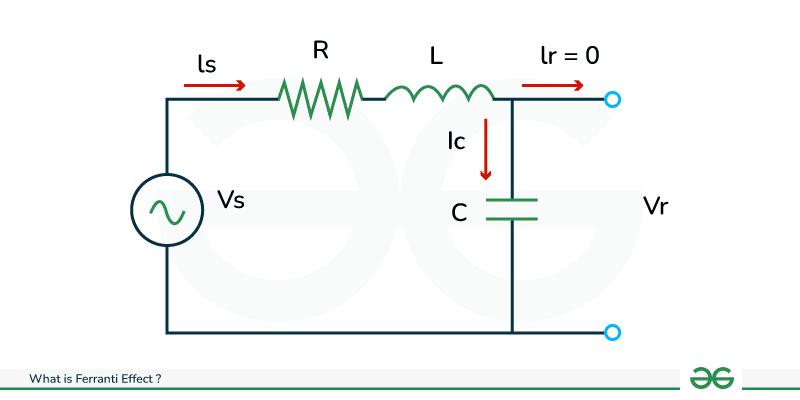
Ferranti Effect vs. Corona Effect vs. Reactive Power Effects
Ferranti Effect vs. Corona Effect vs. Reactive Power Effects A complete technical comparison for long AC transmission lines This is a n...
-
 When a conductor is covered with ice and/or is exposed to wind, the effective conductor weight per unit length increases. During occasions o...
 -
Hello. In this blog, we will try to create a steel pole model, using the PLS Pole software of Power Lines System. This created pole will pr...
-
 Yup, you read it right. This is about the World's Longest Overhead Transmission Line as of today. It is around 1700 km in length, trans...
