Advantages of Diesel Engine Use
The main advantages of using diesel driven electrical power generators are (not in rank order):
1. Performance. Diesel engines normally have high thermal efficiencies, in the region of 40% and higher, regardless of their size. Some current state-of-the-art engines can achieve efficiencies over 50%, and engine
manufacturers have forecast efficiencies as high as 60% by the twenty-first century.
2. Maintenance. Diesels represent mature and well-developed technology and are comparatively easy to maintain on site without the need for fully skilled personnel except for certain nonroutine tasks.
3. Durability and Reliability. Diesels have long lifetimes in the range, on average, of at least 20 to 25 years, and they can operate 7000 to 8000 h per year and in some cases up to 12,000 h between regular major overhauls.
4. Fuel Efficiency. In most power-generation applications, diesels have the most competitive fuel consumption rates, and between half-load and full-load their fuel con-sumption rate is reasonably constant. Depending upon the application, size of engine, loading, and the operating environment, diesel engines normally have a specific fuel consumption in the range 160 to 360 g/ kWh. The new Sulzer Diesel RTA two-stroke engines claimed to be able to produce up to 35,431 kW (47,520 bhp) with a specific fuel consumption as low as 154 g/kWh (115 g/bhp).
5. Transportability. Diesel-generators can be transported on purpose-built trucks or in specially equipped containers by land, sea, or air so that they can be used immediately on arriving on-site even in remote areas. For their physical weight and size, they can generate large amounts of electrical energy, sufficient to supply
a small town.
6. Cost. The cost per unit power installed is very competitive, but it must be emphasized that in costing diesel-power generation it is crucial to determine the total installed costs, not simply the capital cost of the engine and the generator. As a general rule of thumb, the speed of crankshaft rotation basically determines the weight, size, and cost of an engine in relation to its output power.
7. Operational Flexibility. Diesels can use a wide variety of fuel quality and can be designed to use both liquid and gaseous fuels; that is, they are ‘‘dual–fuel’’ engines. They can also be adopted for use in cogeneration and total-energy systems and in ‘‘non-air’’ environments.
8. Environmentally Compliant. Diesels inherently produce low amounts of harmful exhaust emissions. However, in recent years, engines have had to be redesigned and exhaust-emissions treatment systems upgraded to meet increasingly stringent regulations. It is certain that further advances in the efficacy of emission reduction techniques will be required for all fossil-fuel power systems in the future.
MOBILE RADIO CHANNEL BASICS AND TUTORIALS
The term mobile channel refers to the transfer function of adio link when one or both of the terminals are moving. The moving terminal is typically in a vehicle such as a car, or a personal communications terminal
such as a cellphone. Normally one end of the radio link is fixed, and this is referred to as the base station.
In the link, there is usually multipath radiowave propagation, which is changing with time, or more specifically, as a function of position of the moving terminal. The effects of this multipath propagation dominate the behavior and characterization of the mobile channel.
The radio frequency of the link ranges from hundreds of kilohertz, as in broadcast AMradio, to microwave
frequencies, as in cellphone communications. Indeed, even optical frequencies are used, as in an infrared link
used for indoor computer communications.
The kind of channel most often referred to as “mobile,” however, is that using microwave frequencies, and this article concentrates on the characteristics of a mobile microwave radio link. Much of the channel behavior can be scaled by the carrier frequency and by the speed of the mobile terminal.
Current spectral usage is a result of many different historical developments, so the bands used by mobile
radio channels have evolved to be at many frequencies. For example, current vehicular and personal communications terminals mostly use frequencies around 400 MHz, 900 MHz, and 1.8 GHz.
In the future, higher frequencies will be used. The frequency has a definitive bearing on the rate at which the channel changes.
Some examples of mobile channels include: domestic cordless telephones; cellular telephones and radiotelephones; pagers; satellite communication terminals, including navigational services such as Global Positioning System (GPS) reception; and radio networks for local data communications.
Finally, the reception by portable receivers of broadcast radio, at frequencies of a few hundred kilohertz (AM radio) are common forms of the mobile radio channel.
The use of mobile channels has grown very quickly in the last decade. This growth will continue. It is
driven by a combination of consumer demand for mobile voice and data services and advances in electronic
technology. A limiting factor to the growth is that many users must share the radio spectrum, which is a finite
resource.
The spectral sharing is not only local, it is also international, and so spectral regulatory issues have
also become formidable. The increasing pressure to use the spectrum more efficiently is also a driving force in regulatory and technical developments.
To a user, amobile or personal communications system is simple: it is a terminal, such as a telephone, that
uses a radio link instead of a wire link. The conspicuous result is that the terminal is compact for portability,
and it has an antenna, although for personal communications the antenna is often no longer visible.
To the communication engineer, however, the mobile terminal is just a component in a vast, complex circuit. The mobile channel is one link in the circuit, but this link is the most complex, owing to its use of radio waves in complicated propagation environments and of radio signal-processing technology needed to facilitate wireless transmission among multiple users.
In mobile channels, efficient spectral utilization is a function of the basic limitations on controlling radiowave behavior in complicated physical environments, including the launching and gathering of the waves.
Thus antennas and propagation are key topics, and their roles characterize the channel behavior.
SEASON'S GREETINGS
MERRY CHRISTMAS
TO ALL THE
READERS, SUBSCRIBERS AND FOLLOWERS OF
TRANSMISSION LINES DESIGN AND ELECTRICAL ENGINEERING HUB!!!
CHARACTERISTICS OF LIGHTNING BASICS AND TUTORIALS
Lightning has a tendency preferentially to strike taller structures and objects. Strikes to ground are, however, quite common where there is a distance between structures of more than twice their individual height.
For lightning protection purposes an all conducting building, with metal cladding and roof, is an ideal structure. It effectively provides electronic equipment within it with a ‘screened room’ environment.
Many steel framed or reinforced concrete buildings with metal cladding will approximate to this ideal. If lightning strikes the building, a ‘sheet’ of current will flow all over the surface and down to earth, provided that the cladding and roofing is correctly bonded together.
Any small differences in resistance will have little effect on current flow – flow paths are dictated by inductance and not resistance, owing to the fast impulsive nature of the lightning return stroke and restrikes.
Current flows in steel framed or reinforced concrete structures show a similar preference towards external conductors.
Figure 9.15 shows that even when lightning strikes the centre of a building’s roof, the majority of the current will flow down external conductors rather than the nearer internal conductors.

The current flow through the three internal stanchions is relatively small, creating small magnetic
fields within the building.
Thus, buildings with large numbers of down conductors around the edge of the building will have greatly reduced magnetic fields inside the building, minimising the risk of transient interference to electronic equipment from the building’s lightning protection system, provided, of course, that power and data cables are routed away from the down conductors.
For lightning protection purposes an all conducting building, with metal cladding and roof, is an ideal structure. It effectively provides electronic equipment within it with a ‘screened room’ environment.
Many steel framed or reinforced concrete buildings with metal cladding will approximate to this ideal. If lightning strikes the building, a ‘sheet’ of current will flow all over the surface and down to earth, provided that the cladding and roofing is correctly bonded together.
Any small differences in resistance will have little effect on current flow – flow paths are dictated by inductance and not resistance, owing to the fast impulsive nature of the lightning return stroke and restrikes.
Current flows in steel framed or reinforced concrete structures show a similar preference towards external conductors.
Figure 9.15 shows that even when lightning strikes the centre of a building’s roof, the majority of the current will flow down external conductors rather than the nearer internal conductors.

The current flow through the three internal stanchions is relatively small, creating small magnetic
fields within the building.
Thus, buildings with large numbers of down conductors around the edge of the building will have greatly reduced magnetic fields inside the building, minimising the risk of transient interference to electronic equipment from the building’s lightning protection system, provided, of course, that power and data cables are routed away from the down conductors.
MAGNETS AND MAGNETIC FIELDS BASICS AND TUTORIALS
MAGNETIC MATERIALS
Iron and its derivative, steel, can be given the property of attracting other pieces of iron and steel. This property, known as magnetism, is possessed to a much lesser degree by nickel, cobalt, and gadolinium. Iron and steel combined with these and other magnetic materials will yield an alloy with much greater magnetic strength.
The magnetic effects of magnets are concentrated at areas called poles. These poles are of two types and have been designated as north and south poles because of the fact that a magnet supported freely in air will align its axis in a north-south direction.
The end of the magnet that points geographically north is called the north (N) pole, and the other end is called the south (S) pole. Although all materials have some degree of a magnetic property, most materials do not have a useful amount of this property and, for all practical purposes, can be called nonmagnetic.
PERMANENT AND TEMPORARY MAGNETS
Hard steel is used for the construction of permanent magnets. Soft steel is easier to magnetize, but will retain a relatively weak degree of magnetization when the magnetizing force is removed. This small amount of magnetism retained by soft steel is known as residual magnetism and is both desirable and important in the operation of electrical equipment
ELECTROMAGNETS
A very powerful temporary magnet can be made by placing a bar of soft steel inside a coil of wire carrying an electrical current. The intense magnetic force created is reduced to a weak residual force as soon as the current is interrupted. An electromagnet also can be used to magnetize magnetic materials by placing the material across the poles of the electromagnet.
MAGNETIC INDUCTION
Magnetic materials also can be magnetized by placing them near a magnet. The magnetism produced in the material by this method is called induced magnetism. In the case of soft steel, the effect is only temporary. The magnetism is lost as soon as the magnet is removed.
LAW OF MAGNETS
If two magnets are brought near each other, the following will result:
• like poles repel.
• unlike poles attract.
MAGNETIC FIELDS
Magnets influence one another at a distance without actually making contact. The space around a magnet through which this invisible force acts is known as the magnetic field. The force itself may be represented by magnetic lines of force that are assumed to exist in the space between the poles of the magnet. These invisible lines, collectively referred to as magnetic flux. Magnetic lines of force cannot be blocked or insulated, but will pass through or within any material.
Field Strength
The concentration of lines of force is an indication of the magnetic strength at various points in the magnetic field. This concentration, often referred to as the flux density, is the number of flux lines in a square inch of CSA. In other words, as the number of flux lines per CSA increases, the magnetic field becomes stronger.
Properties of Magnetic Flux
The following accepted properties of magnetic flux are very useful in explaining the operation of a wide variety of electrical equipment using magnetic circuits:
1. There is no insulator for magnetic flux; it passes through all materials.
2. Lines of force are closed loops passing through the magnet and the space around it.
3. The loops, formed by the lines of force, tend to become larger and increase in length as they develop away from the magnet.
4. Lines of force have direction. They emerge from the N pole and enter the S pole.
5. Lines of force never cross one another.
6. Lines of force concentrate at the poles and develop maximum field strength there.
7. Large numbers of flux lines are easily established in magnetic materials, but are difficult to establish in nonmagnetic materials such as air.
Iron and its derivative, steel, can be given the property of attracting other pieces of iron and steel. This property, known as magnetism, is possessed to a much lesser degree by nickel, cobalt, and gadolinium. Iron and steel combined with these and other magnetic materials will yield an alloy with much greater magnetic strength.
The magnetic effects of magnets are concentrated at areas called poles. These poles are of two types and have been designated as north and south poles because of the fact that a magnet supported freely in air will align its axis in a north-south direction.
The end of the magnet that points geographically north is called the north (N) pole, and the other end is called the south (S) pole. Although all materials have some degree of a magnetic property, most materials do not have a useful amount of this property and, for all practical purposes, can be called nonmagnetic.
PERMANENT AND TEMPORARY MAGNETS
Hard steel is used for the construction of permanent magnets. Soft steel is easier to magnetize, but will retain a relatively weak degree of magnetization when the magnetizing force is removed. This small amount of magnetism retained by soft steel is known as residual magnetism and is both desirable and important in the operation of electrical equipment
ELECTROMAGNETS
A very powerful temporary magnet can be made by placing a bar of soft steel inside a coil of wire carrying an electrical current. The intense magnetic force created is reduced to a weak residual force as soon as the current is interrupted. An electromagnet also can be used to magnetize magnetic materials by placing the material across the poles of the electromagnet.
MAGNETIC INDUCTION
Magnetic materials also can be magnetized by placing them near a magnet. The magnetism produced in the material by this method is called induced magnetism. In the case of soft steel, the effect is only temporary. The magnetism is lost as soon as the magnet is removed.
LAW OF MAGNETS
If two magnets are brought near each other, the following will result:
• like poles repel.
• unlike poles attract.
MAGNETIC FIELDS
Magnets influence one another at a distance without actually making contact. The space around a magnet through which this invisible force acts is known as the magnetic field. The force itself may be represented by magnetic lines of force that are assumed to exist in the space between the poles of the magnet. These invisible lines, collectively referred to as magnetic flux. Magnetic lines of force cannot be blocked or insulated, but will pass through or within any material.
Field Strength
The concentration of lines of force is an indication of the magnetic strength at various points in the magnetic field. This concentration, often referred to as the flux density, is the number of flux lines in a square inch of CSA. In other words, as the number of flux lines per CSA increases, the magnetic field becomes stronger.
Properties of Magnetic Flux
The following accepted properties of magnetic flux are very useful in explaining the operation of a wide variety of electrical equipment using magnetic circuits:
1. There is no insulator for magnetic flux; it passes through all materials.
2. Lines of force are closed loops passing through the magnet and the space around it.
3. The loops, formed by the lines of force, tend to become larger and increase in length as they develop away from the magnet.
4. Lines of force have direction. They emerge from the N pole and enter the S pole.
5. Lines of force never cross one another.
6. Lines of force concentrate at the poles and develop maximum field strength there.
7. Large numbers of flux lines are easily established in magnetic materials, but are difficult to establish in nonmagnetic materials such as air.
ELECTRICAL ENGINEERING GLOSSARY, TERMS, AND DEFINITIONS
Access Fitting. A fitting that permits access to conductors in concealed
or enclosed wiring, elsewhere than at an outlet.
Active Electrical Network. A network that contains one or more
sources of electrical energy.
Admittance. The reciprocal of impedance.
Air-Blast Transformer. A transformer cooled by forced circulation
of air through its core and coils.
Air Circuit Breaker. A circuit breaker in which the interruption occurs
in air.
Air Switch. A switch in which the interruption of the circuit occurs
in air.
Alive. Electrically connected to a source of emf, or electrically
charged with a potential different from that of the earth. Also,
practical synonym for current-carrying or hot.
Alternating Current. A periodic current, the average value of which
over a period is zero.
Alternator. Synchronous generator; a synchronous alternatingcurrent
machine that changes mechanical power into electrical
power.
Ambient Temperature. The temperature of a surrounding cooling
medium, such as gas or liquid, that comes into contact with the
heated parts of an apparatus.
Ammeter. An instrument for measuring electric current.
Ampere. A charge flow of one coulomb per second.
Annunciator. An electromagnetically operated signaling apparatus
that indicates whether a current is flowing or has flowed in one
or more circuits.
Apparent Power. In a single-phase, two-wire circuit, the product of
the effective current in one conductor multiplied by the effective
voltage between the two points of entry.
Appliance. Current-consuming equipment, fixed or portable, such
as heating or motor-operated equipment.
Arc-Fault Circuit Interrupter (AFCI). An electrical device that detects
the unique electronic characteristics of electrical arcs. If an
arc is sensed, the device further deenergizes the circuit to which it
is connected.
Arcing Contacts. Contacts on which an arc is drawn after the main
contacts of a switch or circuit breaker have parted.
Arcing Time of Fuse. The time elapsing from the severance of the
fuse link to the final interruption of the circuit under specified
conditions.
Arc-Over of Insulator. A discharge of power current in the form of
an arc, following a surface discharge over an insulator.
Armor Clamp. A fitting for gripping the armor of a cable at the
point where the armor terminates, or where the cable enters a
junction box or other apparatus.
Armored Cable. A cable provided with a wrapping of metal, usually
steel wires, primarily for the purpose of mechanical protection.
Arrester, Lightning. A device that reduces the voltage of a surge
applied to its terminals and restores itself to its original operating
condition.
Autotransformer. A transformer in which part of the winding is
common to both the primary and secondary circuits.
Back-Connected Switch. A switch in which the current-carrying
conductors are connected to studs in back of the mounting base.
Bank. An assemblage of fixed contacts in a rigid unit over which
wipers or brushes may move and make connection with the
contacts.
Bank, Duct. An arrangement of conduit that provides one or more
continuous ducts between two points.
Benchboard. A switchboard with a horizontal section for control
switches, indicating lamps, and instrument switches; may also
have a vertical instrument section.
Bidirectional Current. A current that has both positive and negative
values.
Bond, Cable. An electrical connection across a joint in the armor
or lead sheath of a cable, between the armor or sheath to ground,
or between the armor or sheath of adjacent cables.
Box, Conduit. A metal box adapted for connection to conduit for
installation of wiring, making connections, or mounting devices.
Box, Junction. An enclosed distribution panel for connection or
branching of one or more electric circuits without making permanent
splices.
Box, Junction (Interior Wiring). A metal box with blank cover for
joining runs of conduit, electrical metallic tubing, wireway, or
raceway and for providing space for connection and branching of
enclosed conductors.
Box, Pull. A metal box with a blank cover which is used in a run of
conduit or other raceway to facilitate pulling in the conductors; it
may also be installed at the end of one or more conduit runs for
distribution of the conductors.
Branch Circuit. That portion of a wiring system extending beyond
the final automatic overload protective device.
Branch Circuit, Appliance. A circuit supplying energy either to permanently
wired appliances or to attachment-plug receptacles such
as appliance or convenience outlets and having no permanently
connected lighting fixtures.
Branch Circuit Distribution Center. A distribution circuit at which
branch circuits are supplied.
Branch Circuit, Lighting. A circuit supplying energy to lighting outlets
only.
Branch Conductor. A conductor that branches off at an angle from
a continuous run of conductor.
Break. The break of a circuit-opening device is the minimum distance
between the stationary and movable contacts when the device
is in its open position.
Breakdown. Also termed puncture, denoting a disruptive discharge
through insulation.
Breaker, Line. A device that combines the functions of a contactor
and a circuit breaker.
Buried Cable. A cable installed under the surface of the soil in such
a manner that it cannot be removed without digging up the soil.
(Type UF is commonly used for home wiring.)
Bus. A conductor or group of conductors that serves as a common
connection for three or more circuits in a switchgear
assembly.
Bushing. Also termed insulating bushing; a lining for a hole for insulation
and/or protection from abrasion of one or more conductors
passing through it.
Cabinet. An enclosure for either surface or flush mounting, provided
with a frame, mat, or trim.
Cable. The package of wires, insulating material, sheathing, and
whatever else is necessary for the type being installed. It is usually
purchased in large spools.
Cable Fault. A partial or total local failure in the insulation or continuity
of the conductor.
Cable Joint. Also termed a splice; a connection between two
or more individual lengths of cables, with their conductors
individually connected, and with protecting sheaths over the
joint.
Cable, Service. Service conductors arranged in the form of a cable
(see Service).
Cable Sheath. The protective covering, such as lead or plastic, applied
over a cable.
Charge, Electric. An inequality of positive and negative electricity
in or on a body. The charge stored in a capacitor (condenser)
corresponds to a deficiency of free electrons on the positive
plate and to an excess of free electrons on the negative
plate.
Choke Coil. A low-resistance coil with sufficient inductance to substantially
impede ac or transient currents.
Circuit, Electric. A conducting path through which electric charges
may flow. A dc circuit is a closed path for charge flow; an ac circuit
is not necessarily closed and may conduct in part by means of an
electric field (displacement current).
Circuit, Earth (Ground) Return. An electric circuit in which the
ground serves to complete a path for charge flow.
Circuit, Magnetic. A closed path for establishment of magnetic flux
(magnetic field) that has the direction of the magnetic induction
at every point.
Cleat. An assembly of a pair of insulating material members with
grooves for holding one or more conductors at a definite distance
from the mounting surface.
Clip, Fuse. Contacts on a fuse support for connecting a fuse holder
into a circuit.
Closed-Circuit Voltage. The terminal voltage of a source of electricity
under a specified current demand.
Closed Electric Circuit. A continuous path or paths providing for
charge flow. In an ac closed circuit, charge flow may be changed
into displacement current through a capacitor (condenser).
Coercive Force. The magnetizing force at which the magnetic induction
is zero at a point on the hysteresis loop of a magnetic
substance.
Coil. A conductor arrangement (basically a helix or spiral) that concentrates
the magnetic field produced by electric charge flow.
Composite Conductor. A conductor consisting of two or more
strands of different metals, operated in parallel.
Concealed. To be made inaccessible by the structure or finish of a
building; also, wires run in a concealed raceway.
Condenser. Also termed capacitor; a device that stores electric
charge by means of an electric field.
Conductance. A measure of permissiveness to charge flow; the reciprocal
of resistance.
Conductor. A substance that has free electrons or other charge carriers
that permit charge flow when an emf is applied across the
substance.
Conduit. A structure containing one or more ducts; commonly
formed from iron pipe or electrical metallic tubing (EMT).
Conduit Fittings. Accessories used to complete a conduit system,
such as boxes, bushings, and access fittings.
Conduit, Flexible Metal. A flexible raceway of circular form for enclosing
wires or cables; usually made of steel wound helically and
with interlocking edges and a weather-resistant coating. Sometimes
called Greenfield.
Conduit, Rigid Steel. A raceway made of mild steel pipe with a
weather-resistant coating.
Conduit Run. A duct bank; an arrangement of conduit with a continuous
duct between two points in an electrical installation.
Contactor. An electric power switch, not operated manually, designed
for frequent operation.
Contacts. Conducting parts that employ a junction that is opened
or closed to interrupt or complete a circuit.
Control Relay. A relay used to initiate or permit a predetermined
operation in a control circuit.
Coulomb. An electric charge of 6.28 × 10¹⁸ electrons. One coulomb
is transferred when a current of one ampere continues past a point
for one second.
Counter EMF. CEMF; the effective emf within a system which opposes
current in a specified direction.
Current. The rate of charge flow. A current of one ampere is equal
to a flow rate of one coulomb per second.
Cycle. The complete series of values that occurs during one period
of a periodic quantity. The unit of frequency, the hertz, is equal
to one cycle per second.
Dead. Functionally conducting parts of an electrical system that
have no potential difference or charge (voltage of zero with respect
to ground).
Degree, Electrical. An angle equal to 1/360 of the angle between
consecutive field poles of like polarity in an electrical machine.
Diagram, Connection. A drawing showing the connections and interrelations
of devices employed in an electrical circuit.
Dielectric. A medium or substance in which a potential difference
establishes an electric field that is subsequently recoverable as
electric energy.
Direct Current. Aunidirectional current with a constant value. Constant
value is defined in practice as a value that has negligible
variation.
Direct EMF. Also termed direct voltage; anemf that does not change
in polarity and has a constant value (one of negligible variation).
Discharge. An energy conversion involving electrical energy. Examples
include discharge of a storage battery, discharge of a capacitor,
and lightning discharge of a thundercloud.
Displacement Current. The apparent flow of charge through a dielectric
such as in a capacitor; represented by buildup and/or decay
of an electric field.
Disruptive Discharge. A rapid and large current increase through
an insulator due to insulation failure.
Distribution Center. A point of installation for automatic overload
protective devices connected to buses where an electrical supply
is subdivided into feeders and/or branch circuits.
Divider, Voltage. A tapped resistor or series arrangement of resistors,
sometimes with movable contacts, providing a desired IR
drop. (A voltage divider is not continuously and manually variable
as in a potentiometer).
Drop, Voltage. An IR voltage between two specified points in an
electric circuit.
Duct. A single enclosed runway for conductors or cables.
Effective Value. The effective value of a sine-wave ac current or voltage
is equal to 0.707 of peak. Also called the root-mean-square
Glossary 423
(rms) value, it produces the same I 2R power as an equal dc
value.
Efficiency. The ratio of output power to input power, usually expressed
as a percentage.
Electrical Units. In the practical system, electrical units comprise the
volt, the ampere, the ohm, the watt, the watt-hour, the coulomb,
the mho, the henry, the farad, and the joule.
Electricity. A physical entity associated with the atomic structure of
matter that occurs in polar forms (positive and negative) and that
are separable by expenditure of energy.
Electrode. A conducting substance through which electric current
enters or leaves in devices that provide electrical control or energy
conversion.
Electrolyte. A substance that provides electrical conduction when
dissolved (usually in water.)
Electrolytic Conductor. Flow of electric charges to and from electrodes
in an electrolytic solution.
Electromagnetic Induction. A process of generation of emf by movement
of magnetic flux that cuts an electrical conductor.
Electromotive Force (EMF). An energy-charge relation that results
in electric pressure, which produces or tends to produce charge
flow (see Voltage).
Electron. The subatomic unit of negative electricity; it is a charge of
1.6 × 10⁻¹⁹ coulomb.
Electronics. The science dealing with charge flow in vacuum, gases,
and crystal lattices.
Electroplating. The electrical deposition of metallic ions as neutral
atoms on an electrode immersed in an electrolyte.
Electrostatics. A branch of electrical science dealing with the laws
of electricity at rest.
Energy. The amount of physical work a system is capable of doing.
Electrical energy is measured in watt-seconds (the product of
power and time).
Entrance, Duct. An opening of a duct at a distributor box or other
accessible location.
Equipment, Service. A circuit breaker or switches and fuses with
their accessories, installed near the point of entry of service conductors
to a building.
424 Glossary
Exciter. An auxiliary generator for supplying electrical energy to the
field of another electrical machine.
Farad. A unit of capacitance defined by the production of one volt
across the capacitor terminals when a charge of one coulomb is
stored.
Fault Current. An abnormal current flowing between conductors or
from a conductor to ground due to an insulation defect, arc-over,
or incorrect connection.
Feeder. A conductor or a group of conductors for connection of generating
stations, substations, generating stations and substations,
or a substation and a feeding point.
Ferromagnetic Substance. A substance that has a permeability considerably
greater than that of air; a ferromagnetic substance has a
permeability that changes with the value of applied magnetizing
force.
Filament. A wire or ribbon of conducting (resistive) material that
develops light and heat energy due to electric charge flow; light
radiation is also accompanied by electron emission.
Fixture Stud. A fitting for mounting a lighting fixture in an outlet
box and which is secured to the box.
Flashover. A disruptive electrical discharge around or over (but not
through) an insulator.
Fluorescence. An electrical discharge process involving radiant energy
transferred by phosphors into radiant energy that provides
increased luminosity.
Flux. Electrical field energy distributed in space, in a magnetic substance,
or in a dielectric. Flux is commonly represented diagrammatically
by means of flux lines denoting magnetic or electric
forces.
Force. An elementary physical cause capable of modifying the motion
of a mass.
Frequency. The number of periods occurring in unit time of a periodic
process such as in the flow of electric charge.
Frequency Meter. An instrument that measures the frequency of an
alternating current.
Fuse. A protective device with a fusible element that opens the circuit
by melting when subjected to excessive current.
Fuse Cutout. An assembly consisting of a fuse support and holder,
which may also include a fuse link.
Glossary 425
Fuse Element. Also termed fuse link; the current-carrying part
of a fuse that opens the circuit when subjected to excessive
current.
Fuse Holder. A supporting device for a fuse that provides terminal
connections.
Galvanometer. An instrument for indicating or measuring comparatively
small electric currents. A galvanometer usually has zerocenter
indication.
Gap. Spark gap; a high-voltage device with electrodes between
which a disruptive discharge of electricity may pass, usually
through air. A sphere gap has spherical electrodes; a needle gap
has sharply pointed electrodes; a rod gap has rods with flat
ends.
Ground. Also termed earth; a conductor connected between a circuit
and the soil. A chassis ground is not necessary at ground potential
but is taken as a zero-volt reference point. An accidental
ground occurs due to cable insulation faults, an insulator defect,
and so on.
Ground-Fault Interrupter (GFI). A device installed in circuits where
current leakage can be especially dangerous, such as outdoor or
bathroom circuits. It shuts off current flow within 0.025 second
at the onset of a leak as small as 5 milliamperes.
Grounding Electrode. A conductor buried in the earth for connection
to a circuit. The buried conductor is usually a cold-water
pipe, to which connection is made with a ground clamp.
Ground Lug. A lug for convenient connection of a grounding conductor
to a grounding electrode or device to be grounded.
Ground Outlet. An outlet provided with a polarized receptacle with
a grounded contact for connection of a grounding conductor.
Ground Switch. A switch for connection or disconnection of a
grounding conductor.
Guy. A wire or other mechanical member having one end secured
and the other end fastened to a pole or structural part maintained
under tension.
Hanger. Also termed cable rack; a device usually secured to a wall
to provide support for cables.
Heat Coil. A protective device for opening and/or grounding a circuit
by switching action when a fusible element melts due to excessive
current.
426 Glossary
Heater. In the strict sense, a heating element for raising the temperature
of an indirectly heated cathode in a vacuum or gas tube. Also
applied to appliances such as space heaters and radiant heaters.
Henry. The unit of inductance; it permits current increase at the rate
of 1 ampere per second when 1 volt is applied across the inductor
terminals.
Hickey. A fitting for mounting a lighting fixture in an outlet box.
Also, a device used with a pipe handle for bending conduit.
Horn Gap. A form of switch provided with arcing horns for automatically
increasing the length of the arc and thereby extinguishing
the arc.
Hydrometer. An instrument for indicating the state of charge in a
storage battery.
Hysteresis. The magnetic property of a substance which results from
residual magnetism.
Hysteresis Loop. A graph that shows the relation between magnetizing
force and flux density for a cyclically magnetized
substance.
Hysteresis Loss. The heat loss in a magnetic substance due to application
of a cyclic magnetizing force to a magnetic substance.
Impedance. Opposition to ac current by a combination of resistance
and reactance; impedance is measured in ohms.
Impedances, Conjugate. A pair of impedances that have the same resistance
values, and that have equal and opposite reactance values.
Impulse. An electric surge of unidirectional polarity.
Indoor Transformer. A transformer that must be protected from the
weather.
Induced Current. A current that results in a closed conductor due
to cutting of lines of magnetic force.
Inductance. An electrical property of a resistanceless conductor,
which may have a coil form and which exhibits inductive reactance
to an ac current. All practical inductors also have at least a
slight amount of resistance.
Inductor. A device such as a coil with or without a magnetic core
which develops inductance, as distinguished from the inductance
of a straight wire.
Instantaneous Power. The product of an instantaneous voltage by
the associated instantaneous current.
Glossary 427
Instrument. An electrical device for measurement of a quantity under
observation or for presenting a characteristic of the quantity.
Interconnection, System. A connection of two or more power systems.
Interconnection Tie. A feeder that interconnects a pair of electric
supply systems.
Interlock. An electrical device whose operation depends on another
device for controlling subsequent operations.
Internal Resistance. The effective resistance connected in series with
a source of emf due to resistance of the electrolyte, winding resistance,
and so on.
Ion. A charged atom, or a radical. For example, a hydrogen atom
that has lost an electron becomes a hydrogen ion; sulphuric acid
produces H+ and SO−4 ions in water solution.
IR Drop. A potential difference produced by charge flow through a
resistance.
Isolating Switch. An auxiliary switch for isolating an electric circuit
from its source of power; it is operated only after the circuit has
been opened by other means.
Joule. A unit of electrical energy, also called a watt-second. One
joule is the transfer of one watt for one second.
Joule’s Law. The rate at which electrical energy is changed into heat
energy is proportional to the square of the current.
Jumper. A short length of conductor for making a connection between
terminals, around a break in a circuit, or around an electrical
instrument.
Junction. Apoint in a parallel or series-parallel circuit where current
branches off into two or more paths.
Junction Box. An enclosed distribution panel for the connection or
branching of one or more electrical circuits without using permanent
splices. In the case of interior wiring, a junction box consists
of a metal box with a blank cover; it is inserted in a run of conduit,
raceway, or tubing.
Kirchhoff’s Law. The voltage law states that the algebraic sum of
the drops around a closed circuit is equal to zero. The current law
states that the algebraic sum of the currents at a junction is equal
to zero.
Knockout. A scored portion in the wall of a box or cabinet which
can be removed easily by striking with a hammer; a circular
428 Glossary
hole is provided thereby for accommodation of conduit or
cable.
kVA. Kilovolt-amperes; the product of volts and amperes divided
by 1000.
Lag. Denotes that a given sine wave passes through its peak at a
later time than a reference sine wave.
Lamp holder. Also termed socket or lamp receptacle; a device for
mechanical support of and electrical connection to a lamp.
Lay. The lay of a helical element of a cable is equal to the axial
length of a turn.
Lead. Denotes that a given sine wave passes through its peak at an
earlier time than a reference sine wave.
Leakage, Surface. Passage of current over the boundary surfaces of
an insulator as distinguished from passage of current through its
bulk.
Leg of a Circuit. One of the conductors in a supply circuit between
which the maximum supply voltage is maintained.
Lenz’s Law. States that an induced current in a conductor is in a
direction such that the applied mechanical force is opposed.
Limit Switch. A device that automatically cuts the power off at or
near the limit of travel of a mechanical member.
Load. The load on an ac machine or apparatus is equal to the product
of the rms voltage across its terminals and the rms current
demand.
Locking Relay. A relay that operates to make some other device
inoperative under certain conditions.
Loom. See Tubing, Flexible.
Luminosity. Relative quantity of light.
Magnet. A magnet is a body that is the source of a magnetic field.
Magnetic Field. A magnetic field is the space containing distributed
energy in the vicinity of a magnet and in which magnetic forces
are apparent.
Magnetizing Force. Number of ampere-turns in a transformer primary
per unit length of core.
Magnetomotive Force. Number of ampere-turns in a transformer
primary.
Mass. Quantity of matter; the physical property that determines the
acceleration of a body as the result of an applied force.
Glossary 429
Matter. Matter is a physical entity that exhibits mass.
Meter. A unit of length equal to 39.37 inches; also, an electrical
instrument for measurement of voltage, current, power, energy,
phase angle, synchronism, resistance, reactance, impedance, inductance,
capacitance, and so on.
Mho. The unit of conductance defined as the reciprocal of the ohm.
Mounting, Circuit Breaker. Supporting structure for a circuit
breaker.
Multiple Feeder. Two or more feeders connected in parallel.
Multiple Joint. A joint for connecting a branch conductor or cable
to a main conductor or cable to provide a branch circuit.
Multiplier, Instrument. A series resistor connected to a meter mechanism
for the purpose of providing a higher voltage-indicating
range.
Mutual Inductance. An inductance common to the primary and secondary
of a transformer, resulting from primary magnetic flux
that cuts the secondary winding.
Negative. A value less than zero; an electric polarity sign indicating
an excess of electrons at one point with respect to another
point; a current sign indicating charge flow away from a
junction.
Network. A system of interconnected paths for charge flow.
Network, Active. A network that contains one or more sources of
electrical energy.
Network, Passive. A network that does not contain a source of electrical
energy.
No-Load Current. The current demand of a transformer primary
when no current demand is made on the secondary.
Normally Closed. Denotes the automatic closure of contacts in a
relay when deenergized (not applicable to a latching relay).
Normally Open. Denotes the automatic opening of contacts in a
relay when deenergized (not applicable to a latching relay).
Ohm. The unit of resistance; a resistance of one ohm sustains a current
of one ampere when one volt is applied across the resistance.
Ohmmeter. An instrument for measuring resistance values.
Ohm’s Law. States that current is directly proportional to applied
voltage and inversely proportional to resistance, reactance, or
impedance.
430 Glossary
Open-Circuit Voltage. The terminal voltage of a source under conditions
of no current demand. The open-circuit voltage has a value
equal to the emf of the source.
Open-Wire Circuit. A circuit constructed from conductors that are
separately supported on insulators.
Oscilloscope. An instrument for displaying the waveforms of ac
voltages.
Outdoor Transformer. A transformer with weatherproof construction.
Outlet. A point in a wiring system from which current is taken for
supply of fixtures, lamps, heaters, and so on.
Outlet, Lighting. An outlet used for direct connection of a lamp
holder, lighting fixture, or a cord that supplies a lamp holder.
Outlet, Receptacle. An outlet used with one or more receptacles that
are not of the screw-shell type.
Overload Protection. Interruption or reduction of current under
conditions of excessive demand, provided by a protective
device.
Ozone. A compound consisting of three atoms of oxygen, produced
by the action of electric sparks or specialized electrical devices.
Peak Current. The maximum value (crest value) of an alternating
current.
Peak Voltage. The maximum value (crest value) of an alternating
voltage.
Peak-to-Peak Value. The value of an ac waveform from its positive
peak to its negative peak. In the case of a sine wave, the peak-topeak
value is double the peak value.
Pendant. A fitting suspended from overhead by a flexible cord that
may also provide electrical connection to the fitting.
Pendant, Rise-and-Fall. A pendant that can be adjusted in height by
means of a cord adjuster.
Period. The time required for an ac waveform to complete one cycle.
Permanent Magnet. A magnetized substance that has substantial
retentivity.
Permeability. The ratio of magnetic flux density to magnetizing
force.
Phase. The time of occurrence of the peak value of an ac waveform
with respect to the time of occurrence of the peak value of a
Glossary 431
reference waveform. Phase is usually stated as the fractional part
of a period.
Phase Angle. An angular expression of phase difference; it is commonly
expressed in degrees and is equal to the phase multiplied
by 360◦.
Plug. A device inserted into a receptacle for connection of a cord to
the conductor terminations in the receptacle.
Polarity. An electrical characteristic of emf that determines the direction
in which current tends to flow.
Polarization (Battery). Polarization is caused by development of gas
at the battery electrodes during current demand and has the effect
of increasing the internal resistance of the battery.
Pole. The pole of a magnet is an area at which its flux lines tend to
converge or diverge.
Positive. A value greater than zero; an electric polarity sign denoting
a deficiency of electrons at one point with respect to another point;
a current sign indicating charge flow toward a junction.
Potential Difference. A potential difference of one volt is produced
when one unit of work is done in separating unit charges through
a unit distance.
Potentiometer. A resistor with a continuously variable contact arm;
electrical connections are made to both ends of the resistor and
to the arm.
Power. The rate of doing work, or the rate of converting energy.
When one volt is applied to a load and the current demand is one
ampere, the rate of energy conversion (power) is one watt.
Power, Real. Real power is developed by circuit resistance, or effective
resistance.
Primary Battery. A battery that cannot be recharged after its chemical
energy has been depleted.
Primary Winding. The input winding of a transformer.
Proton. The subatomic unit of positive charge; a proton has a charge
that is equal and opposite to that of an electron.
Pull Box. Ametal box with a blank cover for insertion into a conduit
run, raceway, or metallic tubing, which facilitates the drawing of
conductors.
Pulsating Current. A direct current that does not have a steady
value.
432 Glossary
Puncture. A disruptive electrical discharge through insulation.
Quick-Break. A switch or circuit breaker that has a high contactopening
speed.
Quick-Make. A switch or circuit breaker that has a high contactclosing
speed.
Raceway. A channel for holding wires or cables; constructed from
metal, wood, or plastics, rigid metal conduit, electrical metal
tubing, cast-in-place, underfloor, surface metal, surface wooden
types, wireways, busways, and auxiliary gutters.
Rack, Cable. A device secured to the wall to provide support for a
cable raceway.
Rating. The rating of a device, apparatus, or machine states the limit
or limits of its operating characteristics. Ratings are commonly
stated in volt, amperes, watts, ohms, degrees, horsepower, and so
on.
Reactance. Reactance is an opposition to ac current based on the
reaction of energy storage, either as a magnetic field or as an electric
field. No real power is dissipated by a reactance. Reactance
is measured in ohms.
Reactor. An inductor or a capacitor. Reactors serve as currentlimiting
devices such as in motor starters, for phase-shifting applications
as in capacitor start motors, and for power-factor correction
in factories or shops.
Receptacle. Also termed convenience outlet; a contacting device installed
at an outlet for connection externally by means of a plug
and flexible cord.
Rectifier. A device that has a high resistance in one direction and a
low resistance in the other direction.
Regulation. Denotes the extent to which the terminal voltage of a
battery, generator, or other source decreases under current demand.
Commonly expressed as the ratio of the difference of the
no-load voltage and the load voltage to the no-load voltage under
rated current demand; usually expressed as a percentage.
Relay. A device operated by a change in voltage or current in a circuit,
which actuates other devices in the same circuit or in another
circuit.
Reluctance. An opposition to the establishment of magnetic flux
lines when a magnetizing force is applied; usually measured in
rels.
Glossary 433
Remanence. The flux density that remains in a magnetic substance
after an applied magnetomotive force has been removed.
Resistance. A physical property that opposes current and dissipates
real power in the form of heat. Resistance is measured in
ohms.
Resistor. A positive component; may be wire-wound, carboncomposition,
thyrite, or other design.
Rheostat. A variable resistive device consisting of a resistance element
and a continuously adjustable contact arm.
Rosette. A porcelain or other enclosure with terminals for connecting
a flexible cord and pendant to the permanent wiring.
Safety Outlet. Also termed ground outlet; an outlet with a polarized
receptacle for equipment grounding.
Secondary Battery. Abattery that can be recharged after its chemical
energy is depleted.
Sequence Switch. A remotely controlled power-operated switching
device.
Series Circuit. A circuit that provides a complete path for current
and has its components connected end-to-end.
Service. The conductors and equipment for supplying electrical energy
from the main or feeder or from the transformer to the area
served.
Serving, of Cable. A wrapping over the core of a cable before it is
leaded or over the lead if it is armored.
Shaded Pole. A single heavy conducting loop placed around one half
of a magnetic pole that develops an ac field, in order to induce an
out-of-phase magnetic field.
Sheath, Cable. A protective covering (usually lead) applied to a
cable.
Shell Core. A core for a transformer or reactor consisting of three
legs, with the winding located on the center leg.
Short Circuit. A fault path for current in a circuit that conducts
excessive current; if the fault path has appreciable resistance, it is
termed a leakage path.
Shunt. Denotes a parallel connection.
Sine Wave. Variation in accordance with simple harmonic motion.
Sinusoidal. Having the form of a sine wave.
434 Glossary
Sleeve, Splicing. Also termed connector; a metal sleeve (usually
copper) slipped over and secured to the butted ends of conductors
to make a joint that provides good electrical connection.
Sleeve Wire. A circuit conductor connected to the sleeve of a plug
or jack.
Sliding Contact. An adjustable contact arranged to slide mechanically
over a resistive element, over turns of a reactor, over series
of taps, or around the turns of a helix.
Snake. A steel wire or flat ribbon with a hook at one end, used to
draw wires through conduit, et cetera.
Socket. A device for mechanical support of a device (such as a lamp)
and for connection to the electrical supply.
Solderless Connector. Any device that connects wires together without
solder; wire nuts are the most common type.
Solenoid. A conducting helix with a comparatively small pitch; also
applied to coaxial conducting helices.
Spark Coil. Also termed ignition coil; a step-up transformer designed
to operate from a dc source via an interrupter that alternately
makes and breaks the primary circuit.
Sparkover. A disruptive electrical discharge between the electrodes
of a gap; generally used with reference to measurement of highvoltage
values with a gap having specified types and shape of
electrodes.
Splice. Also termed straight-through joint; a series connection of a
pair of conductors or cables.
Standard Cell. A highly precise source of dc voltage, also called a
Weston cell; standard cells are used to check voltmeter calibration
and for highly precise measurement of dc voltage values.
Station, Automatic. A generating station or substation that is usually
unattended and performs its intended functions by an automatic
sequence.
Surge. A transient variation in current and/or voltage at a given
point in a circuit.
Switch. A device for making, breaking, or rearranging the connections
of an electric circuit.
Symbol. A graphical representation of a circuit component; also, a
letter or letters used to represent a component, electrical property,
or circuit characteristic.
Glossary 435
Tap. In a wiring installation, a T joint (Tee joint),Yjoint, or multiple
joint. Taps are made to resistors, inductors, transformers, and so
on.
Terminal. The terminating end(s) of an electrical device, source, or
circuit, usually supplied with electrical connectors such as terminal
screws, binding posts, tip jacks, snap connectors, or soldering
lugs.
Three-Phase System. An ac system in which three sources energize
three conductors, each of which provide a voltage that is 120◦ out
of phase with the voltage in the adjacent conductor.
Tie Feeder. A feeder connected at both ends to sources of electrical
energy. In an automatic station, a load may be connected between
the two sources.
Time Delay. A specified period of time from the actuation of a control
device to its operation of another device or circuit.
Tip, Plug. The contacting member at the end of a plug.
Torque. Mechanical twisting force.
Transfer Box. Also termed pull box; a box without a distribution
panel containing branched or otherwise interconnected
circuits.
Transformer. A device that operates by electromagnetic induction
with a tapped winding, or two or more separate windings,
usually on an iron core, for the purpose of stepping voltage
or current up or down, for maximum power transfer, for isolation
of the primary circuit from the secondary circuit, and
in special designs for automatic regulation of voltage or
current.
Transient. A nonrepetitive or arbitrarily timed electrical surge.
Transmission (AC). Transfer of electrical energy from a source to a
load or to one or more stations for subsequent distribution.
Troughing. An open earthenware channel, wood, or plastic in which
cables are installed under a protective cover.
Tubing, Electrical Metal(lic) (EMT). A thin-walled steel raceway of
circular form with a corrosion-resistant coating for protection of
wire or cables.
Tubing, Flexible. Also termed loom; a mechanical protection for
electrical conductors; a flame-resistant and moisture-repellent circular
tube of fibrous material.
436 Glossary
Twin Cable. A cable consisting of two insulating and stranded conductors
arranged in parallel runs and having a common insulating
covering.
Underground Cable. A cable designed for installation below the
surface of the ground or for installation in an underground
duct.
Undergrounded System. Also termed insulated supply system; an
electrical system that floats above ground, or one that has only a
very high impedance conducting path to ground.
Unidirectional Current. A direct current or a pulsating direct current.
Units. Established values of physical properties used in measurement
and calculation; for example, the volt unit, the ampere unit,
the ampere-turn unit, the ohms unit.
Value. The magnitude of a physical property expressed in terms of
a reference unit, such as 117 volts, 60 Hz, 50 ohms, 3 henrys.
VAR. Denotes volt-amperes reactive; the unit of imaginary power
(reactive power).
Variable Component. A component that has a continuously controllable
value, such as a rheostat or movable-core inductor.
Vector. A graphical symbol for an alternating voltage or current,
the length of which denotes the amplitude of the voltage or current,
and the angle of which denotes the phase with respect to a
reference phase.
Ventilated. A ventilated component is provided with means of air
circulation for removal of heat, fumes, vapors, and so on.
Vibrator. An electromechanical device that changes direct current
into pulsating direct current (direct current with an ac component).
Volt. The unit of emf; one volt produces a current of one ampere in
a resistance of one ohm.
Voltage. In a circuit, the greatest effective potential difference between
a specified pair of circuit conductors.
Voltmeter. An instrument for measurement of voltage values.
Watt. The unit of electrical power, equal to the product of one volt
and one ampere in dc values, or in rms ac values.
Watt-hour. A unit of electrical energy, equal to one watt operating
for one hour.
Glossary 437
Wattmeter. An instrument for measurement of electrical power.
Wave. An electrical undulation, basically of sinusoidal form.
Weatherproof. A conductor or device designed so that water, wind,
or usual vapors will not impair its operation.
Wind Bracing. A system of bracing for securing the position of conductors
or their supports to avoid the possibility of contact due
to deflection by wind forces.
Wiper. An electrical contact arm.
Wire Nut. The most commonly used type of solderless connector.
Work. The product of force and the distance through which the
force acts; work is numerically equal to energy.
Working Voltage. Also termed closed-circuit voltage; the terminal
voltage of a source of electricity under a specified current demand;
also, the rated voltage of an electrical component such as
a capacitor.
X Ray. An electromagnetic radiation with extremely short wavelength,
capable of penetrating solid substances; used in industrial
plants to check the perfection of device and component fabrication
(detection of flaws).
Y Joint. A branch joint used to connect a conductor to a main conductor
or cable for providing a branched current path.
Y Section. Also termed T section; an arrangement of three resistors,
reactors, or impedances that are connected together at one end of
each, with their other ends connected to individual circuits.
Zero-Adjuster. A machine screw provided under the window of a
meter for bringing the pointer exactly to the zero mark on the
scale.
Zero-Voltage Level. A horizontal line drawn through a waveform to
indicate where the positive excursion falls to zero value, followed
by the negative excursion. In a sine wave, the zero-voltage level is
located halfway between the positive peak and the negative peak.
or enclosed wiring, elsewhere than at an outlet.
Active Electrical Network. A network that contains one or more
sources of electrical energy.
Admittance. The reciprocal of impedance.
Air-Blast Transformer. A transformer cooled by forced circulation
of air through its core and coils.
Air Circuit Breaker. A circuit breaker in which the interruption occurs
in air.
Air Switch. A switch in which the interruption of the circuit occurs
in air.
Alive. Electrically connected to a source of emf, or electrically
charged with a potential different from that of the earth. Also,
practical synonym for current-carrying or hot.
Alternating Current. A periodic current, the average value of which
over a period is zero.
Alternator. Synchronous generator; a synchronous alternatingcurrent
machine that changes mechanical power into electrical
power.
Ambient Temperature. The temperature of a surrounding cooling
medium, such as gas or liquid, that comes into contact with the
heated parts of an apparatus.
Ammeter. An instrument for measuring electric current.
Ampere. A charge flow of one coulomb per second.
Annunciator. An electromagnetically operated signaling apparatus
that indicates whether a current is flowing or has flowed in one
or more circuits.
Apparent Power. In a single-phase, two-wire circuit, the product of
the effective current in one conductor multiplied by the effective
voltage between the two points of entry.
Appliance. Current-consuming equipment, fixed or portable, such
as heating or motor-operated equipment.
Arc-Fault Circuit Interrupter (AFCI). An electrical device that detects
the unique electronic characteristics of electrical arcs. If an
arc is sensed, the device further deenergizes the circuit to which it
is connected.
Arcing Contacts. Contacts on which an arc is drawn after the main
contacts of a switch or circuit breaker have parted.
Arcing Time of Fuse. The time elapsing from the severance of the
fuse link to the final interruption of the circuit under specified
conditions.
Arc-Over of Insulator. A discharge of power current in the form of
an arc, following a surface discharge over an insulator.
Armor Clamp. A fitting for gripping the armor of a cable at the
point where the armor terminates, or where the cable enters a
junction box or other apparatus.
Armored Cable. A cable provided with a wrapping of metal, usually
steel wires, primarily for the purpose of mechanical protection.
Arrester, Lightning. A device that reduces the voltage of a surge
applied to its terminals and restores itself to its original operating
condition.
Autotransformer. A transformer in which part of the winding is
common to both the primary and secondary circuits.
Back-Connected Switch. A switch in which the current-carrying
conductors are connected to studs in back of the mounting base.
Bank. An assemblage of fixed contacts in a rigid unit over which
wipers or brushes may move and make connection with the
contacts.
Bank, Duct. An arrangement of conduit that provides one or more
continuous ducts between two points.
Benchboard. A switchboard with a horizontal section for control
switches, indicating lamps, and instrument switches; may also
have a vertical instrument section.
Bidirectional Current. A current that has both positive and negative
values.
Bond, Cable. An electrical connection across a joint in the armor
or lead sheath of a cable, between the armor or sheath to ground,
or between the armor or sheath of adjacent cables.
Box, Conduit. A metal box adapted for connection to conduit for
installation of wiring, making connections, or mounting devices.
Box, Junction. An enclosed distribution panel for connection or
branching of one or more electric circuits without making permanent
splices.
Box, Junction (Interior Wiring). A metal box with blank cover for
joining runs of conduit, electrical metallic tubing, wireway, or
raceway and for providing space for connection and branching of
enclosed conductors.
Box, Pull. A metal box with a blank cover which is used in a run of
conduit or other raceway to facilitate pulling in the conductors; it
may also be installed at the end of one or more conduit runs for
distribution of the conductors.
Branch Circuit. That portion of a wiring system extending beyond
the final automatic overload protective device.
Branch Circuit, Appliance. A circuit supplying energy either to permanently
wired appliances or to attachment-plug receptacles such
as appliance or convenience outlets and having no permanently
connected lighting fixtures.
Branch Circuit Distribution Center. A distribution circuit at which
branch circuits are supplied.
Branch Circuit, Lighting. A circuit supplying energy to lighting outlets
only.
Branch Conductor. A conductor that branches off at an angle from
a continuous run of conductor.
Break. The break of a circuit-opening device is the minimum distance
between the stationary and movable contacts when the device
is in its open position.
Breakdown. Also termed puncture, denoting a disruptive discharge
through insulation.
Breaker, Line. A device that combines the functions of a contactor
and a circuit breaker.
Buried Cable. A cable installed under the surface of the soil in such
a manner that it cannot be removed without digging up the soil.
(Type UF is commonly used for home wiring.)
Bus. A conductor or group of conductors that serves as a common
connection for three or more circuits in a switchgear
assembly.
Bushing. Also termed insulating bushing; a lining for a hole for insulation
and/or protection from abrasion of one or more conductors
passing through it.
Cabinet. An enclosure for either surface or flush mounting, provided
with a frame, mat, or trim.
Cable. The package of wires, insulating material, sheathing, and
whatever else is necessary for the type being installed. It is usually
purchased in large spools.
Cable Fault. A partial or total local failure in the insulation or continuity
of the conductor.
Cable Joint. Also termed a splice; a connection between two
or more individual lengths of cables, with their conductors
individually connected, and with protecting sheaths over the
joint.
Cable, Service. Service conductors arranged in the form of a cable
(see Service).
Cable Sheath. The protective covering, such as lead or plastic, applied
over a cable.
Charge, Electric. An inequality of positive and negative electricity
in or on a body. The charge stored in a capacitor (condenser)
corresponds to a deficiency of free electrons on the positive
plate and to an excess of free electrons on the negative
plate.
Choke Coil. A low-resistance coil with sufficient inductance to substantially
impede ac or transient currents.
Circuit, Electric. A conducting path through which electric charges
may flow. A dc circuit is a closed path for charge flow; an ac circuit
is not necessarily closed and may conduct in part by means of an
electric field (displacement current).
Circuit, Earth (Ground) Return. An electric circuit in which the
ground serves to complete a path for charge flow.
Circuit, Magnetic. A closed path for establishment of magnetic flux
(magnetic field) that has the direction of the magnetic induction
at every point.
Cleat. An assembly of a pair of insulating material members with
grooves for holding one or more conductors at a definite distance
from the mounting surface.
Clip, Fuse. Contacts on a fuse support for connecting a fuse holder
into a circuit.
Closed-Circuit Voltage. The terminal voltage of a source of electricity
under a specified current demand.
Closed Electric Circuit. A continuous path or paths providing for
charge flow. In an ac closed circuit, charge flow may be changed
into displacement current through a capacitor (condenser).
Coercive Force. The magnetizing force at which the magnetic induction
is zero at a point on the hysteresis loop of a magnetic
substance.
Coil. A conductor arrangement (basically a helix or spiral) that concentrates
the magnetic field produced by electric charge flow.
Composite Conductor. A conductor consisting of two or more
strands of different metals, operated in parallel.
Concealed. To be made inaccessible by the structure or finish of a
building; also, wires run in a concealed raceway.
Condenser. Also termed capacitor; a device that stores electric
charge by means of an electric field.
Conductance. A measure of permissiveness to charge flow; the reciprocal
of resistance.
Conductor. A substance that has free electrons or other charge carriers
that permit charge flow when an emf is applied across the
substance.
Conduit. A structure containing one or more ducts; commonly
formed from iron pipe or electrical metallic tubing (EMT).
Conduit Fittings. Accessories used to complete a conduit system,
such as boxes, bushings, and access fittings.
Conduit, Flexible Metal. A flexible raceway of circular form for enclosing
wires or cables; usually made of steel wound helically and
with interlocking edges and a weather-resistant coating. Sometimes
called Greenfield.
Conduit, Rigid Steel. A raceway made of mild steel pipe with a
weather-resistant coating.
Conduit Run. A duct bank; an arrangement of conduit with a continuous
duct between two points in an electrical installation.
Contactor. An electric power switch, not operated manually, designed
for frequent operation.
Contacts. Conducting parts that employ a junction that is opened
or closed to interrupt or complete a circuit.
Control Relay. A relay used to initiate or permit a predetermined
operation in a control circuit.
Coulomb. An electric charge of 6.28 × 10¹⁸ electrons. One coulomb
is transferred when a current of one ampere continues past a point
for one second.
Counter EMF. CEMF; the effective emf within a system which opposes
current in a specified direction.
Current. The rate of charge flow. A current of one ampere is equal
to a flow rate of one coulomb per second.
Cycle. The complete series of values that occurs during one period
of a periodic quantity. The unit of frequency, the hertz, is equal
to one cycle per second.
Dead. Functionally conducting parts of an electrical system that
have no potential difference or charge (voltage of zero with respect
to ground).
Degree, Electrical. An angle equal to 1/360 of the angle between
consecutive field poles of like polarity in an electrical machine.
Diagram, Connection. A drawing showing the connections and interrelations
of devices employed in an electrical circuit.
Dielectric. A medium or substance in which a potential difference
establishes an electric field that is subsequently recoverable as
electric energy.
Direct Current. Aunidirectional current with a constant value. Constant
value is defined in practice as a value that has negligible
variation.
Direct EMF. Also termed direct voltage; anemf that does not change
in polarity and has a constant value (one of negligible variation).
Discharge. An energy conversion involving electrical energy. Examples
include discharge of a storage battery, discharge of a capacitor,
and lightning discharge of a thundercloud.
Displacement Current. The apparent flow of charge through a dielectric
such as in a capacitor; represented by buildup and/or decay
of an electric field.
Disruptive Discharge. A rapid and large current increase through
an insulator due to insulation failure.
Distribution Center. A point of installation for automatic overload
protective devices connected to buses where an electrical supply
is subdivided into feeders and/or branch circuits.
Divider, Voltage. A tapped resistor or series arrangement of resistors,
sometimes with movable contacts, providing a desired IR
drop. (A voltage divider is not continuously and manually variable
as in a potentiometer).
Drop, Voltage. An IR voltage between two specified points in an
electric circuit.
Duct. A single enclosed runway for conductors or cables.
Effective Value. The effective value of a sine-wave ac current or voltage
is equal to 0.707 of peak. Also called the root-mean-square
Glossary 423
(rms) value, it produces the same I 2R power as an equal dc
value.
Efficiency. The ratio of output power to input power, usually expressed
as a percentage.
Electrical Units. In the practical system, electrical units comprise the
volt, the ampere, the ohm, the watt, the watt-hour, the coulomb,
the mho, the henry, the farad, and the joule.
Electricity. A physical entity associated with the atomic structure of
matter that occurs in polar forms (positive and negative) and that
are separable by expenditure of energy.
Electrode. A conducting substance through which electric current
enters or leaves in devices that provide electrical control or energy
conversion.
Electrolyte. A substance that provides electrical conduction when
dissolved (usually in water.)
Electrolytic Conductor. Flow of electric charges to and from electrodes
in an electrolytic solution.
Electromagnetic Induction. A process of generation of emf by movement
of magnetic flux that cuts an electrical conductor.
Electromotive Force (EMF). An energy-charge relation that results
in electric pressure, which produces or tends to produce charge
flow (see Voltage).
Electron. The subatomic unit of negative electricity; it is a charge of
1.6 × 10⁻¹⁹ coulomb.
Electronics. The science dealing with charge flow in vacuum, gases,
and crystal lattices.
Electroplating. The electrical deposition of metallic ions as neutral
atoms on an electrode immersed in an electrolyte.
Electrostatics. A branch of electrical science dealing with the laws
of electricity at rest.
Energy. The amount of physical work a system is capable of doing.
Electrical energy is measured in watt-seconds (the product of
power and time).
Entrance, Duct. An opening of a duct at a distributor box or other
accessible location.
Equipment, Service. A circuit breaker or switches and fuses with
their accessories, installed near the point of entry of service conductors
to a building.
424 Glossary
Exciter. An auxiliary generator for supplying electrical energy to the
field of another electrical machine.
Farad. A unit of capacitance defined by the production of one volt
across the capacitor terminals when a charge of one coulomb is
stored.
Fault Current. An abnormal current flowing between conductors or
from a conductor to ground due to an insulation defect, arc-over,
or incorrect connection.
Feeder. A conductor or a group of conductors for connection of generating
stations, substations, generating stations and substations,
or a substation and a feeding point.
Ferromagnetic Substance. A substance that has a permeability considerably
greater than that of air; a ferromagnetic substance has a
permeability that changes with the value of applied magnetizing
force.
Filament. A wire or ribbon of conducting (resistive) material that
develops light and heat energy due to electric charge flow; light
radiation is also accompanied by electron emission.
Fixture Stud. A fitting for mounting a lighting fixture in an outlet
box and which is secured to the box.
Flashover. A disruptive electrical discharge around or over (but not
through) an insulator.
Fluorescence. An electrical discharge process involving radiant energy
transferred by phosphors into radiant energy that provides
increased luminosity.
Flux. Electrical field energy distributed in space, in a magnetic substance,
or in a dielectric. Flux is commonly represented diagrammatically
by means of flux lines denoting magnetic or electric
forces.
Force. An elementary physical cause capable of modifying the motion
of a mass.
Frequency. The number of periods occurring in unit time of a periodic
process such as in the flow of electric charge.
Frequency Meter. An instrument that measures the frequency of an
alternating current.
Fuse. A protective device with a fusible element that opens the circuit
by melting when subjected to excessive current.
Fuse Cutout. An assembly consisting of a fuse support and holder,
which may also include a fuse link.
Glossary 425
Fuse Element. Also termed fuse link; the current-carrying part
of a fuse that opens the circuit when subjected to excessive
current.
Fuse Holder. A supporting device for a fuse that provides terminal
connections.
Galvanometer. An instrument for indicating or measuring comparatively
small electric currents. A galvanometer usually has zerocenter
indication.
Gap. Spark gap; a high-voltage device with electrodes between
which a disruptive discharge of electricity may pass, usually
through air. A sphere gap has spherical electrodes; a needle gap
has sharply pointed electrodes; a rod gap has rods with flat
ends.
Ground. Also termed earth; a conductor connected between a circuit
and the soil. A chassis ground is not necessary at ground potential
but is taken as a zero-volt reference point. An accidental
ground occurs due to cable insulation faults, an insulator defect,
and so on.
Ground-Fault Interrupter (GFI). A device installed in circuits where
current leakage can be especially dangerous, such as outdoor or
bathroom circuits. It shuts off current flow within 0.025 second
at the onset of a leak as small as 5 milliamperes.
Grounding Electrode. A conductor buried in the earth for connection
to a circuit. The buried conductor is usually a cold-water
pipe, to which connection is made with a ground clamp.
Ground Lug. A lug for convenient connection of a grounding conductor
to a grounding electrode or device to be grounded.
Ground Outlet. An outlet provided with a polarized receptacle with
a grounded contact for connection of a grounding conductor.
Ground Switch. A switch for connection or disconnection of a
grounding conductor.
Guy. A wire or other mechanical member having one end secured
and the other end fastened to a pole or structural part maintained
under tension.
Hanger. Also termed cable rack; a device usually secured to a wall
to provide support for cables.
Heat Coil. A protective device for opening and/or grounding a circuit
by switching action when a fusible element melts due to excessive
current.
426 Glossary
Heater. In the strict sense, a heating element for raising the temperature
of an indirectly heated cathode in a vacuum or gas tube. Also
applied to appliances such as space heaters and radiant heaters.
Henry. The unit of inductance; it permits current increase at the rate
of 1 ampere per second when 1 volt is applied across the inductor
terminals.
Hickey. A fitting for mounting a lighting fixture in an outlet box.
Also, a device used with a pipe handle for bending conduit.
Horn Gap. A form of switch provided with arcing horns for automatically
increasing the length of the arc and thereby extinguishing
the arc.
Hydrometer. An instrument for indicating the state of charge in a
storage battery.
Hysteresis. The magnetic property of a substance which results from
residual magnetism.
Hysteresis Loop. A graph that shows the relation between magnetizing
force and flux density for a cyclically magnetized
substance.
Hysteresis Loss. The heat loss in a magnetic substance due to application
of a cyclic magnetizing force to a magnetic substance.
Impedance. Opposition to ac current by a combination of resistance
and reactance; impedance is measured in ohms.
Impedances, Conjugate. A pair of impedances that have the same resistance
values, and that have equal and opposite reactance values.
Impulse. An electric surge of unidirectional polarity.
Indoor Transformer. A transformer that must be protected from the
weather.
Induced Current. A current that results in a closed conductor due
to cutting of lines of magnetic force.
Inductance. An electrical property of a resistanceless conductor,
which may have a coil form and which exhibits inductive reactance
to an ac current. All practical inductors also have at least a
slight amount of resistance.
Inductor. A device such as a coil with or without a magnetic core
which develops inductance, as distinguished from the inductance
of a straight wire.
Instantaneous Power. The product of an instantaneous voltage by
the associated instantaneous current.
Glossary 427
Instrument. An electrical device for measurement of a quantity under
observation or for presenting a characteristic of the quantity.
Interconnection, System. A connection of two or more power systems.
Interconnection Tie. A feeder that interconnects a pair of electric
supply systems.
Interlock. An electrical device whose operation depends on another
device for controlling subsequent operations.
Internal Resistance. The effective resistance connected in series with
a source of emf due to resistance of the electrolyte, winding resistance,
and so on.
Ion. A charged atom, or a radical. For example, a hydrogen atom
that has lost an electron becomes a hydrogen ion; sulphuric acid
produces H+ and SO−4 ions in water solution.
IR Drop. A potential difference produced by charge flow through a
resistance.
Isolating Switch. An auxiliary switch for isolating an electric circuit
from its source of power; it is operated only after the circuit has
been opened by other means.
Joule. A unit of electrical energy, also called a watt-second. One
joule is the transfer of one watt for one second.
Joule’s Law. The rate at which electrical energy is changed into heat
energy is proportional to the square of the current.
Jumper. A short length of conductor for making a connection between
terminals, around a break in a circuit, or around an electrical
instrument.
Junction. Apoint in a parallel or series-parallel circuit where current
branches off into two or more paths.
Junction Box. An enclosed distribution panel for the connection or
branching of one or more electrical circuits without using permanent
splices. In the case of interior wiring, a junction box consists
of a metal box with a blank cover; it is inserted in a run of conduit,
raceway, or tubing.
Kirchhoff’s Law. The voltage law states that the algebraic sum of
the drops around a closed circuit is equal to zero. The current law
states that the algebraic sum of the currents at a junction is equal
to zero.
Knockout. A scored portion in the wall of a box or cabinet which
can be removed easily by striking with a hammer; a circular
428 Glossary
hole is provided thereby for accommodation of conduit or
cable.
kVA. Kilovolt-amperes; the product of volts and amperes divided
by 1000.
Lag. Denotes that a given sine wave passes through its peak at a
later time than a reference sine wave.
Lamp holder. Also termed socket or lamp receptacle; a device for
mechanical support of and electrical connection to a lamp.
Lay. The lay of a helical element of a cable is equal to the axial
length of a turn.
Lead. Denotes that a given sine wave passes through its peak at an
earlier time than a reference sine wave.
Leakage, Surface. Passage of current over the boundary surfaces of
an insulator as distinguished from passage of current through its
bulk.
Leg of a Circuit. One of the conductors in a supply circuit between
which the maximum supply voltage is maintained.
Lenz’s Law. States that an induced current in a conductor is in a
direction such that the applied mechanical force is opposed.
Limit Switch. A device that automatically cuts the power off at or
near the limit of travel of a mechanical member.
Load. The load on an ac machine or apparatus is equal to the product
of the rms voltage across its terminals and the rms current
demand.
Locking Relay. A relay that operates to make some other device
inoperative under certain conditions.
Loom. See Tubing, Flexible.
Luminosity. Relative quantity of light.
Magnet. A magnet is a body that is the source of a magnetic field.
Magnetic Field. A magnetic field is the space containing distributed
energy in the vicinity of a magnet and in which magnetic forces
are apparent.
Magnetizing Force. Number of ampere-turns in a transformer primary
per unit length of core.
Magnetomotive Force. Number of ampere-turns in a transformer
primary.
Mass. Quantity of matter; the physical property that determines the
acceleration of a body as the result of an applied force.
Glossary 429
Matter. Matter is a physical entity that exhibits mass.
Meter. A unit of length equal to 39.37 inches; also, an electrical
instrument for measurement of voltage, current, power, energy,
phase angle, synchronism, resistance, reactance, impedance, inductance,
capacitance, and so on.
Mho. The unit of conductance defined as the reciprocal of the ohm.
Mounting, Circuit Breaker. Supporting structure for a circuit
breaker.
Multiple Feeder. Two or more feeders connected in parallel.
Multiple Joint. A joint for connecting a branch conductor or cable
to a main conductor or cable to provide a branch circuit.
Multiplier, Instrument. A series resistor connected to a meter mechanism
for the purpose of providing a higher voltage-indicating
range.
Mutual Inductance. An inductance common to the primary and secondary
of a transformer, resulting from primary magnetic flux
that cuts the secondary winding.
Negative. A value less than zero; an electric polarity sign indicating
an excess of electrons at one point with respect to another
point; a current sign indicating charge flow away from a
junction.
Network. A system of interconnected paths for charge flow.
Network, Active. A network that contains one or more sources of
electrical energy.
Network, Passive. A network that does not contain a source of electrical
energy.
No-Load Current. The current demand of a transformer primary
when no current demand is made on the secondary.
Normally Closed. Denotes the automatic closure of contacts in a
relay when deenergized (not applicable to a latching relay).
Normally Open. Denotes the automatic opening of contacts in a
relay when deenergized (not applicable to a latching relay).
Ohm. The unit of resistance; a resistance of one ohm sustains a current
of one ampere when one volt is applied across the resistance.
Ohmmeter. An instrument for measuring resistance values.
Ohm’s Law. States that current is directly proportional to applied
voltage and inversely proportional to resistance, reactance, or
impedance.
430 Glossary
Open-Circuit Voltage. The terminal voltage of a source under conditions
of no current demand. The open-circuit voltage has a value
equal to the emf of the source.
Open-Wire Circuit. A circuit constructed from conductors that are
separately supported on insulators.
Oscilloscope. An instrument for displaying the waveforms of ac
voltages.
Outdoor Transformer. A transformer with weatherproof construction.
Outlet. A point in a wiring system from which current is taken for
supply of fixtures, lamps, heaters, and so on.
Outlet, Lighting. An outlet used for direct connection of a lamp
holder, lighting fixture, or a cord that supplies a lamp holder.
Outlet, Receptacle. An outlet used with one or more receptacles that
are not of the screw-shell type.
Overload Protection. Interruption or reduction of current under
conditions of excessive demand, provided by a protective
device.
Ozone. A compound consisting of three atoms of oxygen, produced
by the action of electric sparks or specialized electrical devices.
Peak Current. The maximum value (crest value) of an alternating
current.
Peak Voltage. The maximum value (crest value) of an alternating
voltage.
Peak-to-Peak Value. The value of an ac waveform from its positive
peak to its negative peak. In the case of a sine wave, the peak-topeak
value is double the peak value.
Pendant. A fitting suspended from overhead by a flexible cord that
may also provide electrical connection to the fitting.
Pendant, Rise-and-Fall. A pendant that can be adjusted in height by
means of a cord adjuster.
Period. The time required for an ac waveform to complete one cycle.
Permanent Magnet. A magnetized substance that has substantial
retentivity.
Permeability. The ratio of magnetic flux density to magnetizing
force.
Phase. The time of occurrence of the peak value of an ac waveform
with respect to the time of occurrence of the peak value of a
Glossary 431
reference waveform. Phase is usually stated as the fractional part
of a period.
Phase Angle. An angular expression of phase difference; it is commonly
expressed in degrees and is equal to the phase multiplied
by 360◦.
Plug. A device inserted into a receptacle for connection of a cord to
the conductor terminations in the receptacle.
Polarity. An electrical characteristic of emf that determines the direction
in which current tends to flow.
Polarization (Battery). Polarization is caused by development of gas
at the battery electrodes during current demand and has the effect
of increasing the internal resistance of the battery.
Pole. The pole of a magnet is an area at which its flux lines tend to
converge or diverge.
Positive. A value greater than zero; an electric polarity sign denoting
a deficiency of electrons at one point with respect to another point;
a current sign indicating charge flow toward a junction.
Potential Difference. A potential difference of one volt is produced
when one unit of work is done in separating unit charges through
a unit distance.
Potentiometer. A resistor with a continuously variable contact arm;
electrical connections are made to both ends of the resistor and
to the arm.
Power. The rate of doing work, or the rate of converting energy.
When one volt is applied to a load and the current demand is one
ampere, the rate of energy conversion (power) is one watt.
Power, Real. Real power is developed by circuit resistance, or effective
resistance.
Primary Battery. A battery that cannot be recharged after its chemical
energy has been depleted.
Primary Winding. The input winding of a transformer.
Proton. The subatomic unit of positive charge; a proton has a charge
that is equal and opposite to that of an electron.
Pull Box. Ametal box with a blank cover for insertion into a conduit
run, raceway, or metallic tubing, which facilitates the drawing of
conductors.
Pulsating Current. A direct current that does not have a steady
value.
432 Glossary
Puncture. A disruptive electrical discharge through insulation.
Quick-Break. A switch or circuit breaker that has a high contactopening
speed.
Quick-Make. A switch or circuit breaker that has a high contactclosing
speed.
Raceway. A channel for holding wires or cables; constructed from
metal, wood, or plastics, rigid metal conduit, electrical metal
tubing, cast-in-place, underfloor, surface metal, surface wooden
types, wireways, busways, and auxiliary gutters.
Rack, Cable. A device secured to the wall to provide support for a
cable raceway.
Rating. The rating of a device, apparatus, or machine states the limit
or limits of its operating characteristics. Ratings are commonly
stated in volt, amperes, watts, ohms, degrees, horsepower, and so
on.
Reactance. Reactance is an opposition to ac current based on the
reaction of energy storage, either as a magnetic field or as an electric
field. No real power is dissipated by a reactance. Reactance
is measured in ohms.
Reactor. An inductor or a capacitor. Reactors serve as currentlimiting
devices such as in motor starters, for phase-shifting applications
as in capacitor start motors, and for power-factor correction
in factories or shops.
Receptacle. Also termed convenience outlet; a contacting device installed
at an outlet for connection externally by means of a plug
and flexible cord.
Rectifier. A device that has a high resistance in one direction and a
low resistance in the other direction.
Regulation. Denotes the extent to which the terminal voltage of a
battery, generator, or other source decreases under current demand.
Commonly expressed as the ratio of the difference of the
no-load voltage and the load voltage to the no-load voltage under
rated current demand; usually expressed as a percentage.
Relay. A device operated by a change in voltage or current in a circuit,
which actuates other devices in the same circuit or in another
circuit.
Reluctance. An opposition to the establishment of magnetic flux
lines when a magnetizing force is applied; usually measured in
rels.
Glossary 433
Remanence. The flux density that remains in a magnetic substance
after an applied magnetomotive force has been removed.
Resistance. A physical property that opposes current and dissipates
real power in the form of heat. Resistance is measured in
ohms.
Resistor. A positive component; may be wire-wound, carboncomposition,
thyrite, or other design.
Rheostat. A variable resistive device consisting of a resistance element
and a continuously adjustable contact arm.
Rosette. A porcelain or other enclosure with terminals for connecting
a flexible cord and pendant to the permanent wiring.
Safety Outlet. Also termed ground outlet; an outlet with a polarized
receptacle for equipment grounding.
Secondary Battery. Abattery that can be recharged after its chemical
energy is depleted.
Sequence Switch. A remotely controlled power-operated switching
device.
Series Circuit. A circuit that provides a complete path for current
and has its components connected end-to-end.
Service. The conductors and equipment for supplying electrical energy
from the main or feeder or from the transformer to the area
served.
Serving, of Cable. A wrapping over the core of a cable before it is
leaded or over the lead if it is armored.
Shaded Pole. A single heavy conducting loop placed around one half
of a magnetic pole that develops an ac field, in order to induce an
out-of-phase magnetic field.
Sheath, Cable. A protective covering (usually lead) applied to a
cable.
Shell Core. A core for a transformer or reactor consisting of three
legs, with the winding located on the center leg.
Short Circuit. A fault path for current in a circuit that conducts
excessive current; if the fault path has appreciable resistance, it is
termed a leakage path.
Shunt. Denotes a parallel connection.
Sine Wave. Variation in accordance with simple harmonic motion.
Sinusoidal. Having the form of a sine wave.
434 Glossary
Sleeve, Splicing. Also termed connector; a metal sleeve (usually
copper) slipped over and secured to the butted ends of conductors
to make a joint that provides good electrical connection.
Sleeve Wire. A circuit conductor connected to the sleeve of a plug
or jack.
Sliding Contact. An adjustable contact arranged to slide mechanically
over a resistive element, over turns of a reactor, over series
of taps, or around the turns of a helix.
Snake. A steel wire or flat ribbon with a hook at one end, used to
draw wires through conduit, et cetera.
Socket. A device for mechanical support of a device (such as a lamp)
and for connection to the electrical supply.
Solderless Connector. Any device that connects wires together without
solder; wire nuts are the most common type.
Solenoid. A conducting helix with a comparatively small pitch; also
applied to coaxial conducting helices.
Spark Coil. Also termed ignition coil; a step-up transformer designed
to operate from a dc source via an interrupter that alternately
makes and breaks the primary circuit.
Sparkover. A disruptive electrical discharge between the electrodes
of a gap; generally used with reference to measurement of highvoltage
values with a gap having specified types and shape of
electrodes.
Splice. Also termed straight-through joint; a series connection of a
pair of conductors or cables.
Standard Cell. A highly precise source of dc voltage, also called a
Weston cell; standard cells are used to check voltmeter calibration
and for highly precise measurement of dc voltage values.
Station, Automatic. A generating station or substation that is usually
unattended and performs its intended functions by an automatic
sequence.
Surge. A transient variation in current and/or voltage at a given
point in a circuit.
Switch. A device for making, breaking, or rearranging the connections
of an electric circuit.
Symbol. A graphical representation of a circuit component; also, a
letter or letters used to represent a component, electrical property,
or circuit characteristic.
Glossary 435
Tap. In a wiring installation, a T joint (Tee joint),Yjoint, or multiple
joint. Taps are made to resistors, inductors, transformers, and so
on.
Terminal. The terminating end(s) of an electrical device, source, or
circuit, usually supplied with electrical connectors such as terminal
screws, binding posts, tip jacks, snap connectors, or soldering
lugs.
Three-Phase System. An ac system in which three sources energize
three conductors, each of which provide a voltage that is 120◦ out
of phase with the voltage in the adjacent conductor.
Tie Feeder. A feeder connected at both ends to sources of electrical
energy. In an automatic station, a load may be connected between
the two sources.
Time Delay. A specified period of time from the actuation of a control
device to its operation of another device or circuit.
Tip, Plug. The contacting member at the end of a plug.
Torque. Mechanical twisting force.
Transfer Box. Also termed pull box; a box without a distribution
panel containing branched or otherwise interconnected
circuits.
Transformer. A device that operates by electromagnetic induction
with a tapped winding, or two or more separate windings,
usually on an iron core, for the purpose of stepping voltage
or current up or down, for maximum power transfer, for isolation
of the primary circuit from the secondary circuit, and
in special designs for automatic regulation of voltage or
current.
Transient. A nonrepetitive or arbitrarily timed electrical surge.
Transmission (AC). Transfer of electrical energy from a source to a
load or to one or more stations for subsequent distribution.
Troughing. An open earthenware channel, wood, or plastic in which
cables are installed under a protective cover.
Tubing, Electrical Metal(lic) (EMT). A thin-walled steel raceway of
circular form with a corrosion-resistant coating for protection of
wire or cables.
Tubing, Flexible. Also termed loom; a mechanical protection for
electrical conductors; a flame-resistant and moisture-repellent circular
tube of fibrous material.
436 Glossary
Twin Cable. A cable consisting of two insulating and stranded conductors
arranged in parallel runs and having a common insulating
covering.
Underground Cable. A cable designed for installation below the
surface of the ground or for installation in an underground
duct.
Undergrounded System. Also termed insulated supply system; an
electrical system that floats above ground, or one that has only a
very high impedance conducting path to ground.
Unidirectional Current. A direct current or a pulsating direct current.
Units. Established values of physical properties used in measurement
and calculation; for example, the volt unit, the ampere unit,
the ampere-turn unit, the ohms unit.
Value. The magnitude of a physical property expressed in terms of
a reference unit, such as 117 volts, 60 Hz, 50 ohms, 3 henrys.
VAR. Denotes volt-amperes reactive; the unit of imaginary power
(reactive power).
Variable Component. A component that has a continuously controllable
value, such as a rheostat or movable-core inductor.
Vector. A graphical symbol for an alternating voltage or current,
the length of which denotes the amplitude of the voltage or current,
and the angle of which denotes the phase with respect to a
reference phase.
Ventilated. A ventilated component is provided with means of air
circulation for removal of heat, fumes, vapors, and so on.
Vibrator. An electromechanical device that changes direct current
into pulsating direct current (direct current with an ac component).
Volt. The unit of emf; one volt produces a current of one ampere in
a resistance of one ohm.
Voltage. In a circuit, the greatest effective potential difference between
a specified pair of circuit conductors.
Voltmeter. An instrument for measurement of voltage values.
Watt. The unit of electrical power, equal to the product of one volt
and one ampere in dc values, or in rms ac values.
Watt-hour. A unit of electrical energy, equal to one watt operating
for one hour.
Glossary 437
Wattmeter. An instrument for measurement of electrical power.
Wave. An electrical undulation, basically of sinusoidal form.
Weatherproof. A conductor or device designed so that water, wind,
or usual vapors will not impair its operation.
Wind Bracing. A system of bracing for securing the position of conductors
or their supports to avoid the possibility of contact due
to deflection by wind forces.
Wiper. An electrical contact arm.
Wire Nut. The most commonly used type of solderless connector.
Work. The product of force and the distance through which the
force acts; work is numerically equal to energy.
Working Voltage. Also termed closed-circuit voltage; the terminal
voltage of a source of electricity under a specified current demand;
also, the rated voltage of an electrical component such as
a capacitor.
X Ray. An electromagnetic radiation with extremely short wavelength,
capable of penetrating solid substances; used in industrial
plants to check the perfection of device and component fabrication
(detection of flaws).
Y Joint. A branch joint used to connect a conductor to a main conductor
or cable for providing a branched current path.
Y Section. Also termed T section; an arrangement of three resistors,
reactors, or impedances that are connected together at one end of
each, with their other ends connected to individual circuits.
Zero-Adjuster. A machine screw provided under the window of a
meter for bringing the pointer exactly to the zero mark on the
scale.
Zero-Voltage Level. A horizontal line drawn through a waveform to
indicate where the positive excursion falls to zero value, followed
by the negative excursion. In a sine wave, the zero-voltage level is
located halfway between the positive peak and the negative peak.
POWER TRANSFORMER TANK CONSTRUCTION TYPES BASICS AND TUTORIALS
Several
types of transformer tank construction are used to prevent exposingliquid to
the atmosphere.
These types
are as follows:
Free
breathing: This type is open to the atmosphere (i.e., the airspace above the
liquid is at atmospheric pressure). The transformer breathes as the air
pressure and temperature change outside the tank. Some of these transformers can be equipped
with dehydrating compounds in the breather.
Conservator
or expansion-tank: These transformers are equipped with small expansion tanks
above the transformer tank. The transformer tank is completely filled with oil,
and the transformer breathes by means of this small tank, usually through a
dehydrating compound.
The purpose
of the small tank is to seal the transformer fl uid from the atmosphere and to
reduce oxidization and formation of sludge.
Sealed tank:
These transformers are equipped with an inert gas, such as nitrogen that is
under pressure above the liquid in the transformer tank. Generally, the
pressure range for this type of transformer is −8 to +8 lb/in.2
Gas-oil
sealed: These transformers have an auxiliary tank to completely seal the
interior tank, containing transformer liquid, from the atmosphere.
Vaporization:
This type of transformer uses a special nonflammable insulating fluid, such as
florocarbon (General Electric R-113), which is nonflammable, and a special
condenser assembly welded on top of the transformer tank.
The cooling
tube ends are swaged and welded to tube headers. This transformer uses the
technique of sprayed liquid on core and coil assembly (i.e., vaporization cooling
known as pool boiling).
The purpose
of the condenser is to cool the boiling vapor into liquid for continued
circulation of the fluid.
AC MOTOR SPEED CONTROL BASICS AND TUTORIALS
Developments
in power electronics over the last 10–15 years has made it possible to control
not only the speed of the AC induction motors but also the torque. Modern
ACVSDs, with flux-vector control, can now meet all the performance requirements
of even the most demanding applications.
The methods
of speed control are listed below:
1. Stator
voltage control
2. Supply
frequency control
3. Rotor
resistance control
4. Pole
changing.
Usually, the
AC motor speed control is achieved by varying its supply frequency. In order to
keep the losses minimum, the terminal voltage frequency is changed to keep the v/f
ratio constant. The frequency control method of changing the speed of AC motors
is a well-known technique for decades. Only recently, however, it has become a
technically viable and economical method of VSD control.
AC drives
have become a more cost-effective method of speed control, in comparison to DC
drives, for most VSD applications of up to 1000 kW. It is also the technically preferred
solution, for many industrial environments, where the reliability and the low maintenance,
associated with the AC squirrel-cage induction motor are important.
The mains AC
supply voltage is converted into a DC voltage and current through a rectifier.
The DC voltage and current are filtered to smooth out the peaks before being
fed into an inverter, where they are converted into a variable AC voltage and
frequency.
The output
voltage is controlled, so that the ratio between the voltage and frequency
remains constant in order to avoid over-fluxing the motor. The AC motor is able
to provide its rated torque over the speed range of up to 50 Hz, without a
significant increase in losses.
The motor
can be run at speeds above the rated frequency, but with a reduced output torque.
The torque is reduced because of the reduction in the air-gap flux, which
depends on the V/f ratio. At frequencies below 50 Hz, a constant torque output
from the motor is possible. At frequencies above the base frequency of 50 Hz,
the torque is reduced in proportion to the reduction in speed.
One of the
main advantages of VVVF (variable voltage variable frequency) speed control
system is that, while the controls are necessarily complex, the motors
themselves can be of a squirrel-cage construction, which is probably the most
robust, and maintenance-free form of electric motor yet devised. This is
particularly useful where the motors are mounted in hazardous locations, or in
inaccessible positions, making routine cleaning and maintenance difficult.
In locations
that require machines to have flameproof or even waterproof enclosures, a
squirrel-cage AC induction motor would be cheaper than a DC motor. On the other
hand, an additional problem with the standard AC squirrel-cage motors when used
for variable speed applications is that they are cooled by means of a shaft
mounted fan.
At low
speeds, cooling is reduced, which affects the load ability of the drive. The
continuous output torque of the drive must be de-rated for lower speeds, unless
a separately powered auxiliary fan is used to cool the motor. This is similar
to the cooling requirements of DC motors, which require a separately powered
auxiliary cooling fan.
ELECTRIC MOTOR INSULATION BASICS AND TUTORIALS
The
insulation utilized should withstand the voltage fluctuations of the motor
under varying operating conditions. Depending on the load and its surrounding
conditions, there could be a rise in the temperature of the motor. The
insulation should withstand such temperature rises also.
The hot-spot
temperature in any part of the motor should not exceed the permissible limit of
the insulation used. In case of insulating materials, their thermal
characteristics are more sensitive than their dielectric characteristics, i.e.,
the failure of an insulating material is more due to thermal limitations than
due to voltage limitations.
In most
cases, the temperature rise or the rise in load does not produce a fault in the
winding of the conductor itself. The rise of load current or greater fault
current, when it is excessive, causes a thermal breakdown in the insulation
covering the conductor. This is what creates a fault in the winding.
Thus, the
maximum permissible temperature rise, in electrical motors, must be in tune with
the type of insulation used and the type of motor.
The main
characteristics, of insulating materials used in electrical machines are:
• Dielectric
strength
• Thermal
strength.
The
insulating material used for the electrical machines should satisfy the
following requirements:
• High
dielectric strength, high specific resistance, and minimum loss in alternating
electric field
• High
mechanical strength and elasticity of material
• Thermal
strength of insulation; the insulating material should preserve its insulation
and mechanical properties when subjected to the operating temperatures of the
windings for a long time
• The
material should remain unaffected by chemical influences.
The
temperature rise permissible can be determined, by deducting the ambient temperature,
from the maximum permissible temperature.
For
electrical machines, the following, are the types of insulating material that
have been classified and standardized as follows:
• Class A
insulation: Cotton, silk, paper, and similar organic materials, impregnated or
immersed in oil, and enamel applied on enameled wires. The limiting hot-spot
temperature for Class A insulation is 105 °C.
• Class E
insulation: An intermediate class of insulating materials between Class A and
Class B insulation materials.
• Class B
insulation: Mica, asbestos, glass fiber, and similar inorganic materials, in
built-up form with organic binding substances. The limiting hotspot temperature
for Class B Insulation is 130 °C.
• Class F
insulation: Includes insulation having mica, asbestos, or glass fiber base with
a silicone or a similar high-temperature-resistant binding material. The
limiting hot-spot temperature for Class F insulation is 155 °C.
• Class H
insulation: Includes insulation having mica, asbestos, or glass fiber base with
a silicone or a similar high-temperature-resistant binding material. The
limiting hot-spot temperature for Class H insulation is 180 °C.
CHARACTERISTICS OF DC MOTORS BASICS AND TUTORIALS
Characteristics of DC motors
• DC motors have good starting torque as well as good speed-regulation capabilities.
• Permanent magnet-type DC motors are used for exact positioning of objects with high-operating torques.
• Series type gives high-starting torque; hence the ability to start with high loads.
• Series motors when operated with no loads can attain high speeds causing harm to motor.
• Shunt-type motors have good speed regulation.
• Direction reversal of DC motor can be done by changing the leads of the armature or the field.
• Speed of DC motor changes either by changing armature voltage or field current.
• If armature voltage is increased, speed increases till base speed and vice versa.
• Similarly, speed can be increased above base speed, by decreasing field current.
• In shunt motors torque is proportional to armature current.
• In series motors torque is proportional to square of armature current.
• DC motors have good starting torque as well as good speed-regulation capabilities.
• Permanent magnet-type DC motors are used for exact positioning of objects with high-operating torques.
• Series type gives high-starting torque; hence the ability to start with high loads.
• Series motors when operated with no loads can attain high speeds causing harm to motor.
• Shunt-type motors have good speed regulation.
• Direction reversal of DC motor can be done by changing the leads of the armature or the field.
• Speed of DC motor changes either by changing armature voltage or field current.
• If armature voltage is increased, speed increases till base speed and vice versa.
• Similarly, speed can be increased above base speed, by decreasing field current.
• In shunt motors torque is proportional to armature current.
• In series motors torque is proportional to square of armature current.
ZERO SEQUENCE IMPEDANCE OF OVERHEAD TRANSMISSION LINES DOWNLOAD LINK
White Paper By the Author John Horak of Basler Electric
A. One’s
imagination should be used to fill in the blanks. An inspection of Fig. 1 shows
that we have 3 current loops, but 4 currents are shown on the diagram. This
means we can actually only set up 3 voltage drop equations, and we will need to
take advantage of IG = IA + IB + IC to remove IG from directly being part of
the voltage drop equations.
CONTINUE READING...
Abstract -
This paper reviews the basic equations for the sequence impedance of
transmission lines, including ground loop current flow, how neutral wires are
included in the equations, and how this impedance is transformed from an ABC
domain impedance to the 012 domain impedance. A side benefit of the approach taken
is that the paper shows how one calculates the sequence impedances of
untransposed power lines, including calculation of the off-diagonal (mutual)
elements of the sequence component 012 domain impedances. The paper also
addresses the calculation of mutual impedances between two parallel lines.
I.
INTRODUCTION
The paper
begins by analyzing system impedances in the ABC (physical or phase) domain,
first without any overhead ground wires, and then shows how the overhead ground
conductors are incorporated into the analysis. Then the paper shows the
translation of these ABC domain impedances to the 012 (sequence) domain, which
provides the zero sequence impedances, and other sequence impedances.
Thereafter, the paper discusses the calculation of mutual impedance coupling between
two parallel lines.
II. BASIC
ABC DOMAIN IMPEDANCE CONCEPTS
In Fig. 1
there are three phase current loops, A, B, and C, each passing through a common
neutral/ground. For this initial investigation, there is no independent
metallic neutral/ground conductor, so the phase currents sum together and
return through the earth in the current named IG. The phase A loop is shown as
a dotted line.
Each phase loop
in Fig. 1 has different impedance; each loop is defined by a different current
path, a different loop cross section area and, when magnetic core material is
involved, a different permeability of the material through which the flux
passes. To keep the drawing from becoming exceedingly complex, only the main
representative flux loops are shown and only for phase
CONTINUE READING...
SURGE PROTECTION CAPACITOR AND ITS APPLICATION ON POWER SYSTEM TUTORIALS

Surge Protection Capacitors
Surges and Protection against surges:
Electrical networks experience surges wherein a voltage or a
current rises rapidly to unsafe values and destroys the dielectric insulation.
These, along with partial discharges which these start, are blamed for the
major portion of failures of electrical equipment of all types.
As per modern thinking, most of the surges are current –
sourced as against the normal voltage sourced electric power supply. An amount
of let off energy, determines this current which flows to ground – irrespective
of the circuit resistance.
If a contact of a lighting conductor stripe is bad, it
creates dangerous voltages – rather than reducing the current. This rapid rate
of rise of current is responded by a magnetic circuit (of all types of transformers)
with an equally rapidly rising flux, a back EMF and a very high induced
voltage.
This voltage causes breakdowns, flash overs, partial
discharges and so on. This surge has two or three parameters which lead to
electrical break – down:
Rate of rise of current or voltage.
Energy contained within a surge which dictates.
The current flowing in a surge.
Any capacitor can not be charged to a full surge voltage
instantly. It will take our indefinite amount of current to do so.
Thus, it takes time to get charged. This time slopes down
the almost vertically advancing surge were – though not substantially.
Even a small reduction in di/dt reduces the magnetically
induced voltages from an infinite value to a finite value and this is how surge
capacitors help.
Surge capacitors by themselves are protective on small
voltage spikes – with limited involved energies. They have to be supplemented
with lighting arrestors which can ground large amounts of surge energies.
The surge capacitors are normally, single terminal, body
grounded type. If these get connected across a system with ungrounded neutral,
there is a possibility of the line terminal getting full line voltage – instead
of a phase voltage, should one of the phases get shorted (under a surge).
Besides they are subjected to high rate of charging when
they cater to surges. As such they are rated at the line voltage or slightly
higher – even though normally they will operate at phase voltage.
SATELLITE APPLICATIONS (COMMUNICATION) BASICS AND TUTORIALS
Figure 74.1
depicts several kinds of satellite links and orbits. The geostationary earth
orbit (GEO) is in the equatorial plane at an altitude of 35,786 km with a
period of one sidereal day (23h 56m 4.09s). This orbit is sometimes called the
Clarke orbit in honor of Arthur C. Clarke who first described its usefulness
for communications in 1945.

The hub retransmits
through the satellite to another small terminal. Such links require two hops with
attendant time delays. With high gain satellite antennas and relatively
narrow-band digital signals, direct single-hop mesh interconnections of VSATs may
be used.

GEO
satellites appear to be almost stationary from the ground (subject to small
perturbations) and the earth antennas pointing to these satellites may need
only limited or no tracking capability.
An orbit for
which the highest altitude (apogee) is greater than GEO is sometimes referred
to as high earth orbit (HEO). Low earth orbits (LEO) typically range from a few
hundred km to about 2000 km.
Medium earth
orbits (MEO) are at intermediate altitudes. Circular MEO orbits, also called
Intermediate Circular Orbits (ICO) have been proposed at an altitude of about
10,400 km for global personal communications at frequencies designated for
Mobile Satellite Services (MSS) [Johannsen, 1995].
LEO systems
for voice communications are called Big LEOs. Constellations of so-called
Little LEOs operating below 1 GHz and having only limited capacity have been
proposed for low data rate non-voice services, such as paging and store and
forward data for remote location and monitoring, for example, for freight
containers and remote vehicles and personnel [Kiesling, 1996].
Initially,
satellites were used primarily for point-to-point traffic in the GEO fixed
satellite service (FSS), e.g., for telephony across the oceans and for
point-to-multipoint TV distribution to cable head end stations. Large earth
station antennas with high-gain narrow beams and high uplink powers were needed
to compensate for limited satellite power.
This type of
system, exemplified by the early global network of the International Telecommunications
Satellite Organization (INTELSAT) used Standard-A earth antennas with 30-m
diameters. Since then, many other satellite organizations have been formed
around the world to provide international, regional, and domestic services.
As
satellites have grown in power and sophistication, the average size of the
earth terminals has been reduced. High gain satellite antennas and relatively
high power satellite transmitters have led to very small aperture earth terminals
(VSAT) with diameters of less than 2 m, modest powers of less than 10 W [Gagliardi,
1991] and even Smaller ultra-small aperture terminals (USAT) diameters
typically less than 1 m.
Terminals
may be placed atop urban office buildings, permitting private networks of
hundreds or thousands of terminals, which bypass terrestrial lines. VSATs are
usually incorporated into star networks where the small terminals communicate
through the satellite with a larger Hub terminal.
CONDUCTANCE AND SIEMENS BASICS AND TUTORIALS
The better a
substance conducts, the less its resistance; the worse it conducts, the higher
its resistance. Electricians and electrical engineers sometimes prefer to speak
about the conductance of a material, rather than about its resistance.
The standard
unit of conductance is the siemens, abbreviated S. When a component has a
conductance of 1 S, its resistance is 1 ohm. If the resistance is doubled, the
conductance is cut in half, and vice-versa.
Therefore,
conductance is the reciprocal of resistance. If you know the resistance in
ohms, you can get the conductance in siemens by taking the quotient of 1 over
the resistance. Also, if you know the conductance in siemens, you can get the
resistance in ohms by taking 1 over the conductance.
The relation
can be written as:
siemens =
1/ohms, or
ohms =
1/siemens
Smaller
units of conductance are often necessary. A resistance of one kilohm is equal
to one millisiemens. If the resistance is a megohm, the conductance is one
microsiemens.
You’ll also
hear about kilosiemens or megasiemens, representing resistances of 0.001 ohm
and 0.000001 ohm (a thousandth of an ohm and a millionth of an ohm)
respectively. Short lengths of heavy wire have conductance values in the range of
kilosiemens. Heavy metal rods might sometimes have conductances in the megasiemens
range.
As an
example, suppose a component has a resistance of 50 ohms. Then its conductance,
in siemens, is 1⁄50, or 0.02 S. You might say that this is 20 mS. Or imagine a piece
of wire with a conductance of 20 S. Its resistance is 1/20, or 0.05, ohm.
Not often will
you hear the term “milliohm”; engineers do not, for some reason, speak of
subohmic units very much. But you could say that this wire has a resistance of
50 milliohms, and you would be technically right.
Conductivity
is a little trickier. If wire has a resistivity of, say, 10 ohms per kilometer,
you can’t just say that it has a conductivity of 1/10, or 0.1, siemens per
kilometer. It is true that a kilometer of such wire will have a conductance of
0.1 S; but 2 km of the wire will have a resistance of 20 ohms (because there is
twice as much wire), and this is not twice the conductance, but half.
If you say
that the conductivity of the wire is 0.1 S/km, then you might be tempted to say
that 2 km of the wire has 0.2 S of conductance. Wrong! Conductance decreases,
rather than increasing, with wire length.
When dealing
with wire conductivity for various lengths of wire, it’s best to convert to
resistivity values, and then convert back to the final conductance when you’re
all done calculating. Then there won’t be any problems with mathematical
semantics.
DIGITAL TELEVISION (TV) STANDARDS BASICS AND TUTORIALS
The standard
for broadcasting analog television in most of North America is NTSC. The
standards for video in other parts of the world are PAL and SECAM. Note that
NTSC, PAL and SECAM will all be replaced over the next ten years with a new
suite of standards associated with digital television.
International
organizations that contribute to standardizing digital television include:
■ Advanced
Television Systems Committee (ATSC)
■ Digital
Video Broadcasting (DVB)
The Advanced
Television Systems Committee was formed to establish a set of technical
standards for broadcasting television signals in the United States. ATSC
digital TV standards include high-definition television, standard definition
television, and satellite direct-to-home broadcasting.
ATSC has
been formally adopted in the United States where an aggressive implementation
of digital TV has already begun. Additionally, Canada, South Korea, Taiwan, and
Argentina have agreed to use the formats and transmission methods recommended
by the group.
DVB is a
consortium of about 300 companies in the fields of broadcasting, manufacturing,
network operation and regulatory matters. They have established common
international standards for the move from analog to digital broadcasting.
DVB has
produced a comprehensive list of standards and specifications that describe
solutions for implementing digital television in areas such as transmission, interfacing,
security, and interactivity for audio, video, and data.
Because DVB
standards are open, all compliant manufacturers can guarantee that their
digital TV equipment will work with other manufacturers’ equipment.
There are
numerous broadcast services around the world using DVB standards and hundreds
of manufacturers offering DVB compliant equipment.
While the
DVB has had its greatest success in Europe, the standard also has implementations
in North and South America, China, Africa, Asia, and Australia.
WHY ARE POWER AMPLIFIERS NEEDED FOR AUDIO ?
For the most
part, the processing of audio signals can be performed with only minuscule
power, either input or dissipated. Analog signals pass through the majority of
the overall signal path at average levels in the order of 100mV to 1 volt.
Load impedances
may be as high as 100kΩ but even if as low as 5kΩ, only 120μW (a hundred and
twenty microwatts; or about a tenth of a thousandth of one watt) would be
dissipated.
At this
rate, it would take about eight million hours or hundreds of years of playing,
for the load to absorb or use one unit (1kWh) of electricity! Most loudspeakers
used to reproduce audio are highly inefficient.
Typical
efficiencies of common direct radiating speakers are 1% to 0.05%. By comparison,
the efficiency of an internal combustion engine (considered highly inefficient
by ecologists) is between 2500% and 50,000% greater.
A medium
sized car uses about 70kW to move 4 people or hundreds of pounds of goods, and
its own weight – altogether at least half a tonne, at speeds of say 70mph. In
some sound systems, to move just the weight of air molecules to reproduce a
bass drum, as much as 7kW of electrical ‘fuel’ can be burned in bursts.
And yet a loudspeaker
only needs to convey 1 acoustic watt to the air to recreate music at the highest
practical sound levels in a domestic space, i.e. about 120dBSPL. And a tenth of
this level (0.1 acoustic watts) will still suit most of the loudest passages in
the less extreme forms of music.
If speaker
efficiency is taken as 0.1%, and 1/10th of an acoustic watt is enough, then an
electrical input power of 1000 times this is needed, i.e. 100 watts.
The highest
SPLs in music can be considerably greater than 0.1 acoustic watt. Loudspeaker
drive units exist that can handle short term electrical power bursts (the norm
in much music) of 5000 watts (5kW) or more. With 2% efficiency, today’s most
capable drivers can generate 100 acoustic watts each.
With horn
loading, efficiency can be raised to 10% or more, allowing one drive unit to
produce 500 acoustic watts for large scale PA. This allows fewer sound sources
to be used, improving quality.
When
comparing SPL figures it is helpful to remember that at medium SPLs (sound levels)
and mid frequencies, a tenfold increase in watts offers only an approximate doubling
in loudness to the ear. But at the lower bass frequencies and at higher SPLs,
considerably smaller changes in wattage, say just x3 to x5, have the same doubling
effect.
Subscribe to:
Comments (Atom)
Ferranti Effect vs. Corona Effect vs. Reactive Power Effects
Ferranti Effect vs. Corona Effect vs. Reactive Power Effects A complete technical comparison for long AC transmission lines This is a n...
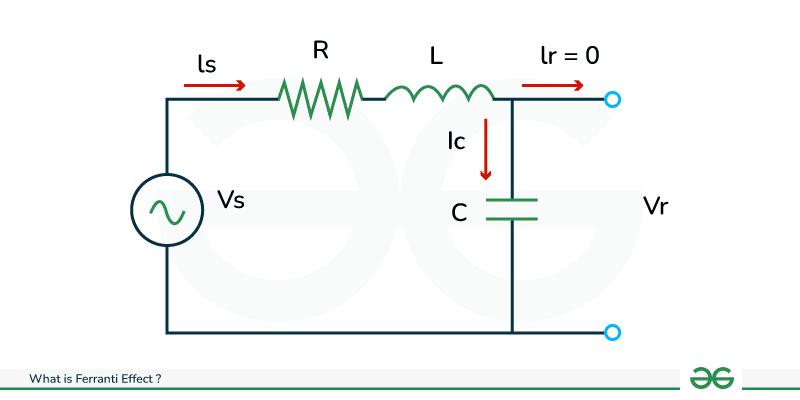
-
 When a conductor is covered with ice and/or is exposed to wind, the effective conductor weight per unit length increases. During occasions o...
 -
Hello. In this blog, we will try to create a steel pole model, using the PLS Pole software of Power Lines System. This created pole will pr...
-
 Yup, you read it right. This is about the World's Longest Overhead Transmission Line as of today. It is around 1700 km in length, trans...
