I would like to share this interesting video. It is about a proposed project linking the renewable energy sources plants in Canada up to New York through underwater cables. It pretty much discusses the overhead transmission lines and the opposition on it and how builders find ways to deliver power despite and due to the many problems encountered in building overhead transmission lines.
New Underwater Transmission Lines Proposed
original URL: http://www.dailymotion.com/video/xdl8s3_new-underwater-transmission-lines-p_news
RULING SPAN OF TRANSMISSION LINES
The Ruling Span is defined
as the assumed uniform span that most likely represents actual spans that are
in any particular section of the line. In the absence of finite element
analysis tools or software (ex. PLS CADD), the ruling span is used to calculate
sag and clearances on the plan profile drawing, and it is necessary in
structure spotting.
Ruling Span Tip: When stringing
the line, the general rule is that the spans in the line should not be more
than twice the ruling span, or less than half of the ruling span.
Ruling Span is one of the most used yet misunderstood and
misused terms in the design, staking, and construction of overhead lines. “Ruling
span” is loosely used with several different meanings.
Theoretical
Ruling Span: It is the equation derived from the conductor
length equation and by making certain assumptions, approximations, and formula
substitutions. This formula must be used if the actual spans are already known.

The
theoretical ruling span equation is not exact because of the assumptions made.
Since
its
accuracy is sufficient for most line designs, it is the equation used most
often to calculate the ruling span for new overhead distribution lines.
Estimated
Ruling Span: If the actual spans are not yet determined but knowledge
gained from a reconnaissance and previous surveys of the proposed line are
known, it is possible to estimate a ruling span. A traditional “rule of thumb”
equation that may be helpful in the estimation of a ruling span is:
Se
=
Average Span + 2/3 (Maximum Span – Average Span)
Use
this rule for estimating the ruling span with caution. Use only this formula if the actual spans are
not yet known.
What
would happen if my ruling span is different from the actual design?
• If the design
sag is greater than the theoretical sag, then the actual sag
of the installed conductors will be less than the predicted sag. This condition
will lead to increased conductor tensions, which may exceed the permitted loads
of support structures and guying assemblies.
• If the design
sag is less than the theoretical sag, then the actual sag of the installed conductors
will be greater than the predicted sag. This condition may result in inadequate
ground clearances.
I
hope this helps.
additional reading and resources:
http://www.usda.gov/rus/electric/pubs/1724e152.pdf
http://www.sag10.com/documents/AppX.pdf
HIGH VOLTAGE DIRECT CURRENT TRANSMISSION LINES (HVDC)
SPOTLIGHT: HIGH VOLTAGE DIRECT CURRENT (HVDC) TRANSMISSION
LINES
During the current wars (AC vs. DC) days, it was the
economics of transmitting power in high voltage and low through power
transformers sealed the fate in favor of AC power transmission. But nowadays,
Direct Current is fighting back. Or that least, it is covering what AC power
transmission cannot.

Most if not all of the bulk transmission of powers are in
AC. That was up until 1954, the firstHVDC (10MW) transmission system was commissioned
in Gotland . It is of important to note that as
early as 1941; a proposed 60 MW HVDC link in Germany
HVDC is favorable to AC transmission on the following reasons:
. No technical limit to the length of a submarine cable
connection.
. No requirement that the linked systems run in synchronism.
. No increase to the short circuit capacity imposed on AC
switchgear.
. Immunity from impedance, phase angle, frequency or voltage
fluctuations.
. Preserves independent management of frequency and
generator control.
. Improves both the AC system’s stability and, therefore,
improves the internal power carrying capacity, by modulation of power in
response to frequency, power swing or line
rating.
The advantages of using HVDC Transmission:
1.The cost of d.c.
conductors are necessary for D.C. line.
2.Tower designs are simple.
3.The dielectric strength of cable is high .
4.The dielectric loss is low.
5.For D.C. overhead transmission lines length is unlimited.
6.Power transmission capacity is higher than a.c.
7.Corona & radio frequency interference losses are less.
8.HVDC link has accurate & quick control of power in the required direction
2.Tower designs are simple.
3.The dielectric strength of cable is high .
4.The dielectric loss is low.
5.For D.C. overhead transmission lines length is unlimited.
6.Power transmission capacity is higher than a.c.
7.Corona & radio frequency interference losses are less.
8.HVDC link has accurate & quick control of power in the required direction
The Limitations of HVDC Transmission:
1. Transformer for step up – step down voltages are not
available in case of HVDC.
2. The terminal equipment is costly.
3. Reliabled.c.
4. Earth current may cause some side effects.
5. Reactive MVA cannot be transferred over a HVDC link.
2. The terminal equipment is costly.
3. Reliable
4. Earth current may cause some side effects.
5. Reactive MVA cannot be transferred over a HVDC link.
6. Although inverters are used, the wave farm of output a.c.
is not exactly sinusoidal and
it contains harmonic distortion
One of the most important considerations in any project is
the cost. The best of to explain the relationship or comparison between AC and
HVDC is this;

HVDC has high const in the construction of its terminal
points compared to ac. But as the transmission lines approaches infinite length,
which hypothetically means the longer the transmission lines are, its cost would become lesser compared to ac.
Considerable amount or research and development are still
being done to improve transmission of bulk power in dc as of the moment. Me for
one hopes to be involved in an HVDC project someday.
For details on the topic HVDC Transmission of power, LINKS
and RESOURCES of the topic can be seen below.
TRANSMISSION LINES NEWS Sept. 2010
Transmission Line Restoration From July 17 Wind Storm Completed
Sep 9, 2010 10:40 PM
Restoration of Nebraska Public Power District's 230-kV transmission
line, severely damaged in a July 17 wind storm, was completed when the
line was re-energized Monday, Aug. 30.
Crews
completed restoration work on a section of the line between the
District's Riverdale substation, located north of Kearney, to a
substation east near Grand Island Monday afternoon. A total of 129
structures were damaged on the line, with approximately 18 mi of power
lines coming to the ground.
Earlier,
another section of line, running west from the Riverdale substation to
Crooked Creek substation, north of Lexington, was restored August 22.
That section of line saw 87 structures damaged with 14 mi of line down
over two separate sections. A third transmission line, running from
Riverdale to the Tower substation in Kearney, had an additional eight
structures damaged with about one mile of line being downed. That work
was completed several days after the storm.
NPPD's
Transmission and Distribution Manager Tom Kent said that completing the
work and restoring the system back to full operation took a combination
of team work from District employees, contractors, and suppliers to
return the line to service.
"We
met our goal of having the line safely returned to service by the end
of the month," Kent explained, "we used our best available resources,
including stringing of line using a helicopter, to bring the line back
into service. While meeting that goal we also had a safe restoration
effort by employees and contractors.
"NPPD
thanks the many property owners for their cooperation as their property
was impacted by the power lines that were downed and throughout the
restoration process." NPPD will continue to work with those property
owners to restore property and repair damages caused by the downed
lines or reconstruction work.
The
July 17 storm pushed through the area bringing winds that measured
between 70 and 100 miles per hour. While those high voltage lines were
lost that night, NPPD's control center was able to redirect power so
that no customers were without service.
NPPD
estimated the cost of reconstructing the two lines at approximately $12
million, with a portion of the cost to be reimbursed by the Federal
Emergency Management Agency. Final right-of-way clean up and
demobilization for both lines will continue for about two more weeks.
news source: http://tdworld.com/projects_in_progress/announcements/nppd-wind-storm-restoration-0910/
news source: http://tdworld.com/projects_in_progress/announcements/nppd-wind-storm-restoration-0910/
Basic Components of Overhead Power Lines
The most common way method of transmitting power is through overhead power lines. It is relatively less costly, visible detection of faults, repair and maintenance is easier compared to underground system.
The following are the basic components of an overhead power line (click on links to see pic):
Supporting structures
The following are the basic components of an overhead power line (click on links to see pic):
Supporting structures

TRANSMISSION AND DISTRIBUTION OF POWER
Electricity as most of us know, are conveniently utilized as we plug our appliances and machines to our power sockets. However, the origin of that very electricity though may actually be as far as hundred and even thousand of kilometers away. These are from power plants and other power generating stations.
A generating plant will be useless unless its generated energy (power) in millions and even thousands of billions of watts will be delivered to its consumers, to us. These electrons traveled in speed approaching that of light, through a medium called transmission and distribution lines.
 Electricity might be transmitted and distributed in either on the following ways(click on link for pics):
The choice and selection of methods of construction would usually vary on the philosophy of the personalities and circumstances involved. These would refer to the owner of the lines, the engineering team and the culture, practice and applicability wherein the transmission lines are located.
The most common type of transmission and distribution lines there is, are the overhead types. These are conductors, bare and insulated those are attached to supporting structures, usually poles and towers. It could be attributed to the fact that it would be cheaper in first cost, maintenance and repair as compared to that of underground.
The main selling point of an underground system is in its aesthetics. Certain customers or situation would require a use of underground cables in distributing power. Common cases would be the impracticality of putting overhead lines due to existing aerial obstruction. Submarine cables are common in inter-island grid interconnection.
A generating plant will be useless unless its generated energy (power) in millions and even thousands of billions of watts will be delivered to its consumers, to us. These electrons traveled in speed approaching that of light, through a medium called transmission and distribution lines.

The choice and selection of methods of construction would usually vary on the philosophy of the personalities and circumstances involved. These would refer to the owner of the lines, the engineering team and the culture, practice and applicability wherein the transmission lines are located.
The most common type of transmission and distribution lines there is, are the overhead types. These are conductors, bare and insulated those are attached to supporting structures, usually poles and towers. It could be attributed to the fact that it would be cheaper in first cost, maintenance and repair as compared to that of underground.
The main selling point of an underground system is in its aesthetics. Certain customers or situation would require a use of underground cables in distributing power. Common cases would be the impracticality of putting overhead lines due to existing aerial obstruction. Submarine cables are common in inter-island grid interconnection.
WELCOME
Greetings everyone.
One of the most useful forms of energy ever utilized is in the form of electricity. It is a primary if not the sole contributor in the advent on human history and civilization. It is almost impossible to imagine living today without electric power. Without it, you won't be reading this blog, since nothing will power your computer.
 One of the most visible and profound units of the electrical power system are its transmission and distribution lines. Lines, wires, cables, it is almost everywhere and yet it is as if it is nothing to most of us.
But the creation, design and construction of these lines, the engineering behind in itself is a wonder to behold. The evolution, from the site and draft process to the use of sophisticated software like PLS-CADD makes the study of craft even more exciting.
This blog aims to give everyone an overview, a brief understanding and resources in understanding and appreciation of the art and science of transmission and distribution lines design.
Everyone is encouraged to browse, ask and interact with us. Much effort will be done to make entries as convenient and as accommodating to all. Students could use some of the materials for their research. The curious may find some of it handy and useful. This blogs might also serve as an avenue in interaction of Engineers who are involved in this field.
Succeeding entries will give information and definition on some of transmission lines nuisance, tips on transmission lines design, ask an expert and PLS-CADD tutorials.
I hope you'll like this site and would find as much information as you could.
Enjoy.
One of the most useful forms of energy ever utilized is in the form of electricity. It is a primary if not the sole contributor in the advent on human history and civilization. It is almost impossible to imagine living today without electric power. Without it, you won't be reading this blog, since nothing will power your computer.

But the creation, design and construction of these lines, the engineering behind in itself is a wonder to behold. The evolution, from the site and draft process to the use of sophisticated software like PLS-CADD makes the study of craft even more exciting.
This blog aims to give everyone an overview, a brief understanding and resources in understanding and appreciation of the art and science of transmission and distribution lines design.
Everyone is encouraged to browse, ask and interact with us. Much effort will be done to make entries as convenient and as accommodating to all. Students could use some of the materials for their research. The curious may find some of it handy and useful. This blogs might also serve as an avenue in interaction of Engineers who are involved in this field.
Succeeding entries will give information and definition on some of transmission lines nuisance, tips on transmission lines design, ask an expert and PLS-CADD tutorials.
I hope you'll like this site and would find as much information as you could.
Enjoy.
Subscribe to:
Comments (Atom)
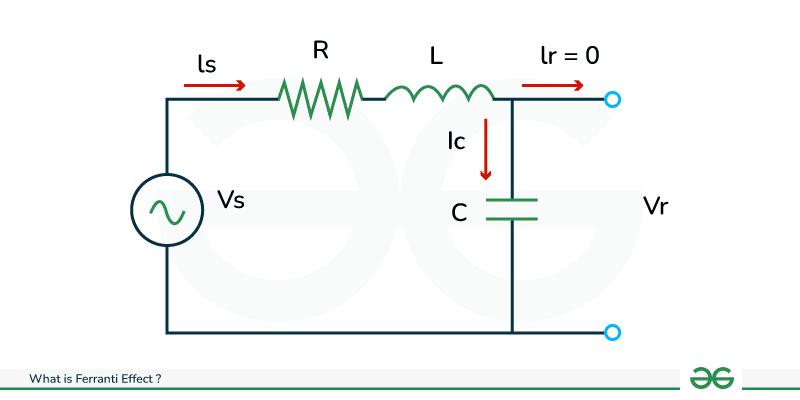
Ferranti Effect vs. Corona Effect vs. Reactive Power Effects
Ferranti Effect vs. Corona Effect vs. Reactive Power Effects A complete technical comparison for long AC transmission lines This is a n...
-
Hello. In this blog, we will try to create a steel pole model, using the PLS Pole software of Power Lines System. This created pole will pr...
-
 When a conductor is covered with ice and/or is exposed to wind, the effective conductor weight per unit length increases. During occasions o...
 -
Ruling Span in Transmission Line Design: Definition, Formula, Examples, and Engineering Standards An authoritative guide for electrical, t...
