POWER SYSTEM PROTECTION DESIGN CRITERIA BASIC INFORMATION
The logic of protective relaying looks at a complex distribution system as an integration of various subsystems. In all cases, some common design criteria are applicable.
This consists of five basic elements: (1) selectivity, (2)speed of operation (3) reliability, (4) simplicity, and (5) economics. Sometimes a sixth criterion of maintainability is also added.
Selectivity.
A protection system should operate so as to isolate the faulted section only. In a radial system of distribution, using inverse time relays as the primary protection, the desired selectivity is obtained by coordinating upstream relays with the downstream relays in steps, so that an upstream relay is slower than the downstream relay.
This may increase the fault clearance time toward the source depending upon relay characteristics and the fault current distribution. A separate zone of protection can be established around each system element so that a fault occurring in that zone will be instantaneously cleared without a time delay.
Normally, these zones are overlapped by proper location of the current transformers and protective relays so that there are no unprotected areas. This logically divides the system into protective zones for generators, transformers, buses, transmission lines, cables, and motors.
These are called unit protection schemes. The faults are cleared fast, with detection times of 1 to 2 cycles. The other relays, such as time overcurrent and directional relays, are still retained as backup protection.
The desired reliability may increase the system protection complexity and backup protection becomes necessary. Reliability and fast fault clearing dictate these unit protection schemes. In a network of interconnected lines and multiple generators, more than one breaker must be tripped to isolate the fault.
Speed.
Fault damage to the system components, the stability between synchronous machines, and auto reclosing to restore power are to be considered in designing the speed of operation of the protective system. The total fault duration is the relay operating time plus the breaker interrupting time.
A reduction in power transferred to the loads will occur during a fault condition, the amount depending upon the type of fault. The shorter the fault clearance time, the greater the amount of power that can be transferred without a system separation and shutdown.
Reliability.
Dependability and security are the measures of reliability. The protection must be dependable and operate in response to system trouble within its required area and be secure against incorrect trips from all other conditions (i.e., voltage regulation due to load application and rejection, inrush currents, switching surges, and high magnitude of through fault currents).
Thus, these two objectives of reliability mutually oppose each other. Designing more flexibility into the system design (i.e., double-ended substation, duplicate feeders, auto-switching, and bus transfer schemes) will increase the complexity and hence reduce security of the protective system. Reliability should be viewed in terms of overall system performance—overprotection and underprotection may both jeopardize it.
DEREGULATED POWER SYSTEM BASIC INFORMATION
The Public Utility Holding Company Act of 1935 (PUHCA) erected a barrier for the entry of nonutility generators (NUGs) into the electricity generation market. The market monopoly was breached by the Public Utility Regulatory Policies Act of 1978 (PURPA).
It opened the door for cogeneration and for small power production technology based on hydro, wind, and biomass, allowing them to enter the electricity market without being burdened with PUHCA requirements. Electric utilities retained some avenue through rules that allowed up to 50% ownership share in a qualifying facility (QF).
Since PURPA, many utilities have established subsidiaries to exploit the potential benefits of participation in QF projects as sources of lower-risk capacity compared to plants directly built by the utility. As a result of PURPA, more than 20,000 MW of QF capacity were brought into operation.
The initial purchases, which were based on the avoided cost of the utility, soon gave way to competitive bidding among QFs. The competitive bidding has now expanded beyond PURPA facilities and in many states has become the mechanism for establishing merit among all producers of electricity (utility, QF,
independent power, etc.).
Despite the competitive bidding, PUHCA acted as an effective barrier to the entry of many new power producers into the nationwide electricity market. As a result, the National Energy Policy Act of 1992 considers the amendment of PUHCA to promote greater competition in the supply of electric power by creating a new class of wholesale electricity generators who are exempted from the corporate and geographic restrictions of PUHCA.
In another major change, the Federal Power Act (FPA)was also amended to provide the Federal Energy Regulatory Commission (FERC) with the authority to order transmission utilities to wheel power produced by the new exempt wholesale generators (GENCOs) if such wheeling is in the public interest and would not impair the reliability of the transmission system.
Hence, the door is opened for NUGs and independent power producers (IPPs), qualified as GENCOs, to enter the wholesale electric power market. In principle, the competition will be on the production side, whereas network costs will be supplied for and through new monopolies. In fact, competition is not so easy.
If power producers are tied together with jointly owned power stations, it is obvious that some strategic company information must be not only exchanged but also questioned by outsiders who desire increased competition.
Since early 1990, owners, operators, and users of interconnected transmission systems in the eastern United States and Canada have been voluntarily convening to discuss interregional transmission issues with the intent of enhancing cooperation and coordination. The participants refer to themselves as the Interregional Transmission Coordination Forum (ITCF).
The ITCF recognized that significant parallel flow between utilities is inevitable and occasionally burdensome to transmission owners and operators who presently have little or no control over others’ transactions and receive no compensation for parallel power flows across their systems.
To address this issue, the ITCF formed the General Agreement on Parallel Paths (GAPP) Committee to explore the practicality of replacing the single contract path approach with a multiple contract path approach. In such cases, the transmission systems, which are impacted by specific transactions, will be appropriately involved from a contracting, scheduling, and operation perspective.
Under the GAPP method, utilities will be compensated for what would previously have been an uncompensated parallel flow; parallel flow will largely become scheduled flow, and all scheduled flows will be priced by the providers of transmission service according to a public posting of their approved rates, whatever they may be.
ITCF is planning to have the details of an up to 2-year experiment ready to present to FERC in 1994, which will include how the experiment will be conducted and how results will be evaluated.
EMERGENCY AND STANDBY SYSTEM TERMS AND REFERENCES
Automatic transfer switch: A transfer switch that can transfer the electrical load from one power source to another without manual intercession.
Bypass switch: A transfer switch for an uninterruptible power supply (UPS) that is operated automatically to transfer DC battery power to the DC-to-AC converter to sustain the AC load. The switch can be operated manually for maintenance or repair of the conversion circuitry of the UPS.
Emergency power system: A separate source of electric power that can pick up all or part of an electrical load automatically following an outage of normal power. It can take over loads so rapidly that critical lights and equipment will continue to function, assuring the safety of personnel and preventing property damage or loss.
Manual transfer switch: A switch that must be operated manually to transfer the electrical load from one power source to another.
Normal AC power (also called commercial power): Power supplied by a public utility. In some situations, normal power from an alternate commercial source can be switched to provide emergency or standby power as an option to the use of an engine–generator set.
Standby power system: A source of DC battery power that is switched on automatically following an outage of the normal AC line power. It maintains loads such as lamps and other equipment that function with DC power until normal AC power is restored or until the batteries are discharged to the level that they can no longer power the load.
Uninterruptible power supply (UPS): A power supply that normally supplies the load with conditioned AC power from the AC power line when it is present. If an outage of normal AC line power occurs, rechargeable storage batteries supply DC to the inverter to sustain AC power to the load.
This continues until normal power is restored or the batteries are discharged to the level that they can no longer power the load. A transfer switch can bypass the internal UPS circuitry to allow the load to be powered from the normal AC line for maintenance or repair of the UPS.
SUPER STORM HURRICANE SANDY LEAVES 2.8 MILLION WITHOUT ELECTRICITY
Power interruptions are normal occurrence whenever there are massive weather disruption. Super storm Sandy however left around 2.8 million homes without electric power as it affected the transmission and distribution grid due to wind, gust and heavy flooding.

Power interruption cost a substantial amount of money due to stoppage of salary or work payment, Cost of loss of profit opportunity, Overtime payment, Cost of loss of raw material, Cost of re-starting the process, and Cost of damaged equipment.But this super storm.
But in cases like this, money is not the primary concern. The safety and health of the people within the area is.
In a report by CBS news, Superstorm Sandy slammed into the New Jersey coastline with 80 mph winds Monday night and hurled an unprecedented 13-foot surge of seawater at New York City, flooding its tunnels, subway stations and the electrical system that powers Wall Street.
The power was out for hundreds of thousands of New Yorkers and an estimated 5.2 million people altogether across the East. And the full extent of the storm's damage across the region was unclear, and unlikely to be known until daybreak.
The subway system and the electrical network beneath the city's financial district, New York City's main utility cut power to about 6,500 customers in lower Manhattan. But a far wider swath of the city was hit with blackouts caused by flooding and transformer explosions.
The city's transit agency said water surged into two major commuter tunnels, the Queens Midtown and the Brooklyn-Battery, and it cut power to some subway tunnels in lower Manhattan after water flowed into the stations and onto the tracks.
The subway system was shut down Sunday night, and the stock markets never opened Monday and would be closed Tuesday as well.
"We've got everything pretty well situated, bunkered down, generators, [we'll] hang out, ride it out. We rode out Irene last year, it wasn't that bad," he said.
At least half a million people along the East Coast had been ordered to evacuate, including 375,000 from low-lying parts of New York City.
Not only was the New York subway shut down, but the Holland Tunnel connecting New York to New Jersey was closed, as was a tunnel between Brooklyn and Manhattan. The Brooklyn Bridge, the George Washington Bridge, the Verrazano-Narrows Bridge and several other spans were closed because of high winds.
It should be noted that some of the experienced power interruption is deliberately done to protect the people, and equipment from further damage. Also, before evacuating, make sure that the main circuit breaker is turned off.
transmission-line.net is wishing for everyone's safety, especially to those affected by this unfortunate event.
live streaming is found below courtesy of CBS news

Power interruption cost a substantial amount of money due to stoppage of salary or work payment, Cost of loss of profit opportunity, Overtime payment, Cost of loss of raw material, Cost of re-starting the process, and Cost of damaged equipment.But this super storm.
But in cases like this, money is not the primary concern. The safety and health of the people within the area is.
In a report by CBS news, Superstorm Sandy slammed into the New Jersey coastline with 80 mph winds Monday night and hurled an unprecedented 13-foot surge of seawater at New York City, flooding its tunnels, subway stations and the electrical system that powers Wall Street.
The power was out for hundreds of thousands of New Yorkers and an estimated 5.2 million people altogether across the East. And the full extent of the storm's damage across the region was unclear, and unlikely to be known until daybreak.
The subway system and the electrical network beneath the city's financial district, New York City's main utility cut power to about 6,500 customers in lower Manhattan. But a far wider swath of the city was hit with blackouts caused by flooding and transformer explosions.
The city's transit agency said water surged into two major commuter tunnels, the Queens Midtown and the Brooklyn-Battery, and it cut power to some subway tunnels in lower Manhattan after water flowed into the stations and onto the tracks.
The subway system was shut down Sunday night, and the stock markets never opened Monday and would be closed Tuesday as well.
"We've got everything pretty well situated, bunkered down, generators, [we'll] hang out, ride it out. We rode out Irene last year, it wasn't that bad," he said.
At least half a million people along the East Coast had been ordered to evacuate, including 375,000 from low-lying parts of New York City.
Not only was the New York subway shut down, but the Holland Tunnel connecting New York to New Jersey was closed, as was a tunnel between Brooklyn and Manhattan. The Brooklyn Bridge, the George Washington Bridge, the Verrazano-Narrows Bridge and several other spans were closed because of high winds.
It should be noted that some of the experienced power interruption is deliberately done to protect the people, and equipment from further damage. Also, before evacuating, make sure that the main circuit breaker is turned off.
transmission-line.net is wishing for everyone's safety, especially to those affected by this unfortunate event.
live streaming is found below courtesy of CBS news
OPGW SAG AND TENSION LIMITS BASIC INFORMATION AND TUTORIALS
The following are recommended as minimum controls to be used in preparing sag and tension charts for OPGW as recommended by IIEE STD 1138-1994:
a) OPGW sags should be such that the tensions do not exceed the limits for open supply conductors, which are given in the latest edition of the National Electrical Safety Code (NESC) or appropriate national code(s) for the country where installed.
These limitations are based on the use of recognized methods for reducing the likelihood of fatigue failures by minimizing chafing and stress concentrations.
b) Sag and tension recommendations regarding vibration protection should be obtained from the OPGW manufacturer or from other sources knowledgeable in the field of vibration protection of overhead cables.
c) In addition, it is known that some types of cable construction exhibit increased attenuation of the optical signal at tensions, which are permitted by the National Electrical Safety Code (NESC) or appropriate national code(s) for the country where installed. This may be a factor in the selection of the maximum design tension.
d) It is recommended that tension limits for a specific application be chosen through a coordinated study that should include the requirements of the user, recommendations from the cable manufacturer, and recommendations from the manufacturer of all supporting hardware.
a) OPGW sags should be such that the tensions do not exceed the limits for open supply conductors, which are given in the latest edition of the National Electrical Safety Code (NESC) or appropriate national code(s) for the country where installed.
These limitations are based on the use of recognized methods for reducing the likelihood of fatigue failures by minimizing chafing and stress concentrations.
b) Sag and tension recommendations regarding vibration protection should be obtained from the OPGW manufacturer or from other sources knowledgeable in the field of vibration protection of overhead cables.
c) In addition, it is known that some types of cable construction exhibit increased attenuation of the optical signal at tensions, which are permitted by the National Electrical Safety Code (NESC) or appropriate national code(s) for the country where installed. This may be a factor in the selection of the maximum design tension.
d) It is recommended that tension limits for a specific application be chosen through a coordinated study that should include the requirements of the user, recommendations from the cable manufacturer, and recommendations from the manufacturer of all supporting hardware.
POOL AND FOUNTAIN LIGHTING BASIC INFORMATION AND TUTORIALS
Swimming, wading, and decorative pools and fountains present special problems for lighting designers. Outdoor lighting must be capable of functioning properly under all weather conditions and wide temperature excursions, but electrification near bodies of water requires additional safeguards.
It is imperative that all luminaires and wiring suitable for use near these installations be made to withstand long-term exposure to a wet environment. They must also incorporate features that eliminate the possibility of electrical shock to persons in or near them. An electric shock can be received near these installations in several ways, because electrical potentials exist with respect to ground and within the water itself.
Any person in the pool who touches a faulty energized metal enclosure is subject to possibly fatal electrical shock because his or her body will conduct current through the water and pool to earth. For this reason NEC 2002, Article 680, “Swimming Pools, Fountains, and Similar Installations,” covers the requirements for the construction and installation of electrical equipment in and around swimming pools and similar installations
to minimize shock hazards.
Article 680 also covers other electrical equipment installed near pools, including transformers, heaters, water circulating systems, and fans. Because of the complexity of the provisions in Article 680, only highlights are presented here. It is expected that anyone contemplating the installation of any electrical equipment in or near pools or hot tubs will study the provisions closely before proceeding.
The following topics are covered by Article 680:
Transformers and ground-fault circuit interrupters (GFCIs)
Receptacles, lighting fixtures, lighting outlets, switches, and fans
Electric pool water heaters
Underground wiring
Underwater lighting fixtures
The bonding of metallic, non-current-carrying parts of a pool installation
Equipment grounding
RULES FOR RECEPTACLES NEAR WATER
Receptacles are prohibited within 10 ft from the pool edge, and GFCIs must protect all 120-V AC receptacles between 10 and 20 ft from the inside walls of indoor and outdoor pools. The exception is the installation of a GFCI-protected receptacle for a cord-connected swimming pool recirculating pump. (It can be less than 10 ft but not closer than 5 ft from the inside wall of the pool.)
At least one 120-V receptacle must be installed at residential pools within the 10- to 20-ft band to eliminate the use of long extension cords, but it can be closer if it is protected by a hinged or sliding door.
RULES FOR LIGHTING DEVICES NEAR WATER
GFCI protection is required for existing lighting outlets on buildings adjacent to the pools, tubs, or fountains within a space that is at least 5 ft above the water and 5 ft back from the pool edge. However, this rule does not apply if the outlets are more than 12 ft above the water and 10 ft back from the pool edge. New lighting is not permitted within this space around the pool.
All lighting fixtures must be at least 12 ft above the water level of an outdoor pool, but totally enclosed fixtures with GFCI protection in their supply circuits that have a clearance of at least 7.5 ft can be installed over indoor pools. GFCI protection is not required for all lighting fixtures set back from the pool edge at least 5 ft and mounted at least 5 ft above the deck.
USES OF THE SINGLE-LINE DIAGRAM BASIC INFORMATION
The single-line diagram may be used in a
number of important ways in operating and maintaining an industrial or
commercial power distribution system. Frequently, the single-line diagram, with
all of the listed information, becomes too crowded for information to be used
effectively in some of the operating activities.
In those instances, it is wise to produce a
set of single-line diagrams, with each different diagram in the set containing
the pertinent information that is required for a particular activity or set of
activities. Some of the needs for special single-line diagrams are
a) Switching functions. When the
primary use of the diagram is to provide information to system operators for
switching in order to isolate portions for maintenance or for load control,
then only the data required to make the decisions necessary for system
switching are included on the diagram.
Sometimes, when the distribution system is
complex, a separate version of the single-line diagram in block form is more
usable than a complete single-line diagram. This may be identified as a system
operating diagram.
b) Load flow control. This diagram
is used exclusively for load flow control. It only includes the data that show
system component capacities and other data that pertain to load flow.
c) Relaying and relay logic diagrams.
These single-line diagrams are used to describe the system protective relay
systems. These diagrams are used particularly as logic and tripping diagrams
that may contain a unique language used only to depict the sequence of relay or
system protective component operation under various fault conditions.
SINGLE CONVERSION UPS SYSTEM BASIC INFORMATION
Single-conversion UPS systems are those in
which, during normal operation, the incoming line is used to provide power to
the critical load either through a transformer or in conjunction with some
series impedance.
Some forms of single-conversion UPS
products are classified as “line interactive”. The single conversion UPS
usually provides a higher operating efficiency at lower cost than the double
conversion UPS at a comparable system reliability. (Note that the recently
revised NEMA PE 1-1993 [B23], identifies the single-conversion system as a
“single-conversion converter.”)
Unlike the double-conversion system, the
incoming line to the single-conversion UPS is not rectified to produce dc power
to provide input to the inverter. The normal ac power is supplied directly to
the critical load through a series inductor or a linear or ferroresonant
transformer.
The normal ac also supplies a small charger
used to maintain the UPS batteries in a fully charged condition. Thus the
battery is only used when inverter requires the battery’s output to supplement
or replace the normal power source. Single-conversion UPSs include the
ferroresonant type, some variants of the tri-port type, line interactive types,
and some SPS designs. A discussion of some of these systems follows.
Line interactive systems
The line interactive UPS is rapidly
achieving prominence in the industry. Lower cost, simplicity of design, and
smaller “package” are some of the advantages of this design.
In the line interactive UPS, line power is
not converted into dc but is fed directly to the critical load through a series
inductor or transformer. Regulation and continuous power to the load is
achieved through use of inverter switching elements in combination with
inverter magnetic components such as inductors, linear transformers, or
ferroresonant transformers.
The term “line interactive UPS” derives
from the fact that the inverter interacts with the line to buck, boost, or
replace incoming power as needed to maintain constant voltage to the critical
load. In the absence of line power, the line interactive UPS provides the total
power to the critical load.
Some line interactive products exhibit a
break in power to the critical load during line-to-battery or battery-to-line
transfers (this type of system would be an SPS). Other designs are capable of
producing true unbroken power to the critical load. Line interactive UPSs are
available as single-phase or three-phase units.
BRONZE SUPER CONDUCTORS BASIC INFORMATION AND TUTORIALS
To fabricate high-field magnets,
flexible tapes, having the advantage of a small distance from the
brittle A15 compound to the neutral phase in bending direction, have
been used successfully. The large area-to-thickness ratio of the A15
layer leads to instability (flux jumps), especially if magnets have a
rapid ramping rate.
The solid-state diffusion process, as
used for bronze conductors of Nb3Sn and V3Ga (31), has solved this
problem, by dividing the core material into plenty of fine filaments.
The formation of A15 layers is principally limited by the amount of
Sn and Ga in the bronze.
The solubility of Sn in Cu is 8.5 at.%
and for Ga in Cu is 20 at.%. Bronze with about 7.5 at.% Sn or about
18 at.% Ga has been used. The diffusion process forms the A15 layer
until the equilibrium for a given temperature is established.
At a temperature of 620#C to 700#C, the
diffusion for Ga ends at a remaining concentration at 14 at.% to 15
at.% Ga in the matrix. Sn diffusion from the bronze proceeds at
approximately 700#C to 850#C, leaving a Sn concentration in the
bronze of approximately at 3% to 4 at.%;
The heat-treatment time and temperature
has to be controlled in such a way as to receive an optimum layer
thickness, but without increasing too much the grain size. Especially
for a long heat treatment of #200 h, the matrix volume has to be
increased, in order to provide enough Sn or Ga.
Small distances between the filaments
seem to be desirable, due to reduced bending strain, but the space
between the filaments acts as a diffusion path for the B ions from
the conductor periphery, too. Those diffusion paths are reduced in
their effective width by the Kirkendall voids caused by the diffusion
mechanism during heat treatment.
At a given temperature and a constant
concentration gap, the quantity of B ions diffusing through a cross
section in a given time is proportional to the area of this cross
section (Fick’s first law). From this follows that the cross
section of the cores of Nb or V should be divided in as many portions
as feasible, to increase the in layer between the bronze and the core
material.
This leads to an increase of the total
amount of A15 material, even with reduced heat treatment time.
Optimization studies of diffusion treatment versus layer thickness
have shown that filament diameters should be in the range of 3 #m to
5 #m. For conductors with a diameter of 1.5 mm, and taking into
account the cross section needed for stabilization and diffusion
barrier, approximately 15,000 filaments are necessary.
Workability of the component is an
essential request to arrive with technically and commercially usable
conductors. While the basic components, Nb or V, electron beam- or
arc-melted, are high-purity materials of excellent ductility, they
are sensitive to imbrittlement by interstitials of oxygen (O),
nitrogen (N), or C.
This is especially true for the V, but
the more problematic part is the bronze. For many years, the
technically attainable Sn content was limited to about 8 at.%. Newer
processes made homogeneous bronze at 8.5 at.% Sn available.
WATER HEATER HEATING ELEMENTS RATING BASIC INFORMATION
Residential electric water heaters are
listed under UL Standard 174, Household Electric Storage Tank Water
Heaters. Electrical contractors many times are also in the plumbing,
heating, and appliance business.
They need to know more than how to do
the electrical hookup. The following text discusses electrical as
well as other data about electric water heaters that will prove
useful.
All homes require a supply of hot
water. To meet this need, one or more automatic water heaters are
generally installed as close as practical to the areas having the
greatest need for hot water.
Water piping carries the heated water
from the water heater to the various plumbing fixtures and to
appliances such as dishwashers and clothes washers.
The wattage ratings of electric water
heaters can vary greatly, depending on the size of the heater in
gallons, the speed of recovery desired, local electric utility
regulations, and codes. Typical wattage ratings are 1500, 2000, 2500,
3000, 3800, 4500, and 5500 watts.
A resistance heating element might be
dual rated. For example, the element might be marked 5500 watts at
250 volts, and 3800 watts at 208 volts.
Most residential-type water heaters are
connected to 240 volts except for the smaller 2-, 4-, and 6-gallon
point of use sizes generally rated 1500 watts at 120 volts.
Commercial electric water heaters can be rated single-phase or
3-phase, 208, 240, 277, or 480 volts.
UL requires that the power (wattage)
input must not exceed 105% of the water heater’s nameplate rating.
All testing is done with a supply voltage equal to the heating
element’s rated voltage.
Most heating elements may burn out
prematurely if operated at voltages 5% higher than for which they
are rated.
To help reduce the premature burnout of
heating elements, some manufacturers will supply 250-volt heating
elements, yet will mark the nameplate 240 volts, with its
corresponding wattage at 240 volts.
This allows a safety factor if slightly
higher than normal voltages are experienced.
OPTICAL GROUND WIRE (OPGW) CENTRAL FIBER OPTIC UNIT DESIGN
The central fiber optic unit shall be
designed to house and protect the optical fibers from damage due to
forces such as crushing, bending, twisting, tensile stress, and
moisture.
The fiber optic unit and the outer
stranded metallic conductors shall serve together as an integral unit
to protect the optical fibers from degradation due to vibration and
galloping, wind and ice loadings, wide temperature variations,
lightning and fault current, as well as environmental effects that
may produce hydrogen.
The fiber optic unit may include an
aluminum tube and/or channeled aluminum rod, but is not limited
to these designs.
Aluminum tube
The fiber optic unit may include an
aluminum tube to house the fibers. The aluminum tube may be
fabricated as a seamless extruded tube, seam welded, or a tube
without a welded seam.
Aluminum rod
An aluminum rod may be fabricated with
one or more channels or grooves and formed into a helix to house the
optical fibers.
An outer protective shield may be
applied around the rod such as an aluminum tube or a helically
applied overlapping aluminum tape to provide an additional mechanical
and environmental barrier.
Filling compound
If required, the interstices of the
fiber optic unit shall be filled with a suitable compound to prohibit
any moisture ingress from outside or any water migration along the
fiber optic unit.
The filling compound used shall be
compatible with all the components it may come in contact with and
shall absorb and/or inhibit generation of hydrogen within the cable.
Central structural member(s)
Structural member(s) may be used to
limit the stress on the fiber inside the central fiber optical unit.The central fiber optic unit shall be
designed to house and protect the optical fibers from damage due to
forces such as crushing, bending, twisting, tensile stress, and
moisture.
The fiber optic unit and the outer
stranded metallic conductors shall serve together as an integral unit
to protect the optical fibers from degradation due to vibration and
galloping, wind and ice loadings, wide temperature variations,
lightning and fault current, as well as environmental effects that
may produce hydrogen.
The fiber optic unit may include an
aluminum tube and/or channeled aluminum rod, but is not limited
to these designs.
Aluminum tube
The fiber optic unit may include an
aluminum tube to house the fibers. The aluminum tube may be
fabricated as a seamless extruded tube, seam welded, or a tube
without a welded seam.
Aluminum rod
An aluminum rod may be fabricated with
one or more channels or grooves and formed into a helix to house the
optical fibers.
An outer protective shield may be
applied around the rod such as an aluminum tube or a helically
applied overlapping aluminum tape to provide an additional mechanical
and environmental barrier.
Filling compound
If required, the interstices of the
fiber optic unit shall be filled with a suitable compound to prohibit
any moisture ingress from outside or any water migration along the
fiber optic unit.
The filling compound used shall be
compatible with all the components it may come in contact with and
shall absorb and/or inhibit generation of hydrogen within the cable.
Central structural member(s)
Structural member(s) may be used to
limit the stress on the fiber inside the central fiber optical unit.
UNDERGROUND/UNDERWATER AC POWER TRANSMISSION BASIC INFORMATION
High-voltage underground cables have
been installed in response to adverse public response to the visually
offensive high-rise transmission towers in or close to populated
communities. Underground cables rated for voltages as high as 500 kV
have been developed.
They were first placed in service in
the United States in 1976. Traditionally, underground cable systems
have been installed in cities and other heavily populated areas,
where open high-voltage lines present a safety hazard.
They have also been installed where
overhead lines were not practical, in locations such as air port
approaches because of aircraft safety issues, or water crossings
where overhead lines are not feasible because of interference with
water traffic.
For crossing large bodies of water,
trenches are dug or dredged to depths related directly to the voltage
being carried by the cable, and the crossings are marked near the
shore lines. Extruded dielectric cables have become the U.S. standard
for voltages to 161 kV.
Low-pressure cables have hollow cores
for the circulation of oil under low pressure. The oil provides
temporary protection of the enclosed wires from water damage should
the cable sheath develop a leak.
High-pressure oil-filled pipe-type
cables are commonly installed for 230- and 345-kV applications in the
United States. Oil is circulated in the pipe under high pressure (14
kg/cm2 or 200 psi).
Most new cable installations make use
of extruded dielectric, but pipe-type cables account for 75 percent
of the approximately 2400 circuit miles now in service.
From 15 to 20 percent of the cable is
extruded dielectric, and most of the remainder is self-contained
fluid filled cable.
Subscribe to:
Comments (Atom)
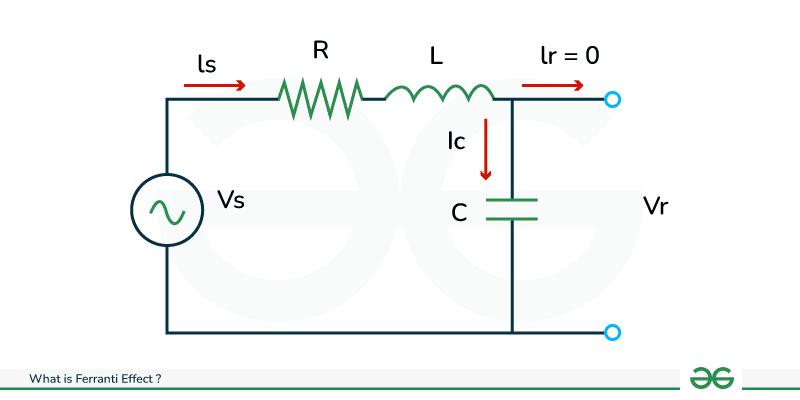
Ferranti Effect vs. Corona Effect vs. Reactive Power Effects
Ferranti Effect vs. Corona Effect vs. Reactive Power Effects A complete technical comparison for long AC transmission lines This is a n...
-
 When a conductor is covered with ice and/or is exposed to wind, the effective conductor weight per unit length increases. During occasions o...
 -
Hello. In this blog, we will try to create a steel pole model, using the PLS Pole software of Power Lines System. This created pole will pr...
-
 Yup, you read it right. This is about the World's Longest Overhead Transmission Line as of today. It is around 1700 km in length, trans...
