Transmission Lines Design, Electrical Engineering Calculations, Substation Notes, Line Parameters, Relay Protection Tutorials, and Engineering Guides for Students and Professionals.
STRANDED METALLIC WIRES OF OPGW (OPTICAL GROUND WIRE) BASIC INFORMATION
The composite fiber optic overhead ground wire shall be made up of buffered flexible glass optical telecommunications fibers contained in a protective central fiber optic unit surrounded by concentric-lay stranded metallic wires in single or multiple layers.
The dual purpose of the composite cable is to provide the electrical and physical characteristics of conventional overhead ground wire while providing the optical transmission properties of optical fiber.
Stranded metallic wires
a) The basic construction shall have bare concentric-lay stranded metallic wires with the outer layer having left hand lay unless otherwise specified by the purchaser.
b) The stranded wires may be of multiple layers with a combination of various metallic wires within each layer. The direction of lay shall be reversed in successive layers.
c) The wires shall be so stranded that when the complete OPGW is cut, the individual wires can be readily regrouped and then held in place by one hand.
d) The preferred length of lay of the various layers of wires is 13.5 times the outside diameter of that layer, but the length of lay shall not be less than 10 nor more than 16 times this diameter.
e) The rated breaking strength of the completed OPGW shall be taken as 90% of the sum of the rated breaking strengths of the individual wires, calculated from their nominal diameter and the appropriate specified minimum tensile strength.
f) At the manufacturer's option, the rated breaking strength may include the strength of the optical unit. In this case, the manufacturer shall notify the customer if the fiber optic unit is considered a load bearing tension member when determining the total rated breaking strength of the composite conductor.
g) The finished wires shall contain no joints or splices unless otherwise agreed upon between the manufacturer and the purchaser.
h) Hybrid designs not included in items a)-f) are not excluded from this standard.
THE ADVANTAGES OF GAS INSULATED TRANSMISSION LINES BASIC INFORMATION AND TUTORIALS
GIL offers several advantages for high capacity power transmission, as listed below.
Low Transmission Losses
Resistive losses are low because of the large cross-section of the conductor and enclosure pipes. Typical GIL resistances are 6–8 m /km depending on the outer diameter (500 mm or 600 mm) and the wall thickness of the enclosure and conductor pipe (6 mm to 15 mm).
The transmission losses are related to the square of the transmitted current as Pv = I2 · R (I = current, R = resistance). When the current rating is high – as it is for GIL (e.g., 3000 A) – then the effect of low transmission losses is high. The losses through the insulating gas are negligibly small.
Low Capacitive Load
Electric phase-angle compensation is only needed at very long lengths, because the capacity of the GIL is low, typically 55 μF/km. Therefore, no or low compensation coils are needed under most network conditions for transmission lengths of about 100 km. This also reduces the thermal operation losses.
Power Rating Like an Overhead Line
The GIL is the ideal alternative or supplement to overhead lines. The high power transmission capability of the GIL (up to 3000 MVA per system at 550 kV rated voltage) allows it to go directly underground in series with an overhead line without power reduction.
The GIL also allows the use of protection and control systems in the same way as with overhead lines. No differential protection is needed for failure location when a GIL is combined with overhead lines. The GIL has a low capacitance and, therefore, the inrush current is low.
High Level of Personnel Safety
The outer enclosure pipe is solid grounded and no access to high-voltage parts is possible (gas-tight enclosure). Personnel safety is also guaranteed in case the GIL has to carry a short-circuit current (50, 63 or 80 kA up to 1 or 3 s). Even in case of internal failure and an arc between the enclosure and conductor pipes, tests have shown that no external impact occurs on the surroundings.
High Reliability
The only purpose of the GIL is electric power transmission. No internal switching or breaking capability is needed. Based on this, the GIL can be seen as a passive high-voltage gas-insulated system with no active moving parts (e.g., switches).
Today, more than 300 km of single-phase lengths has been in operation world-wide for more than 35 years. So far, no major failure (arc fault in the system) has been reported. This makes the GIL the most reliable power transmission system known.
No Electric Ageing
Gas insulations do not age. The best example is an overhead line with ambient air as insulating gas. The electric field strength of the insulators and the maximum temperature of the GIL are too low to start the process of electrical or thermal ageing.
This has been proven using long-term measurements in independent laboratories and also by extensive experience with the equipment in the network. The first GIL installations have been in operation since 1974, and the results are reported by the CIGRE [71, 224].
Operation Like an Overhead Line
Overhead lines in the transmission network are operated with the so-called autoreclosure function. This means that in case of a ground fault detected on the line, the circuit breaker will automatically break the lines, wait some seconds (depending on the network condition) and then switch on again.
In most cases the reason for the fault current detection will be gone and the transmission line will go back to normal operation (for example, if a tree branch gets too close to an overhead line, the branch will be burned away or if a lightning strike causes the fault current, that will also be gone after some seconds).
Electromagnetic Fields
To protect the public and the operational personnel international regulations require electromagnetic field limitations. These values vary across regions and countries depending on laws and regional regulations. A trend can be seen worldwide that limiting values are getting lower and the restrictions harder. In densely populated areas and cities these electromagnetic field requirements are defining the allowed design of transmission lines.
The GIL is operated as a solid grounded installation and the inductive loop is closed through the ground connection. The coupling factor is about 95%. This means that the superposition of the two reverse currents reduces the outside magnetic field by 95%, and only 5% of the magnetic field of the conductor current is effective outside the GIL.
Because of the induction law, the current in the conductor will induce a current in the enclosure of the same size and with 180◦ phase shift. The superposition of both electromagnetic fields is close to zero. In case of limitation of the magnetic field in the surroundings, this solid grounded GIL can fulfil even very low magnetic field requirements. With a current rating of 3000 A, within a few metres’ distance a magnetic field strength of 1 μT can be reached (as required in some countries).
The advantage of a low magnetic field is important when residential areas are close to the transmission line for airports with their sensitive instruments, hospitals with their sensitive imagining systems, or all kinds of sensitive electronic equipment in private or business use. In Italy, electromagnetic field requirements for new installations go down to magnetic flux values of only 0.2 μT. When residential areas are involved, the GIL can reach such low values over a distance of a few metres.
No Thermal Ageing
The GIL is designed for maximum operational temperatures given by the surrounding conditions – maximum 60 or 70◦C touching temperature in a tunnel, or 40 or 50◦C when directly buried. The different temperature values depend on individual countries and their applied standards and regulations.
In all cases the maximum allowed temperature of the conductor of 100 to 120◦C is not reached by far. Therefore, no practical ageing of the system can be expected under these operating conditions.
ELECTRICAL SPECIFICATIONS BASIC DEFINITION AND TUTORIALS
Electrical specifications for buildings or projects are written legal descriptions of the work to be performed by the electrical contractor, subcontractors, and electric power utilities and the responsibilities and duties of the architect/engineer, general contractor, and owner. Electrical specifications and electrical drawings are integral parts of the contract requirements for the performance of electrical work.
Because specifications are a significant part of a legally binding contract, typically involving expenditures of thousands or even millions of dollars, it is important that they be mutually compatible with the drawings and as free as possible of errors or discrepancies.
It has long been known that even minor errors in wording or intent or the presentation of incorrect data or measurements can result in expensive repairs or replacements of hardware, lost time in the completion of the schedule, and serious project cost overruns due to delays and the need for additional labor and supervision.
In most engineering and architectural firms, regardless of size, specifications writers are skilled persons with technical backgrounds who report to a responsible project supervisor. The preparation of an error-free specification is a time-consuming task calling for the writer’s patience and the ability to deal effectively with complex technical details.
The process might call for many drafts and revisions following the review, comments, and corrections made by persons within the architect/engineering organization with specialized knowledge and experience in each of the trades involved in the project. As with drawings, all responsible reviewers are expected to sign the final version that is released for bid.
Nevertheless, this does not relieve specifications writers of their responsibilities, because they are expected to have sufficient knowledge of the project to make them capable of finding and resolving any discrepancies between the specifications and the drawings. Discrepancies are most likely to occur when:
-A generic master or prototype specification is used without making all of the modifications necessary to reflect what is actually shown on the working drawings.
-Revisions that should have been made in a previously prepared drawings are indicated only by a note in the revision block, leaving the drawing unchanged.
-Revisions in items that are listed both in schedules on the drawings and in the written specifications are made on only one of these documents.
For example, there is a discrepancy if the specification calls for one loadcenter but the drawing has been revised to show two load centers and this change is not reflected back to the specifications. Such a discrepancy could result in unnecessary costs, unless caught in time.
For this reason, it is not good professional practice to duplicate the same information on both specifications and drawings. It is preferable that the required information be placed on the document on which it is most logically found to assure compliance, with perhaps a reference to its location on the other document.
If for some reason duplication of information occurs in both drawings and specifications, and it is not practical to delete it from one of the documents, the project supervisor should add a note to the contract before it is put out for bid stating whether the specifications or drawings take precedence.
Subscribe to:
Comments (Atom)
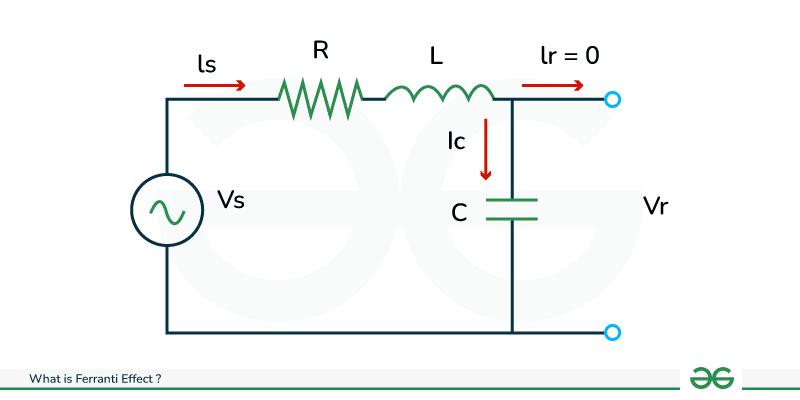
Ferranti Effect vs. Corona Effect vs. Reactive Power Effects
Ferranti Effect vs. Corona Effect vs. Reactive Power Effects A complete technical comparison for long AC transmission lines This is a n...
-
 When a conductor is covered with ice and/or is exposed to wind, the effective conductor weight per unit length increases. During occasions o...
 -
Hello. In this blog, we will try to create a steel pole model, using the PLS Pole software of Power Lines System. This created pole will pr...
-
 Yup, you read it right. This is about the World's Longest Overhead Transmission Line as of today. It is around 1700 km in length, trans...
