The Electric Field, also called the electrostatic fi eld, the electric field is not as commonly known per se as the magnetic fi eld. In the same way that current is connected to the magnetic field, voltage is connected to the electric field. That leads to a good rule of thumb to remember: Current is magnetic and voltage is electric .
The electric fi eld comes from electric charges, both positive and negative. In a way that is analogous to the way like poles on magnets repel and opposite poles attract, like charges repel and opposite charges attract. Any molecule or atom can be neutral (no net charge), positively charged, or negatively charged.
The accumulation of these charges is what is known as voltage. One way to think of it is that the charges are the voltage making the electric field, and movement of those charges is called current and creates the magnetic field.
Similarly to the way an inductor is a way of concentrating a magnetic field, a capacitor is a way of concentrating an electric field. Capacitors are made by two collectors or plates separated by a material that will not conduct electricity, also known as a dielectric.
Because of the dielectric, current or actual charges cannot fl ow or move across the capacitor, all the charges build up on one side of the cap, kind of like a 50-car pileup on the freeway.
As the charges pile up on one side, the electrostatic fi eld builds up, causing all the like charges on the other side of the cap to go rushing away (remember how like charges repel). Once it all comes to rest, there is an equal number of opposite charges on the other side of the cap. In this way the capacitor stores a charge of voltage on the plates of the capacitor.
How much charge a cap can store in an electric field is a function of the area of the plates. The amount of voltage it can store is dependent on the strength of the dielectric. If you exceed the capability of the insulation, the dielectric will break down and a charge will cross the gap. The same thing happens on a stormy day.
During a thunderstorm charges build up in the clouds and the ground in the same way they do on either side of a capacitor. A lightning strike is a large-scale version of what happens when the insulation or dielectric in a capacitor breaks down.
In the same way current creates a magnetic fi eld, voltage creates an electric field. Just as the magnetic fi eld can store energy, the electric fi eld can also store energy. As the magnetic fi eld dissipates, it tries to maintain current. As the electric field dissipates, it tries to maintain voltage. Voltage and electric fields are closely connected.
Thumb Rules
An inductor stores energy in a magnetic field.
A capacitor stores energy in an electric field.
Current is magnetic.
Voltage is electric.
ELECTRONIC FILTER DESIGN BASIC CONCEPT TUTORIALS
Electronic filters have many applications in the telecommunications and data communications industry. One such application, which involves a multiple channel communications system employing a technique known as time-division multiplexing (TDM).

In this system several channels are transmitted through a medium such as an optical fi ber, as shown here, or through a coaxial cable or waveguide. Multiplexing means combining several signals into one, and this is accomplished in TDM by allocating time slots for each channel so that each channel is transmitted at a particular time.
If the signals are synchronized correctly there will be no interference between them. At the transmitter end a multiplexer is used to combine the signals, while at the receiver end a demultiplexer is used to separate the original channels.
However, when the channel signals arrive at the receivers they have deteriorated in shape and amplitude. In order to clean them up they are reconstructed by an integrator that sums up the incoming signal very much as in mathematical integration. Once this has been done a filter is used to pass the wanted channel frequencies while attenuating the unwanted signals such as noise.
The combined functions of the integrator and filter cause the transmitted channels to be reproduced. In this case, where three channels are involved, each filter will be designed to pass the particular channel frequency and its related information, hence a band of frequencies is passed by each filter.
This is an example of where filters are used to pass bands of frequencies such as the voice band (300–3400 Hz). However, filters can also be used to pass frequencies below a certain frequency while attenuating all frequencies above it. Similarly, it is possible to construct a filter which passes all frequencies above a certain frequency while attenuating all frequencies below it.
Other applications are the following: noise filtering; guard band separation of channels; bandpass selection; boosting and cutting certain bands in the frequency spectrum; and harmonic reduction. Some of these will be investigated later.
Sine waves of different amplitudes and frequencies are shown below.

It should be appreciated that the majority of filters have to be capable of handling a mixture of such sine waves, as shown in (e) ; the effect of reducing the amplitudes of the signals in figures(d)–(e) is shown in Figure (f) . Figure (g) shows what happens when the signal in Figure (b) is reduced and that in
Figure (a) is eliminated.
It is therefore possible to use filters to alter amplitudes and frequencies, depending on the requirements of the system. Finally, the fi lters discussed in this chapter are used in sine or continuous wave circuits.
However, certain circuits such as integrators and differentiators utilize passive high-pass and low-pass networks to process square waves and produce wave shaping. When fed through a filter the square wave is modified: the high-frequency edges are rounded when passing through a low-pass fi lter, while the flat top and bottom are distorted when passing through a high-pass filter.
TRAVELING WAVES ON TRANSMISSION LINES TUTORIALS AND BASICS
Standing waves appear when a length of line is excited at a frequency for which the electrical line length is a significant part of an electrical wavelength. They result from the constructive and destructive interference of forward and refl ected waves on the line.
The behavior of the line can be determined by solving the applicable differential equations relating the line parameters to the exciting frequency. The solution of the equations for a line with losses is rather complex and adds little to the practical considerations, so the lossless line will be analyzed instead.
In the lossless line, L is the series inductance per unit length, and C is the shunt capacitance. If a differential length, dx , is considered, the inductance for that length is L dx , and the voltage in that length is e _ – L dx ( di/dt ). Since e = ( de/dx ) dx , the equation can be written as dx ( de/dx ) = – L dx ( di/dt ). Similarly, dx ( di/dx ) = – C dx ( de/dt ).
Dividing out the dx terms and substituting partial derivatives, the fundamental forms of transmission line equations result: -∂e/∂x = L ∂i/∂t and -∂i/∂x = C ∂e/∂t
By differentiating with respect to x and then with respect to t , these equations can be solved simultaneously to yield second-order, elliptical, partial differential equations for both e and i individually with respect to t and x . The classical forms then result: LC ∂2i/∂t2 -∂2i/∂x2 = 0 and LC ∂2e/∂t2 -∂2e/∂x2 =0
These equations can now be solved by transforms or classical methods. Explicit solutions can be developed with hyperbolic functions in the complex plane, and these solutions were the only practical means of line analysis until the digital computer was developed.
Fortunately, the computer offers an easier method of analysis by numerical integration, and line losses can be incorporated with relative ease. The difference equations can be solved by simple Euler integration, so the whole process is not nearly as daunting as in earlier years.
These equations allow numerical solutions for the voltages and currents on the line as functions of distance and time. Although it may not be immediately apparent, these difference equations, in the limit, replicate the differential equations.
Before proceeding to typical solutions, several derived parameters should be defined. First, the line has a surge, or characteristic, impedance defined as Z0 = ( L/C ) 1/2 and, second, a velocity of propagation v = 1/( LC ) 1/2 . The characteristic impedance defines the relationship between the line and its attached load, and the velocity of propagation defines the speed of signal transmission along the line and consequently its electrical length.
The electrical length of the line, in terms of wavelengths for any given exciting frequency, is λp / λe = v/c , where λp is the physical line length, λe is the exciting frequency wavelength in free space, v is the velocity of propagation, and c is the speed of light.
The overhead line has a high series inductance and relatively low shunt capacitance that leads to a high surge impedance. It also has a relatively high velocity of propagation because of the low capacitance. In the cable, things are reversed.
Shielded cable has a very high capacitance that makes the surge impedance low, and the velocity of propagation is also low. Note that the physical wavelength of a signal in such shielded cable is less than one-third of the wavelength in free space.
 |
| Traveling Waves |
In the lossless line, L is the series inductance per unit length, and C is the shunt capacitance. If a differential length, dx , is considered, the inductance for that length is L dx , and the voltage in that length is e _ – L dx ( di/dt ). Since e = ( de/dx ) dx , the equation can be written as dx ( de/dx ) = – L dx ( di/dt ). Similarly, dx ( di/dx ) = – C dx ( de/dt ).
Dividing out the dx terms and substituting partial derivatives, the fundamental forms of transmission line equations result: -∂e/∂x = L ∂i/∂t and -∂i/∂x = C ∂e/∂t
By differentiating with respect to x and then with respect to t , these equations can be solved simultaneously to yield second-order, elliptical, partial differential equations for both e and i individually with respect to t and x . The classical forms then result: LC ∂2i/∂t2 -∂2i/∂x2 = 0 and LC ∂2e/∂t2 -∂2e/∂x2 =0
These equations can now be solved by transforms or classical methods. Explicit solutions can be developed with hyperbolic functions in the complex plane, and these solutions were the only practical means of line analysis until the digital computer was developed.
Fortunately, the computer offers an easier method of analysis by numerical integration, and line losses can be incorporated with relative ease. The difference equations can be solved by simple Euler integration, so the whole process is not nearly as daunting as in earlier years.
These equations allow numerical solutions for the voltages and currents on the line as functions of distance and time. Although it may not be immediately apparent, these difference equations, in the limit, replicate the differential equations.
Before proceeding to typical solutions, several derived parameters should be defined. First, the line has a surge, or characteristic, impedance defined as Z0 = ( L/C ) 1/2 and, second, a velocity of propagation v = 1/( LC ) 1/2 . The characteristic impedance defines the relationship between the line and its attached load, and the velocity of propagation defines the speed of signal transmission along the line and consequently its electrical length.
The electrical length of the line, in terms of wavelengths for any given exciting frequency, is λp / λe = v/c , where λp is the physical line length, λe is the exciting frequency wavelength in free space, v is the velocity of propagation, and c is the speed of light.
The overhead line has a high series inductance and relatively low shunt capacitance that leads to a high surge impedance. It also has a relatively high velocity of propagation because of the low capacitance. In the cable, things are reversed.
Shielded cable has a very high capacitance that makes the surge impedance low, and the velocity of propagation is also low. Note that the physical wavelength of a signal in such shielded cable is less than one-third of the wavelength in free space.
WILLIAM GILBERT - ELECTRICAL ENGINEERING HERO
 |
| William Gilbert |
William Gilbert is famous for his works on electricity and magnetism. In fact, Gilbert's book De magnete (in English called On the Magnet, Magnetick Bodies Also, and on the Great Magnet the Earth), published in 1600, is considered as a cornerstone works in this branch of engineering.
William Gilbert, or Gylberde,was born on the 24th of May 1544 at Colchester, where his father, Hierome Gilbert, became recorder. Educated at Colchester school, he entered St. John's College, Cambridge in 1558, and after taking the degrees of BA and MA, in due course, graduated MD in 1569, in which year he was elected a senior fellow of his college. He is also considered as the most distinguished man of science in England during the reign of Queen Elizabeth I.
One of the most notable fact related to our ee hero is that the Gilbert (G) CGS unit of magnetomotive force, equal to 10/4pi = 0.795 775 ampere-turns was named after him.
For more of our Electrical Engineering Hero - William Gilbert, below are links relevant to him:
William Gibert Articles
During Gilbert’s lifetime Britain was a major seafaring nation, and sailors relied heavily upon the magnetic compass to help them navigate. Christopher Columbus thought that the Pole Star attracted the compass needle, others thought that magnetism was caused by mountains in the Arctic, and many believed that garlic actually interfered with the device. Intrigued by the mystery, Gilbert conducted experiments for about 17 years to clarify his understanding of the compass and the phenomenon of magnetism. Read more...
Gilbert's findings suggested that magnetism was the soul of the Earth, and that a perfectly spherical lodestone, when aligned with the Earth's poles, would spin on its axis, just as the Earth spins on its axis over a period of 24 hours. Gilbert was in fact debunking the traditional cosmologists' belief that the Earth was fixed at the centre of the universe, and he provided food for thought for Galileo, who eventually came up with the proposition that the Earth revolves around the Sun. Read more...
Gilbert did not, however, express an opinion as to whether this rotating Earth was at the center of the universe or in orbit around the Sun. Since the Copernican cosmology needed a new physics to support it, Copernicans such as Johannes Kepler and Galileo were very interested in Gilbert's magnetic researches. Galileo's efforts to make a truly powerful armed lodestone for his patrons probably date from his reading of Gilbert's book. Read more...
Gilbert was representative of the type of individual who fueled the European Renaissance: Overall, he was motivated by truth, and consequently he followed facts wherever they may lead -- as opposed to clinging to dogmatic and preconceived notions, religious or secular. Read more...
The Magnetic Poles are the points at which the Earth's lines of magnetic force enter and exit the Earth vertically (or straight up and down). At the North Magnetic Pole (NMP) the "dip" (angle towards the Earth) is 90°. The north point of a magnetic compass points to this pole. This definition was first put forth by Sir William Gilbert (1544-1603), a physician to Queen Elizabeth I. He compared the polarity of a magnet to the polarity of the Earth. Read more...
It is a matter of great regret for the historian of chemistry that Gilbert left nothing on that branch of science, to which he was deeply devoted, "attaining to great exactness therein." So at least says Thomas Fuller, who in his Worthies of England prophesied truly how he would be afterwards known: "Mahomet's tomb at Mecca", he says, "is said strangely to hang up, attracted by some invisible loadstone; but the memory of this doctor will never fall to the ground, which his incomparable book De magnete will support to eternity." Read more...
TRANSMISSION LINE STRINGING PULLER AND TENSIONER OPERATING CHARACTERISTICS
The pulling and braking systems should operate smoothly and
should not cause any sudden jerking or bouncing of the conductor. Each system
should be readily controllable and capable of maintaining a constant tension.
Pullers and tensioners may be mounted separately or in groups for bundled
conductor installation.
The controls should allow the independent adjustment of
tension in each conductor. It is recommended that the tensioner have an
independently operated set of bullwheels for each subconductor when stringing
bundled conductor, particularly when more than two subconductors per phase are
being installed.
Pullers should be equipped with load-indicating and
load-limiting devices. The load-limiting device should automatically stop the
puller from acting further if a preset maximum load has been exceeded.
Tensioners should be equipped with tension indicating devices.
Capacity selection of the puller and tensioner is dependent
upon conductor weight, the length to be strung, and the stringing tensions. The
capacities of the puller and tensioner should be based on the conductor, span
length, terrain, and clearances required above obstructions.
In general, stringing tensions will be about 50% of sag
tensions. Sag tensions should never be exceeded during stringing. Tensioner bullwheels must be retarded so that
conductor tension may be maintained at various pulling speeds.
Positive braking systems are required for pullers and
tensioners to maintain conductor tension when pulling is stopped. Failsafe-type
braking systems are recommended.
There are basically two types of pulling machines used in
the construction of transmission lines being strung under tension. These are
defined as bullwheel and drum-type or reel-type pullers.
Some drum-type or reel-type pullers are available with level
wind features to provide uniform winding of the line. Some drum-type and all
reel-type pullers provide easy removal of the drum (or reel) and line to
facilitate highway mobility.
This feature also provides the advantage of
interchangeability of drums. The control of payout tension of the pulling line
is a desirable feature of many pullers.
Mobility of the pullers and tensioners is important to
minimize downtime between pulls. Also critical are the setup and leveling
features of the units.
The overhead ground wire tensioner is normally a separate
unit from the conductor tensioner as the requirements are independent of each
other.
ENERGY CONSERVATION PROGRAM BASICS TUTORIALS
It is important, from several standpoints, to establish the
existing pattern of electrical usage and to identify those areas where energy
consumption could be reduced. A month-by-month record of electricity usage is
available from electric bills, and this usage should be carefully recorded in a
format (possibly graphic) that will facilitate future reference, evaluation,
and analysis.
The following list of items (where appropriate) should be
recorded in the electric usage history:
1) Billing month
2) Reading data
3) Days in billing cycle
4) Kilowatthours (or kilovoltamperehours, if billed on this
basis)
5) Billing kW demand (or kVA demand, if billed on this
basis)
6) Actual kW demand (or kVA demand, if billed on this basis)
7) Kilovats (actual and billed)
8) Kilovar hours (actual and billed)
9) Power factor (average or peak, as billed)
10) Load factor (average use compared to peak use)
11) Power bill (broken down into the above categories along
with fuel cost)
12) Occupancy level
13) Heating or cooling degree days
14) A electricity usage history, including appropriate
remarks (such as vacation periods)
A listing of building operations, equipment, and energy
conservation opportunities (ECOs) will also provide both a usage history and a
basis for evaluating future improvement. The listing of this information, along
with electricity usage, is part of the energy audit.
In general, there are four categories of ECOs. These four
categories are as follows:
1) Housekeeping Measures - Easily performed (and usually
low-cost) actions (for example, turning lights off when not required; cleaning
or changing air filters; cleaning heat exchangers; keeping doors shut; and
turning off redundant motors, pumps, compressors, and fans)
2) Equipment Modification - This is usually more difficult
and more expensive because it involves physical changes to the electric system
(for example, the addition of solid-state, adjustable speed drives; reducing
motor sizes on existing equipment; removing light fixtures; adding automatic
controls to reduce lighting in unoccupied areas; and modifying heating and
cooling systems).
3) Better Equipment Utilization - The use of natural
lighting as much as possible, the redirection of warmer air to cooler parts of
the building during the heating season, and staggering starting times for
tenants to reduce energy demand or consumption, or both.
4) Changes to the Building Shell - Improving the insulation
quality of the building to reduce energy losses to the outside environment (for
example, adding insulation, reducing infiltration, controlling exhaust/intake,
etc.) and reducing heat gains in the inside environment by using reflective
materials, shading, and insulation.
LOCK OUT – TAG OUT HAZARDOUS ENERGY CONTROL PROGRAM TUTORIALS
Hazardous energy control is not optional these days. It is
required by law for all employees who work on de-energized equipment where
there is potential for injury if the equipment is unexpectedly re-energized.
This is an extremely important part of the overall electrical safety program,
not only because it is the law, but also because it is a key effective method
toward ensuring that employees have the electrically safe work condition.
It is often called a lockout/tagout program. OSHA regulation
29 CFR 1910.333(b)(2) states: “While any employee is exposed to contact with
parts of fixed electrical equipment or circuits which have been deenergized,
the circuits energizing the parts shall be locked out or tagged out or both in
accordance with the requirements of this paragraph.”
That paragraph covers the following subjects:
a) Establishment and maintenance of written procedures for
lockout/tagout;
b) Establishment of safe procedures for de-energizing
equipment;
c) Requirements for the use of locks and tags;
d) Verification of the de-energized condition;
e) Requirements before re-energizing the circuits.
This means that a hazardous energy control program shall be
established to cover all employees whose jobs could possibly expose them to
energized electrical conductors or circuit parts. Hazardous energy control of
electrically operated equipment is important to nonelectrical workers also.
Consider the following examples:
-Two mechanics working on a crane runway were knocked 40 ft
to the floor below when a control-circuit failure caused the crane to start
unexpectedly.
- A pipe fitter was scalded when an operator depressed the
“open” button on a motor operated valve.
- A two-man cleanup crew was buried in a storage silo when a
conveyor was started accidentally.
- A hopper gate closed on the torso of a welder who was
repairing the hopper lining.
All of these accidents have a common denominator. Although
none involved electricians, nor electric shock or electrocution, all were
electrically initiated. Furthermore, none would have occurred if proper electrical
energy control procedures had been in effect.
A hazardous energy control procedure is a part of providing
an electrically safe work condition for employees. This procedure is applicable
to work on electrical equipment at all voltage levels, not just for higher
voltage systems.
Hazardous energy control procedures, in the electrical
business, are often referred to as lockout/tagout procedures. There are several
existing documents in which lockout/tagout procedures are discussed in detail.
ANSI Z244.1-1982 is a document that provides good guidance for establishing
lockout/tagout procedures. ANSI Z244.1-1982 has a sample lockout/ tagout
procedure in its appendix.
It is quite obvious that the U.S. federal government is
serious about control of hazardous energy in the workplace. OSHA regulation 29
CFR 1910.147 covers hazardous energy control in general and includes all kinds
of hazardous energy, not just electrical. This document also contains a sample
of a minimal lockout/tagout procedure.
OSHA regulation 29 CFR 1910.333 is speciÞcally aimed at
lockout/tagout for electrical work in general industry. OSHA regulation 29 CFR
1926.417 discusses lockout and tagging of circuits for the construction
industry.
OSHA regulation 29 CFR 1910.269 discusses lockout/tagout
requirements for power generation, transmission, and distribution type work.
Lockout/tagout practices and devices, including training, retraining,
equipment, and procedures, are discussed in NFPA 70E-1995, Part II, Chapter 5.
TYPICAL HAZARDOUS TASKS ON ELECTRICAL WORKS TUTORIALS AND BASICS
The following tasks are some examples of possible exposure
to energized conductors:
a) Measuring, testing, and probing electrical system
components;
b) Working near battery banks;
c) Opening electrical equipment enclosure doors or removing
covers;
d) Inserting or pulling fuses;
e) Drilling, or otherwise penetrating, earth, walls, or
ßoors;
f) Pulling conductors in raceways, cable trays, or
enclosures;
g) Lifting leads or applying jumpers in control circuits;
h) Installing or removing temporary grounds;
i) Operating switches or circuit breakers;
j) Working inside electronic and communications equipment
enclosures.
Evaluating the degree of hazard
Each of the tasks mentioned above should be evaluated for
the degree of electrical hazard involved. For example, opening an enclosure
door of a 120 V control panel containing many relays and terminals does expose
a person to an electrical hazard.
But the probability of serious injury may be small due to
the lower voltage and lower fault current capacity. Whereas, opening the door
or cover of an energized, 13 800 V primary disconnect switch enclosure exposes
a person to a much greater danger due to the higher voltage and larger fault
current capacity. Different procedures, personal protective equipment,
approvals, and attendance would be required.
Actions to eliminate, minimize, or control the hazard
Obviously, it would be most desirable to eliminate any
hazard. The best way to do that is to rethink the purpose of the job and why it
cannot be accomplished by establishing an electrically safe work condition. If
the answer is “inconvenience” or “saving a little time”, then the answer is not good enough.
First of all, it would violate the intention of the OSHA
laws. Secondly, the possible consequences if something went wrong should be
considered.
When it is not possible or feasible to establish an
electrically safe work condition, it is extremely important that work on or
near exposed energized parts be thoroughly planned and strictly controlled.
Work shall be done only by qualified personnel who have been trained to use
safe practices and protective equipment.
Permit for energized work
In addition to work authorization documents, it is desirable
to have a special permit system to give specific permission to work on or near
energized electrical conductors or circuit parts. This permit would list the
following items that are required before working on or near exposed energized
electrical conductors or circuit parts:
a) Justification for energized work;
b) Personal and other protective equipment;
c) Test equipment;
d) Tools;
e) Attendants;
f) Approvals;
g) Existing procedures to use;
h) Special notes.
INSULATION FAULT HAZARDS TUTORIALS AND BASICS
An insulation fault, irrespective of its cause, presents
hazards for: human life; preservation of property; availability of electrical
power; the above all depending on dependability.
Electric Shock of persons
A person (or animal) subjected to an electrical voltage is
electrified. According to the gravity of the Electric Shock, this person may
experience: discomfort; a muscular contraction; a burn;
c cardiac arrest (this is Electrocution)
Since protection of persons against the dangerous effects of
electric current takes priority, Electric Shock is thus the first hazard to be
considered. The current strength I -in value and time-, passing through the
human body (in particular the heart) is the dangerous aspect.
In LV, the impedance value of the body (an important aspect
of which is skin resistance) virtually changes only according to environment
(dry and wet premises and damp premises). In each case, a safety voltage
(maximum acceptable contact voltage for at least 5 s) has been defined: it is
known as the conventional limit voltage UL in IEC 60479.
IEC 60364 paragraph 413.1.1.1 (and NF C 15-100) state that
if there is a risk of contact voltage Uc exceeding voltage UL, the application
time of the fault voltage must be limited by the use of protection devices
Fire
This hazard, when it occurs, can have dramatic consequences
for both persons and property. A large number of fires are caused by important
and localised temperature rises or an electric arc generated by an insulation
fault.
The hazard increases as the fault current rises, and also
depends on the risk of fire or explosion occurring in the premises.
Unavailability of electrical power
It is increasingly vital to master this hazard. In actual
fact if the faulty part is automatically disconnected to eliminate the fault,
the result is: a risk for persons, for example:
sudden absence of lighting, placing out of operation of
equipment required for safety purposes; an economic risk due to production
loss.
This risk must be mastered in particular in process
industries, which are lengthy and costly to restart. Moreover, if the fault current
is high: damage, in the installation or the loads, may be considerable and
increase repair costs and times; circulation of high fault currents in the
common mode (between network and earth) may also disturb sensitive equipment,
in particular if these are part of a "low current" system
geographically distributed with galvanic links.
CIGRE'S PROTOCOL FOR REPORTING THE OPERATIONAL PERFORMANCE OF HVDC TRANSMISSION SYSTEMS
Recognising that the experience gained on HVDC transmission
systems could be of value throughout the industry, CIGRÉ Study Committee 14
established Working Group 04, Performance of DC Schemes, with terms of
referencewhich included an obligation to collect information on all systems in
commercial service.
It was considered that such information could be useful in
the planning, design, construction and operation of new projects. It was also
envisaged that the sharing of operational performance data could be of benefit
to those concerned with the operation of existing HVDC links or those planning
new HVDC links.
It was clear that such reports were best prepared in
accordance with a standardized procedure so that, with time, the accumulated
data from several systems would establish a basis against which performance
could be judged.
General information collected includes a system description,
main circuit data and a simplified one-line diagram for each scheme. This
descriptive information is compiled in a Compendium. The Compendium is revised
biennially with the pages distributed to Regular Members of SC14.
The Regular Members may be contacted to obtain the latest
copy of the Compendium or revised pages as required. The Compendium or revised
pages may also be obtained through the Chair or Secretary of WG 14.04.
Furthermore, operational performance data is collected annually from each
scheme in commercial operation.
Performance data include reliability, availability and
maintenance statistics. Reliability data are confined to failures or events
which result in loss of transfer capability. Statistic are categorized in order
to indicate which type of equipment caused the reduction in the transmission
capacity.
With the exception of recording thyristor failures, data on
component failures not causing a loss of transmission capacity are not
recorded. Reliability data on individual components such as capacitors, relays
or circuit breakers is more appropriately kept by groups directly involved with
each respective apparatus. Working Group 04 summarizes the performance
statistics for all reporting schemes every two year in a CIGRÉ paper entitled
“A Survey of the Reliability of HVDC Systems Throughout the World.”
As the equipment and techniques of HVDC transmission developed,
for example, the replacement of mercury- arc valves by thyristor valves in new
projects; it has been necessary to revise or supplement the procedure from time
to time. This revision of the Protocol will provide more accurate data on
scheduled or planned outages, reporting of system capacity and commutation
failures summarized as follows:
a) Outages taken for major reconfiguration shall not be
reported.
b) Scheduled outages will include work that may be postponed
until a suitable time during light load periods—usually night or weekend.
Outages of this type will include work on redundant systems such as the
controls where there is the philosophy of the owner to schedule an outage for
this activity.
c) Maximum capacity has been clarified to include capacity
available through utilizing redundant equipment when system may be loaded over
normal conditions.
d) Inverter end commutation failures during ac faults will
be reported when ac bus voltage drops below 90 percent rather than 85 percent.
Another category has been added to commutation failures
related to control problems.Scheduled equipment unavailability (SEU) has less
significance than forced equipment unavailability (FEU) in comparing different
systems since scheduled outages may be taken during reduced system loading
conditions or when some reduction in power transfer capability is acceptable.
Discretionary outages for maintaining redundant equipment
are also considered within the SEU category. Accordingly, SEU is intended to be
used mainly by owners over a long period of time for general comparison or for
comparisons of their own needs, and not intended to be used for evaluating
reliability of availability performance in RAM design or under RAM warranties.
This revised Protocol has been distributed to SC14 members
for ballot last quarter, 1996 and was approved in March 1997. The Protocol will
supersede the earlier issues and should be used for reporting 1996 performance
and beyond.
NOTE—General terms relevant to HVDC transmission with
explanatory figures are to be found in the International Electrotechnical
Commission publication 633, “Terminology for High-voltage Direct Current
Transmission” to which reference should be made.
HVDC BACK TO BACK CONVERTER STATIONS TUTORIALS AND BASICS
Back-to-back HVDC converter stations are integrated within
ac transmission links and play a role similar to that of transmission tie
stations (or substations) on an ac transmission system. Often, the back-to-back
HVDC converters are permitting power interchange between two weak and/or
unsynchronized ac systems.
In some applications, the back-to-back tie is used for only
a few hours per day, and power may flow either way.
In these cases, the “availability” is a logical RAM
parameter to specify as one of the design goals, and the specification should
treat the entire back-to-back tie as a single system. Other RAM specification
terms should be similar to the terms used in IEEE Std 859-1987.
In other applications, it might be desirable to transmit the
maximum amount of energy possible at all times and in only one direction. In
such cases, one may treat the HVDC converter station as a generator, and
“energy availability” may be a better parameter to specify than “availability.”
Deferred maintenance and planned outages may be combined and
called “scheduled outages.”
However, the RAM specification should not count “scheduled
outages” that are called “operations related outages” in IEEE Std 859-1987. An
“operations related outage” is when the unit is removed from service to improve
system operating conditions.
The RAM specification also needs to define whether
“scheduled outages” for equipment modifications to the HVDC converter station
are to be counted. IEEE Std 859-1987 defines four types of “forced outage,” as
follows:
a) Transient forced outage: A forced outage where the unit
is undamaged and is restored to service automatically.
b) Temporary forced outage: A forced outage where the unit
is undamaged and is restored to service by manual switching without repair, but
possibly with on-site inspection.
c) Permanent forced outage: A forced outage where the unit
is damaged and is not restorable to service until repair or replacement is
completed.
d) System-related outage: A forced outage that results from
system effects or conditions and is not caused by an event directly associated
with the unit.
METAL OXIDE (MO) ARRESTERS TEMPORARY OVERVOLTAGE PROTECTION BASICS AND TUTORIALS
The metal-oxide (MO) arrester offers an alternative solution
to limit TOVs and can act alone or in conjunction with convertor control and
the switching of shunt capacitors and ac filters.
The basic idea behind the use of MO arresters to limit TOVs
at the convertor station is to exploit the high energy-absorption capability
offered by the MO equipment. Various solutions are possible. Two basic
approaches adopted in recent dc projects are discussed below:
a) MO arresters with an extremely low protective level are
used to limit the TOV to values of typically 1.4 pu and permanently connected
to the ac busbar.
To achieve this low protective level and because of the
given MO material characteristic, signiÞcant currents flow through the arrester
at normal operating voltages. The arrester, therefore, needs special cooling to
avoid overheating during continuous operation.
The use of such permanently connected MO arresters is
recommended where the initial two or three peaks of the TOV are higher than the
acceptable value and cannot be limited by other arresters installed in the
station.
b) Special MO arresters that are switched in by circuit
breakers in the case of high TOVs. When the TOV has been reduced either by
restarting the dc system or by switching out the shunt capacitors and ac
filters, the arrester is disconnected from the network to prevent overloading
caused by normal operating voltage.
This arrester can limit the TOV to values as low as 1.25 pu.
However, the closing time of the breaker must be considered with the result
that the over voltage is not limited until a few cycles after its occurrence.
In both solutions the possible fault contingencies must be
studied carefully to determine the maximum energy stress of the arrester. Lower
protective levels require higher energy capability of the MO equipment and
consequently lead to higher costs.
Experience shows that the optimum overall design could be in
the range of 1.25 - 1.4 pu.
GENERATOR PROTECTION TYPES BASICS AND TUTORIALS
GENERATOR PROTECTION
As with electrical motor protection, generator protection
schemes have some similarities and overlap. This is advantageous, since not all
generators have all of the protection schemes listed in this section. In fact,
there are many protection schemes available; only the more common ones are
discussed here.
Generator Over-Current
Over-currents in the windings due to over-loads or faults
will cause extensive damage. The generator must be separated from the
electrical system and field excitation removed as quickly as possible to reduce
this damage to a minimum.
During run-up and shutdown, the field may accidentally be
applied while the frequency is below 60Hz. Under these conditions normal
protections may not work or may not be sensitive enough. A sensitive
over-current protection called supplementary start over-current is usually
provided when the frequency is less than about 56Hz.
Generator Differential Protection
Differential protection can be used to detect internal
faults in the windings of generators, including ground faults, short circuits
and open circuits. Possible causes of faults are damaged insulation due to
aging, overheating, over-voltage, wet insulation and mechanical damage.
Generator Ground Fault Protection
Generators are usually connected to the delta winding of a
delta-star main transformer. This allows the generator to produce nearly
balanced three phase currents even with unbalanced loading on the
primary of the main transformer. This minimizes stress,
vibration and heating of the stator windings during unbalanced system
conditions and electrical system faults.
However, with the generator connected to a delta winding, a
separate protection has to be used to protect against stator faults. Any
resistance to ground will pull the delta towards ground and may initially go
undetected by the differential relay. The stator ground relay will trip the
generator before severe damage results. Often the ground relay has a low-set
alarm included to allow possible correction before a trip condition exists.
Possible causes of ground faults are insulation damage due
to aging, overheating, over-voltage, wet insulation and mechanical damage. If
the faults are not cleared, then the risk of insulation damage will occur due
to overheating (as a result of high currents) or damage from arcing if the
insulation has already been damaged.
Rotor Ground Fault Protection
The windings on the rotor of an ac generator produce the
magnetic field at the poles. In four pole generators (typical of 60 Hz, 1800
rpm units), the occurrence of a single ground fault within the rotor generally
has no detrimental effects.
A second ground fault, however, can have disastrous results.
It can cause part of the rotor winding to be bypassed which alters the shape of
the otherwise balanced flux pattern. Excessive vibration and even rotor/stator
contact may result. A means of detecting the first ground fault provides
protection against the effects of a second fault to ground on the rotor.
A ground fault occurring anywhere within the excitation
system and rotor winding will cause current to flow through the limiting
resistor (the voltage at the fault point will add to the bias voltage and cause
a current flow through the GFD circuit), the GFD relay, the bias supply to
ground and then back to the fault location. Current flow through the GFD relay
brings in an alarm.
Generator Phase Unbalance Protection
If a generator is subjected to an unbalanced load or fault,
the unbalance will show up as ac current in the rotor field. With the 4-pole
1800 rpm generators used in nuclear stations, this current will be at twice
line frequency or 120Hz.
Continued operation with a phase imbalance will cause rapid
over-heating of the rotor due to the additional induced circulating currents
(these currents will also cause heating of other internal components of the
generator). This will result in rapid and uneven heating within the generator
and subsequent damage to insulation and windings (hence, reduced machine life)
and thermal distortion could occur.
Also the unbalanced magnetic forces within the generator due
to these currents will cause excessive vibration. This may result in bearing
wear/damage and reduced machine life and may result in a high vibration trip.
A specialized relay to detect these circulating currents,
called a negative sequence current relay, is used to detect the phase imbalance
within the generator. The term negative sequence is just a mathematical term to
describe the effects of unbalancing a symmetrical three phase system.
The most critical phase unbalance would come from an open
circuit in one of the windings and may not be detected by any other protection.
Other causes of phase imbalance include unequal load distribution, grid faults
and windings faults.
Generator Loss of Field Protection
When a generator develops insufficient excitation for a
given load, the terminal voltage will decrease and the generator will operate
at a more leading power factor with a larger load angle. If the load angle
becomes too large, loss of stability and pole slipping will occur and the
turbine generator will rapidly go into over-speed with heavy ac currents
flowing in the rotor.
A loss of field could be caused by an exciter or rectifier
failure, automatic voltage regulator failure, accidental tripping of the field
breaker, short circuits in the field currents, poor brush contact on the
slip-rings or ac power loss to the exciters (either from the station power
supply or from the shaft generated excitation current).
A relay that sense conditions resulting from a loss of
field, such as reactive power flow to the machine, internal impedance changes
as a result of field changes or field voltage decreases, may be used for the
detection of the loss of field. A field breaker limit switch indicating that
the breaker is open also gives an indication that there is no field to the
generator.
Generator Over-Excitation Protection
If the generator is required to produce greater than rated
voltage at rated speed (or rated voltage below rated speed), the field current
must be increased above normal (generated voltage is proportional to frequency
and flux). The excess current in the rotor and generated voltage will result in
over-fluxing of the generator stator iron and the iron cores of the main and
unit service transformers. Damage due to overheating may result in these
components. Over-voltage may also cause breakdown of insulation, resulting in
faults/arcing.
This problem may occur on generators that are connected to
the grid if they experience generator voltage regulation problems. It may also
occur for units during start-up or re-synchronizing following a trip (the field
breaker should open when the turbine is tripped). When the field breaker opens,
a field discharge resistor is inserted into the rotor circuit to help prevent
terminal voltage from reaching dangerous levels.
Over-excitation on start-up may be a result of equipment
problems or operator error in applying excessive excitation prematurely
(excitation should not be applied to the generator until it reaches near
synchronous speed).
A specialized volts/hertz relay is used to detect this
condition and will trip the generator if excessive volts/hertz conditions are
detected.
Generator Under-frequency Protection
While connected to a stable grid, the grid frequency and
voltage are usually constant. If the system frequency drops excessively, it
indicates that there has been a significant increase in load. This could lead
to a serious problem in the grid and it is of little use to supply a grid that
may be about to collapse. In this case, the generator would be separated from
the grid. The grid (or at least portions of it) may well collapse. The system
can slowly rebuild (with system generators ready to restore power) to proper,
pre-collapse operating conditions.
As mentioned above, if a generator connected to the grid has
sufficient excitation applied below synchronous speed (since grid frequency has
dropped) for it to produce rated voltage, the excitation level is actually
higher than that required at synchronous speed. Overexcitation and the problems
described above may result.
A specialized volts/hertz relay compares voltage level and
frequency and will trip the generator if preset volts/hertz levels are
exceeded.
Generator Out of Step Protection
This protects the generator from continuing operation when
the generator is pole slipping. Pole slipping will result in mechanical
rotational impacts to the turbine, as the generator slips in and out of
synchronism. This can be the result of running in an under excited condition
(see the section on loss of field) or a grid fault that has not cleared.
Relays that detect changes in impedance of the generator can
be used to detect the impedance changes that will occur when the unit slips
poles. Another method to provide this protection is to detect the loss of
excitation, using the loss of field protection and trip the unit if excitation
is too low (i.e., trip the generator when pole slipping is imminent). This has
been discussed in the loss of field section of this module.
Generator Reverse Power Protection
Motoring refers to the process of an ac generator becoming a
synchronous motor, that is, the device changing from a producer of electrical
power to a consumer of it. Following a reactor trip or setback/stepback to a
very low power level, it is beneficial to enter the motoring mode of
turbine-generator operation. However, this is not a desirable mode of operation
for standby or emergency generators. They are not designed to operate in this
manner and can be seriously damaged if power is allowed to flow in the wrong
direction.
A means of indicating when the transition from exporter to
importer of power occurs is provided by a device known as a reverse power
relay. As its name suggests, it is triggered by power flowing in a direction
opposite to that which is normally desired.
ELECTRICAL MACHINE INSULATION BASICS AND TUTORIAL
The most frequent failure in electrical equipment is the
degradation and breakdown (flashover) of the insulation. Hence, it is necessary
to mention in this module n basic electrical theory the effect of operating
environment on electrical machine insulation.
Electrical insulation can be liquid or solid, organic or
inorganic. Organic insulation material consists of enamels, varnishes, resins,
or polymers that are applied to the steel surface to provide high inter-laminar
(between windings) resistance as found on most air-cooled machinery and some
oil-immersed transformers.
Larger transformers are oil-filled with pure mineral oil to
provide higher insulation capability and more effective heat dissipation when
equipped with external radiators, fans and pumps. Physical insulation inside
these transformers is often in the form of oil-impregnated paper wrapped around
the conductors.
Inorganic insulation material can include a combination of
magnesium oxide, silicates, phosphates, and ceramic powder. This type of
insulation is usually heat-treated into the surface of the steel and is less
common than organic insulation. No matter what the type of insulation, the two
most common contributing factors in insulation failure are moisture and heat.
Excessive Moisture
On air-cooled electrical machinery, the moisture content of
the air is very important. With aging of the insulation, small hairline cracks
will appear in the insulation. Moisture will seep into these cracks and allow
an electrical path to short-circuit between adjacent turns of wire.
Although the voltage between the turns is quite small, when
they short together, a closed loop to the magnetic flux is provided, and this
causes tremendous currents to flow in the shorted loop. This usually destroys
the electrical machine, and it has to be removed and re-wound/replaced.
On oil-cooled machinery (i.e., transformers), moisture can
only be detected by regular oil samples. Moisture will be sucked into the oil
via the oil expansion air vent, through the continuous process of transformer
heating and cooling cycles. Special air dryers (i.e., Drycol) and absorbents
can assist in decreasing the rate the moisture is absorbed into the oil.
Excessive Temperature
On air-cooled electrical machinery, prolonged high
temperature causes thermal aging. This causes the insulation to become brittle.
Eventual failure can occur due to moisture penetration as just discussed, or by
physical contact of conductors.
In oil-filled transformers the effect is called insulation
aging. Chemical aging occurs more rapidly at high temperatures, with the loss
of insulation life being almost exponential with temperature. As an example,
for a standard 65 deg C (temperature rise) rated insulation the loss of life
increases from 0.001% per hour at 1000C to 0.05% per hour at 140 deg C and 1.0%
per hour at 180 deg C.
ELECTRIC BUSWAYS SYSTEM TYPES AND CONSTRUCTION BASICS AND TUTORIALS
Busway Construction
Originally a busway consisted of bare copper conductors
supported on inorganic insulators, such as porcelain, mounted within a
nonventilated steel housing. This type of construction was adequate for the
current ratings of 225Ð600 A then used.
As the use of busways expanded and increased loads demanded
higher current ratings, the housing was ventilated to provide better cooling at
higher capacities. The bus bars were covered with insulation for safety and to
permit closer spacing of bars of opposite polarity in order to achieve lower
reactance and voltage drop.
Feeder Busway
Feeder busway is used to transmit large blocks of power. It
has a very low and balanced circuit reactance to minimize voltage drop and
sustain voltage at the utilization equipment Feeder busway is frequently used
between the source of power, such as a distribution transformer or service
drop, and the service entrance equipment.
Industrial plants use feeder busway from the service
equipment to supply large loads directly and to supply smaller current ratings
of feeder and plug-in busway, which in turn supply loads through power take-offs
or plug-in units.
Available current ratings range from 600 - 5000 A, 600 Vac
or Vdc. By paralleling runs, higher ratings can be achieved. The manufacturer
should be consulted for dc ratings. Feeder busway is available in single-phase
and three-phase service with 50% and 100% neutral conductor. A grounding bus is
available with all ratings and types.
Available short-circuit current ratings are 42 000 - 200 000
A, symmetrical rms (see 13.8.2). The voltage drop of low-impedance feeder
busway with the entire load at the end of the run ranges from 1-3 V/100 ft,
line-to-line, depending upon the type of construction and the current rating .
Feeder busway is available in indoor and outdoor
construction. Outdoor construction is designed so that exposure to the weather
will not interfere with successful operation.
Plug-in Busway
Plug-in busway is used in industrial plants as an overhead
system to supply power to utilization equipment. Plug-in busway provides tapoff
provisions at regular intervals (approximately every 2 ft) over the length of
the run to allow safe connection of a switch or circuit breaker to the busway.
Load side cable connections can then be short and direct. Plug-in tapoffs (bus
plugs) can be connected to their loads by conduit and wire or flexible bus drop
cable.
Bus plugs can be removed, relocated, and reused. The use of
flexible cable permits the bus plug and machine it serves to be relocated and
put back into service in a minimum of time Bus plugs are available in several
types.
They include fusible switches, circuit breakers, static
voltage protectors (potentializer), ground detectors (indicating), combination
motor starters and lighting contactors, transformers, and capacitor plugs. Many
can be equipped with additional accessories, such as control power
transformers, relays, indicating lights (blown fuse), and terminal blocks for
remote control and indication.
Busway is totally enclosed and can be of the ventilated or
non-ventilated design. Plug-in busways have current ratings ranging from
100-5000 A. Plug-in and feeder busway sections of the same manufacturers above
600 A are usually of compatible design and are interchangeable, allowing for a
section of plug-in to be installed in a feeder run where tapoffs are desired.
Bus plugs are generally limited to maximum ratings of 800 A
for fused-switch type plugs and 1200 A for circuit-breaker type plugs.
Short-circuit current ratings vary from 10 000Ð200 000 A symmetrical rms. The
voltage drop ranges are approximately from 1- 3 V/100 ft, line-to-line, for
evenly distributed
loading. If the entire load is concentrated at the end of
the run, these values double.
A neutral bar may be provided for single-phase loads such as
lighting. Neutral bars usually are of the
same capacity as the phase bars.The bus housing may be used
as an equipment grounding path.
However, grounding bus bar is often added for greater system
protection and coordination under ground fault conditions. The grounding bus
bar provides a low-impedance ground path and reduces the possibility of arcing
at the joint under high-level ground faults if the housing is used as a ground
path.
Lighting Busway
Lighting busway is rated a maximum of 60 A, 300 V-to-ground,
with two, three, or four conductors. It may be used on 480Y/277 V or 208Y/120 V
systems and is specifically designed for use with fluorescent and
high-intensity discharge lightingTapoffs for lighting busway are available in
various types and include those with built-in circuit protection by either fuse
or circuit breaker.
Accessories include special mounting brackets and tapoffs
for surface or close coupling attachment of fluorescent lighting fixtures to
the busway. Lighting busway can be surface-mounted, recessed in dropped
ceilings, or suspended from drop rods. Hangers are available to accommodate
each method.
Lighting busways provide power to the lighting Þxture and
also serve as the mechanical support for the fixture. Auxiliary supporting
means called strength beams are available for increasing supporting intervals.
The strength beams provide supports for the lighting busway
as required by the National Electrical Code (NEC) (ANSI/NFPA 70-1993). Lighting
busway is also used to provide power for light industrial applications.
Trolley Busway
Trolley busway is constructed to receive stationary or
movable take-off devices to power overhead cranes, monorail systems, industrial
doors, and conveyor lines. Trolley busways are not suitable for outdoor
application.
They are used on a moving production line to supply electric
power to a motor or a portable tool moving with a production line, or where
operators move back and forth to perform their specific operations.
Trolley busway is available in current ratings ranging from
60Ð800 A, up to 600 V ac or dc, and 3, 4, and 5 wire. The steel casing serves
as the ground. Tapoffs (moving trolleys) range from 15Ð200 A and can be
equipped with circuit breakers, fusible protection, starters, contactors, and
relays.
TRANSMISSION LINE AND SUBSTATION LIGHTNING RELIABILITY CRITERION
The fundamental performance or reliability criterion is the
acceptable failure rate. This criterion is based on the consequence of failure
and on the expected life of the equipment. Therefore, the failure rate of
transmission lines and substation equipment may be different.
Transmission Lines
The performance/reliability criterion for lightning is
normally specified as the number of flashovers per 100 km-years. For switching
surges, the flashover rate is normally specified in terms of flashovers per
number of switching operations.
However, the highest magnitude switching surges normally
occur when reclosing, which is normally caused by a fault associated with
lightning. Thus, the two separate criteria may not be appropriate in specifying
the line reliability.
Another criterion, denoted as the storm outage rate, is the
number of unsuccessful reclosures per year and is obtained by multiplying the
lightning flashover rate for the line in units of flashovers per year by the
switching surge flashover rate in terms of flashovers per switching operation.
For example, assuming the lightning flashover rate to be two
per year and the switching surge flashover rate to be one per 100 switching
operations, the storm outage rate is two per 100 years assuming one reclosing
operation per year. Both the storm outage rate and the lightning flashover rate
may be important since the lightning fault creates voltages “dips” or
depressions in power frequency voltage, which may affect customer power
quality.
For transmission lines, lightning flashover rates vary with
system voltage and may range from 0.5 for EHV systems to 20 per 100 km-year for
HV systems. Although lines are being designed for switching surge flashover
rates between 1 and 10 flashovers per 100 switching operations, due to other
conservative assumptions, switching surge flashovers are relatively rare.
Substations
The commonly used reliability criterion for lightning is the
MTBF.
Because the consequence of failure within the station is
greater than the consequence of a flashover of a single line, the station
reliability criterion is higher than the line by a factor of 10. In addition,
transformers, other wound devices, and equipment with non self-restoring
insulation may be arrester protected due to the consequence of failure.
Different criteria are usually applied to air- and
gas-insulated stations. For example, the MTBF for air-insulated stations varies
between 50 and 200 years, whereas for the gas-insulated station, the MTBF has
been set as high as 800 years.
The basis for the increase is the consequence of failure in
the gas-insulated station that may require significant outage and repair times.
KIRCHHOFF’S CURRENT LAW (KCL) AND VOLTAGE (KVL) BASICS AND TUTORIALS
Anything we learn about the behavior of a circuit from the
connections among its elements can be understood in terms of two constraints
known as Kirchhoff’s laws (after the 19th-century German physicist Gustav
Robert Kirchhoff). Specifically, they are Kirchhoff’s voltage law and
Kirchhoff’s current law.
Their application in circuit analysis is ubiquitous,
sometimes so obvious as to be done unconsciously, and sometimes surprisingly
powerful. While Kirchhoff’s laws are ultimately just concise statements about
the basic physical properties of electricity, when applied to intricate
circuits with many connections, they turn into sets of equations that organize
our knowledge about the circuit in an extremely elegant and convenient fashion.
Kirchhoff’s Voltage Law
Kirchhoff’s voltage law (often abbreviated KVL) states that
the sum of voltages around any closed loop in a circuit must be zero. In
essence, this law expresses the basic properties that are inherent in the
definition of the term “voltage” or “electric potential.”
Specifically, it means that we can definitively associate a
potential with a particular point that does not depend on the path by which a
charge might get there. This also implies that if there are three points (A, B,
and C) and we know the potential differences between two pairings (between A
and B and between B and C), this determines the third relationship (between A
and C).
Without thinking in such abstract and general terms, we
apply this principle when we move from one point to another along a circuit by
adding the potential differences or voltages along the way, so as to express
the cumulative voltage between the initial and final point.
Finally, when we go all the way around a closed loop, the
initial and final point are the same, and therefore must be at the same
potential: a zero difference in all.
The analogy of flowing water comes in handy. Here, the
voltage at any given point corresponds to the elevation. A closed loop of an
electric circuit corresponds to a closed system like a water fountain. The
voltage “rise” is a power source—say, a battery—that corresponds to the pump.
From the top of the fountain, the water then flows down,
maybe from one ledge to another, losing elevation along the way and ending up
again at the bottom. Analogously, the electric current flows “down” in voltage,
maybe across several distinct steps or resistors, to finish at the “bottom” end
of the battery.
Kirchhoff’s Current Law
Kirchhoff’s current law (KCL) states that the currents
entering and leaving any branch point or node in the circuit must add up to
zero. This follows directly from the conservation property: electric charge is
neither created nor destroyed, nor is it “stored” (in appreciable quantity)
within our wires, so that all the charge that flows into any junction must also
flow out.
Thus, if three wires connect at one point, and we know the
current in two of them, they determine the current in the third.
Again, the analogy of flowing water helps make this more
obvious. At a point where three pipes are connected, the amount of water
flowing in must equal the amount flowing out (unless there is a leak).
Despite their simple and intuitive nature, the fundamental
importance of Kirchhoff’s laws cannot be overemphasized. They lie at the heart
of the interdependence of the different parts and branches of power systems:
whenever two points are electrically connected, their voltages and the currents
through them must obey KVL and KCL, whether this is operationally and
economically desirable or not.
EFFECTS OF HARMONIC CURRENTS ON TRANSFORMERS TUTORIALS
To better understand how harmonic currents affect
transformers one must first understand the basic construction. For power
transformers up to about 50 MVA, the typical construction is core form. The low-voltage winding is generally placed
next to the core leg, with the high-voltage winding wound concentrically over
the low-voltage winding.
For some high-current transformers, these windings may be
reversed, with the low-voltage winding wound on the outside over the
high-voltage coil. The core and coils are held together with core clamps, and
the core and coil is generally enclosed by a tank or enclosure.
Losses in the transformer can be broken down into core loss,
no-load loss, and load loss. Load losses can be further broken down into I^2R
loss and stray loss. Stray loss can be further broken down into eddy current
losses and other stray losses.
Electromagnetic fields from the ac currents produce voltages
across conductors, causing eddy currents to flow in them. This increases the
conductor loss and operating temperature. Other stray losses are due to losses
in structures other than the windings, such as core clamps and tank or
enclosure walls.
The region of maximum eddy-current losses is the upper
region of the winding, near the high–low barrier. The same usually exists at
the bottom of the transformer winding as well, but it is typically the upper
region that has the most damaging effects, as it is in a higher ambient
temperature of liquid or air. Core-loss components can be broken down into core
eddy loss, hysteresis loss, and winding-excitation loss.
These losses are a function of the grade of core steel, the
lamination thickness, the type of core and joint, the operating frequency, the
destruction factor during manufacture, and the core induction. Harmonic
currents can create harmonic voltage distortions and somewhat increase the core
loss, the exciting current, and sound levels while leading to potential
core-saturation problems.
However, this is not considered to be the main cause of problems
in rectifier transformers. ANSI/IEEE C57.18.10 does not calculate any effect on
the core loss by the harmonic currents.
Other stray losses are generally proportional to the current
squared times the harmonic frequency order to the 0.8 power, as shown earlier
in Equation 2.4.2. Metallic parts will increase in temperature, and load loss
will increase.
These losses are generally not detrimental to the life of
the transformer as long as the insulating system is not damaged. The metallic
parts typically affected are the core clamps, winding clamping structures, and
tank or enclosure walls.
The use of nonmagnetic materials, magnetic shields,
conductive shields, increased magnetic clearances, and interleaving of
high-current buswork are useful methods in reducing the stray losses that are
amplified by the harmonic currents.
The transformer designer must make efforts to reduce the
winding eddycurrent losses due to the harmonic amplification of these losses.
Careful winding and impedance balances, dimensioning of the conductors, and
transposition of the conductors are useful methods in this effort.
DISTRIBUTION TRANSFORMER LOADING BASICS AND TUTORIALS
Temperature Limits
According to ANSI standards, modern distribution
transformers are to operate at a maximum 65˚C average winding rise over a 30˚C
ambient air temperature at rated kVA. One exception to this is submersible or
vault-type distribution transformers, where a 55˚C rise over a 40˚C ambient is
specified.
The bulk oil temperature near the top of the tank is called
the “top oil temperature,” which cannot be more than 65˚C over ambient and will
typically be about 55˚C over ambient, 10˚C less than the average winding rise.
Hottest-Spot Rise
The location in the transformer windings that has the
highest temperature is called the “hottest spot.” Standards require that the
hottest-spot temperature not exceed 80˚C rise over a 30˚C ambient, or 110˚C.
These are steady-state temperatures at rated kVA.
The hottest spot is of great interest because, presumably,
this is where the greatest thermal degradation of the transformer’s insulation
system will take place. For calculation of thermal transients, the top-oil rise
over ambient air and the hottest-spot rise over top oil are the parameters
used.
Load Cycles
If all distribution loads were constant, then determining
the proper loading of transformers would be a simple task. Loads on
transformers, however, vary through the hours of a day, the days of a week, and
through the seasons of the year.
Insulation aging is a highly nonlinear function of
temperature that accumulates over time. The best use of a transformer, then, is
to balance brief periods of hottest-spot temperatures slightly above 110C
with extended periods at hottest spots well below 110˚C.
Methods for calculating the transformer loss-of-life for a
given daily cycle are found in the ANSI Guide for Loading (IEEE, 1995).
Parameters needed to make this calculation are the no-load and load losses, the
top-oil rise, the hottest-spot rise, and the thermal time constant.
Thermal Time Constant
Liquid-filled distribution transformers can sustain
substantial short-time overloads because the mass of oil, steel, and conductor
takes time to come up to a steady-state operating temperature. Time constant
values can vary from two to six hours, mainly due to the differences in oil
volume vs. tank surface for different products.
Loading Distribution Transformers
Utilities often assign loading limits to distribution
transformers that are different from the transformer’s
nameplate kVA. This is based on three factors: the actual
ambient temperature, the shape of the load
curve, and the available air for cooling.
For example, one utility divides its service territory into
three temperature situations for different ambient temperatures: summer
interior, summer coastal, and winter. The transformer installations are divided
into three applications for the available air cooling: overhead or pad-mounted,
surface operable, and vault.
The load shape is expressed by the peak-day load factor,
which is defined as the season’s peak kVA divided by the average kVA and then
expressed as a percentage.
COOLANTS OF DISTRIBUTION TRANSFORMERS BASICS AND TUTORIALS
Mineral Oil
Mineral oil surrounding a transformer core-coil assembly
enhances the dielectric strength of the winding and prevents oxidation of the
core. Dielectric improvement occurs because oil has a greater electrical
withstand than air and because the dielectric constant of oil (2.2) is closer
to that of the insulation.
As a result, the stress on the insulation is lessened when
oil replaces air in a dielectric system. Oil also picks up heat while it is in
contact with the conductors and carries the heat out to the tank surface by
selfconvection. Thus a transformer immersed in oil can have smaller electrical
clearances and smaller conductors for the same voltage and kVA ratings.
Askarels
Beginning about 1932, a class of liquids called askarels or
polychlorinated biphenyls (PCB) was used as a substitute for mineral oil where
flammability was a major concern. Askarel-filled transformers could be placed
inside or next to a building where only dry types were used previously.
Although these coolants were considered nonflammable, as
used in electrical equipment they could decompose when exposed to electric arcs
or fires to form hydrochloric acid and toxic furans and dioxins. The compounds
were further undesirable because of their persistence in the environment and
their ability to accumulate in higher animals, including humans.
Testing by the U.S. Environmental Protection Agency has shown
that PCBs can cause cancer in animals and cause other noncancer health effects.
Studies in humans provide supportive evidence for potential carcinogenic and
noncarcinogenic effects of PCBs.
The use of askarels in new transformers was outlawed in 1977
(Claiborne, 1999). Work still continues to retire and properly dispose of
transformers containing askarels or askarel-contaminated mineral oil. Current
ANSI/IEEE standards require transformer manufacturers to state on the nameplate
that new equipment left the factory with less than 2 ppm PCBs in the oil (IEEE,
2000).
High-Temperature Hydrocarbons
Among the coolants used to take the place of askarels in
distribution transformers are high-temperature hydrocarbons (HTHC), also called
high-molecular-weight hydrocarbons. These coolants are classified by the
National Electric Code as “less flammable” if they have a fire point above
300˚C.
The disadvantages of HTHCs include increased cost and a
diminished cooling capacity from the higher viscosity that accompanies the
higher molecular weight.
Silicones
Another coolant that meets the National Electric Code
requirements for a less-flammable liquid is a silicone, chemically known as
polydimethylsiloxane. Silicones are only occasionally used because they exhibit
biological persistence if spilled and are more expensive than mineral oil or
HTHCs.
Halogenated Fluids
Mixtures of tetrachloroethane and mineral oil were tried as
an oil substitute for a few years. This and other chlorine-based compounds are
no longer used because of a lack of biodegradability, the tendency to produce
toxic by-products, and possible effects on the Earth’s ozone layer.
Esters
Synthetic esters are being used in Europe, where
high-temperature capability and biodegradability are most important and their
high cost can be justified, for example, in traction (railroad) transformers.
POWER TRANSFORMERS ACCESSORY EQUIPMENT BASICS AND TUTORIALS
There are many different accessories used to monitor and
protect power transformers, some of which are considered standard features, and
others of which are used based on miscellaneous requirements. A few of the
basic accessories are briefly discussed here.
Liquid-Level Indicator
A liquid-level indicator is a standard feature on
liquid-filled transformer tanks, since the liquid medium is critical for
cooling and insulation. This indicator is typically a round-faced gauge on the
side of the tank, with a float and float arm that moves a dial pointer as the
liquid level changes.
Pressure-Relief Devices
Pressure-relief devices are mounted on transformer tanks to
relieve excess internal pressures that might build up during operating
conditions. These devices are intended to avoid damage to the tank. On larger
transformers, several pressure-relief devices may be required due to the large quantities
of oil.
Liquid-Temperature Indicator
Liquid-temperature indicators measure the temperature of the
internal liquid at a point near the top of the liquid using a probe inserted in
a well and mounted through the side of the transformer tank.
Winding-Temperature Indicator
A winding-temperature simulation method is used to
approximate the hottest spot in the winding. An
approximation is needed because of the difficulties involved
in directly measuring winding temperature.
The method applied to power transformers involves a current
transformer, which is located to incur a current proportional to the load
current through the transformer. The current transformer feeds a circuit that
essentially adds heat to the top liquid-temperature reading, which approximates
a reading that models the winding temperature. This method relies on design or
test data of the temperature differential between the liquid and the windings,
called the winding gradient.
Sudden-Pressure Relay
A sudden- (or rapid-) pressure relay is intended to indicate
a quick increase in internal pressure that can occur when there is an internal
fault. These relays can be mounted on the top or side of the transformer, or
they can operate in liquid or gas space.
Desiccant (Dehydrating) Breathers
Desiccant breathers use a material such as silica gel to
allow air to enter and exit the tank, removing moisture as the air passes
through. Most tanks are somewhat free breathing, and such a device, if properly
maintained, allows a degree of control over the quality of air entering the
transformer.
Liquid-Preservation Systems
There are several methods to preserve the properties of the
transformer liquid and associated insulation structures that it penetrates.
Preservation systems attempt to isolate the transformer’s internal environment
from the external environment (atmosphere) while understanding that a certain
degree of interaction, or “breathing,” is required to accommodate variations in
pressure that occur under operational conditions, such as expansion and
contraction of liquid with temperature.
Free-breathing systems, where the liquid is exposed to the
atmosphere, are no longer used. The most commonly used methods are outlined as
follows:
• Sealed-tank systems have the tank interior sealed from the
atmosphere and maintain a layer of gas — a gas space or cushion — that sits
above the liquid. The gas-plus-liquid volume remains constant. Negative
internal pressures can exist in sealed-tank systems at lower loads or
temperatures with positive pressures as load and temperatures increase.
• Positive-pressure systems involve the use of inert gases
to maintain a positive pressure in the gas space. An inert gas, typically from
a bottle of compressed nitrogen, is incrementally injected into the gas space
when the internal pressure falls out of range.
• Conservator (expansion tank) systems are used both with
and without air bags, also called bladders or diaphragms, and involve the use
of a separate auxiliary tank. The main transformer tank is completely filled
with liquid; the auxiliary tank is partially filled; and the liquid expands and
contracts within the auxiliary tank. The auxiliary tank is allowed to
“breathe,” usually through a dehydrating breather. The use of an air bag in the
auxiliary tank can provide further separation from the atmosphere.
“Buchholz” Relay
On power transformers using a conservator
liquid-preservation system, a “Buchholz” relay can be installed in the piping
between the main transformer tank and the conservator. The purpose of the Buchholz
relay is to detect faults that may occur in the transformer.
One mode of operation is based on the generation of gases in
the transformer during certain minor internal faults. Gases accumulate in the
relay, displacing the liquid in the relay, until a specified volume is
collected, at which time a float actuates a contact or switch.
Another mode of operation involves sudden increases in
pressure in the main transformer tank, a sign of a major fault in the
transformer. Such an increase in pressure forces the liquid to surge through
the piping between the main tank and the conservator, through the “Buchholz”
relay, which actuates another contact or switch.
Gas-Accumulator Relay
Another gas-detection device uses a system of piping from
the top of the transformer to a gas accumulator relay. Gases generated in the
transformer are routed to the gas-accumulator relay, where they accumulate
until a specified volume is collected, actuating a contact or switch.
Subscribe to:
Comments (Atom)
Ferranti Effect vs. Corona Effect vs. Reactive Power Effects
Ferranti Effect vs. Corona Effect vs. Reactive Power Effects A complete technical comparison for long AC transmission lines This is a n...
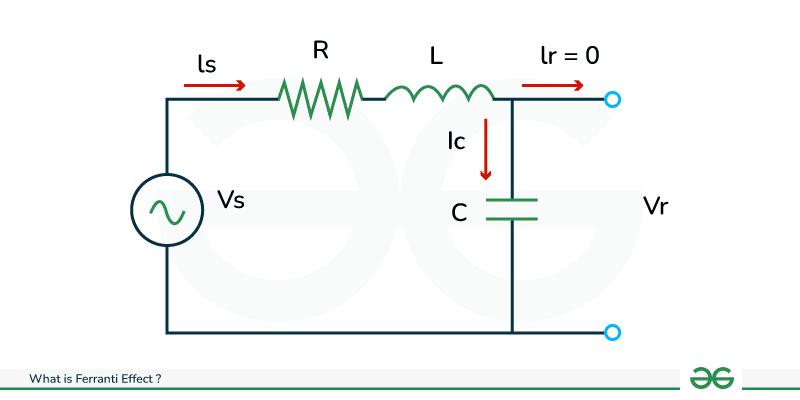
-
 When a conductor is covered with ice and/or is exposed to wind, the effective conductor weight per unit length increases. During occasions o...
 -
Hello. In this blog, we will try to create a steel pole model, using the PLS Pole software of Power Lines System. This created pole will pr...
-
 Yup, you read it right. This is about the World's Longest Overhead Transmission Line as of today. It is around 1700 km in length, trans...
